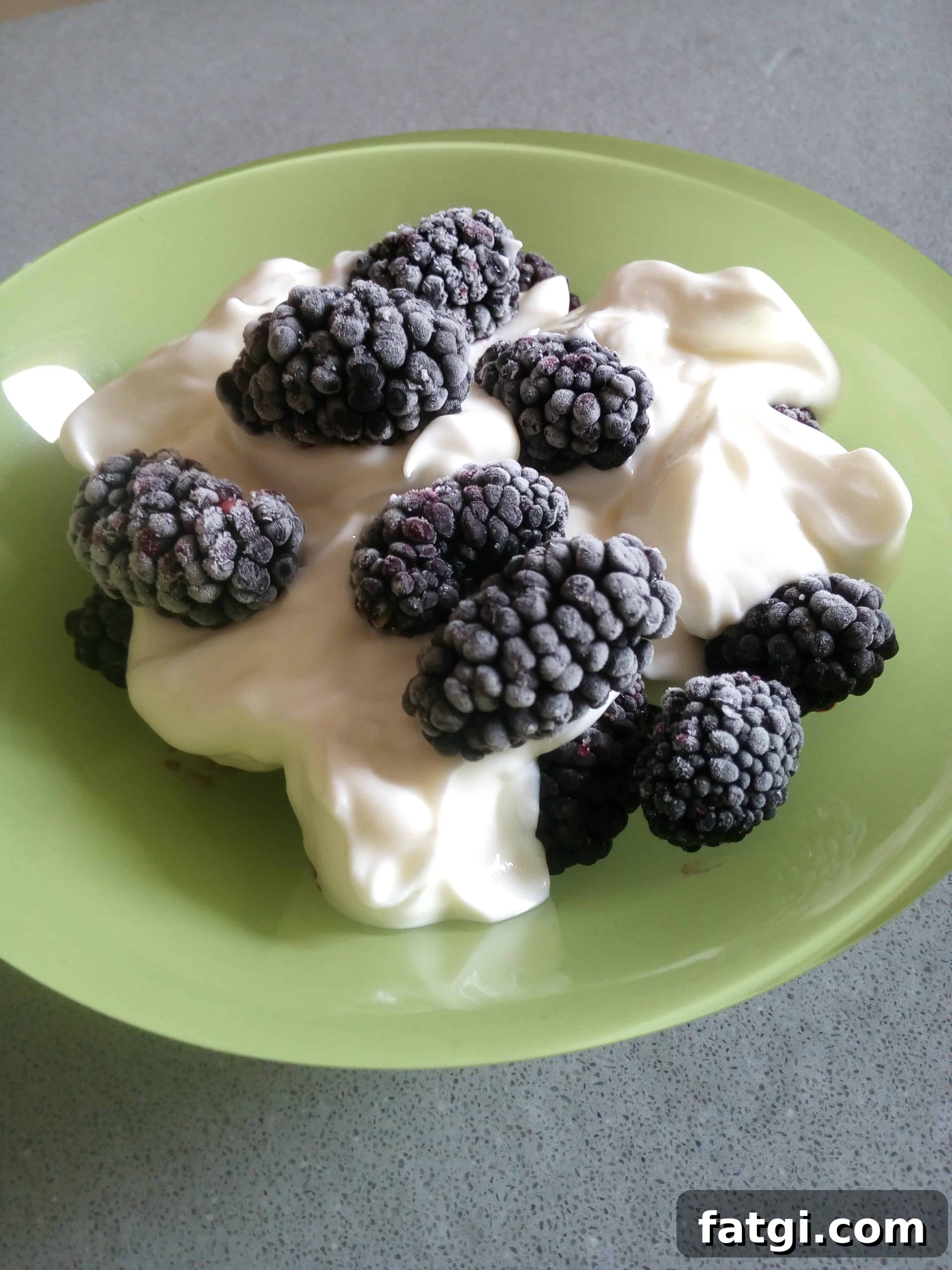
Sugar Free Low Carb Strained Greek-Style Yoghurt: HOW TO MAKE IT in 2 easy steps.
Ever since I learned to strain yoghurt I have enjoyed it daily and never tire of it. With mulberries, blueberries, a strawberry compote, chia seeds, or nuts — or all of them together — it is simply delicious.
Why strain yoghurt instead of buying Greek-style? Because homemade strained yoghurt tastes better, is more filling, and straining removes whey, which reduces the carbohydrate content. That makes it especially suitable for low carb and ketogenic diets.
When I first started keto I looked for low-carb snacks and desserts. Regular flavoured yoghurt pots are full of sugar, starches and flavourings, so they became off-limits. Greek-style yoghurt seemed like a solution, but it can be expensive, hard to find, and I didn’t enjoy the texture. Straining plain, unsweetened whole milk yoghurt fixed all of that.

You only need a few simple, inexpensive tools:
– a deep jug (mine is 16cm deep and 14cm in diameter)
– two elastic bands
– a muslin cloth or cheesecloth
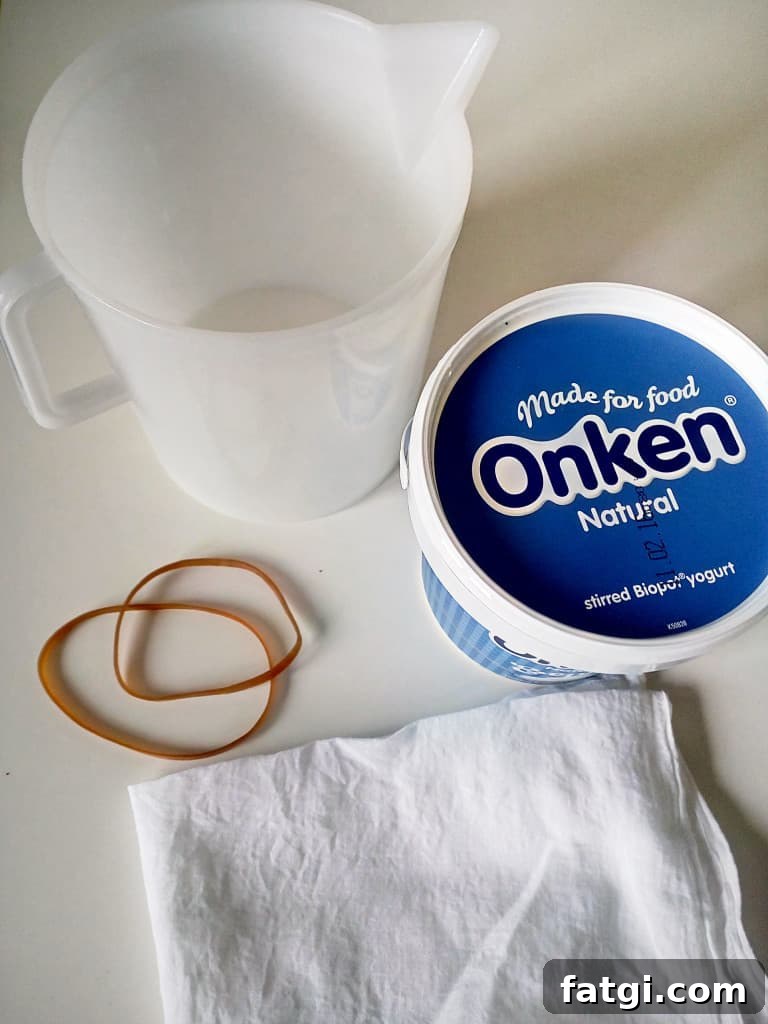
The process is quick and easy:
- Pour plain whole milk yoghurt onto a suspended muslin cloth and leave it in the fridge for 3–4 hours.
- Scoop the strained yoghurt from the muslin cloth, add a little pure stevia powder to taste if you like, and serve.
Detailed instructions follow in the recipe below.


5 reasons to strain yoghurt
- Strained yoghurt contains fewer carbs than ordinary plain yoghurt and can be lower in carbs than some Greek-style products.
- It is far more flavourful and concentrated than plain yoghurt.
- It is denser and more filling, so a smaller serving satisfies more.
- It’s very simple to make at home with minimal equipment.
- It is usually cheaper than buying premium Greek-style yoghurt.
Difference between shop-bought yoghurt and homemade strained Greek-style yoghurt
Straining removes whey from yoghurt. Whey contains lactose (milk sugar), so removing it lowers the carbohydrate content. The exact carb reduction will depend on the yoghurt brand and starting composition, but straining consistently concentrates protein and fat while reducing available sugars.
Yoghurt brands vary. Read the nutritional label on your chosen product before you start, because the final carb and protein values of your strained yoghurt depend on the initial values.
My preferred yoghurt: Onken stirred whole milk bio pot, 1 kg (not sponsored).
I found differences between packaging sizes. The 1 kg bio tub contains only yoghurt and live cultures, while some smaller pots include stabilisers or fillers that change texture and nutritional content. For the best low-carb, creamy result I use the plain 1 kg tub.
As an example of how straining concentrates nutrients: the 1 kg tub I use lists 4.1 g carbs and 4.5 g protein per 100 g. Starting with 1 kg, that equals 41 g carbs and 45 g protein total. After straining I end up with approximately 650 g of thick yoghurt and around 350 ml of liquid whey removed. Using published values for liquid acid whey, that removed whey contains roughly 17.85 g carbs and 2.8 g protein. The remaining 650 g of strained yoghurt therefore contains about 23 g carbs and 42 g protein in total, which works out to roughly 3.5 g carbs and 6.5 g protein per 100 g. Protein and calories are higher in the finished product because of concentration, while carbs are lower than the original yoghurt per gram.
(If you notice an error in the calculation, please leave a comment.)
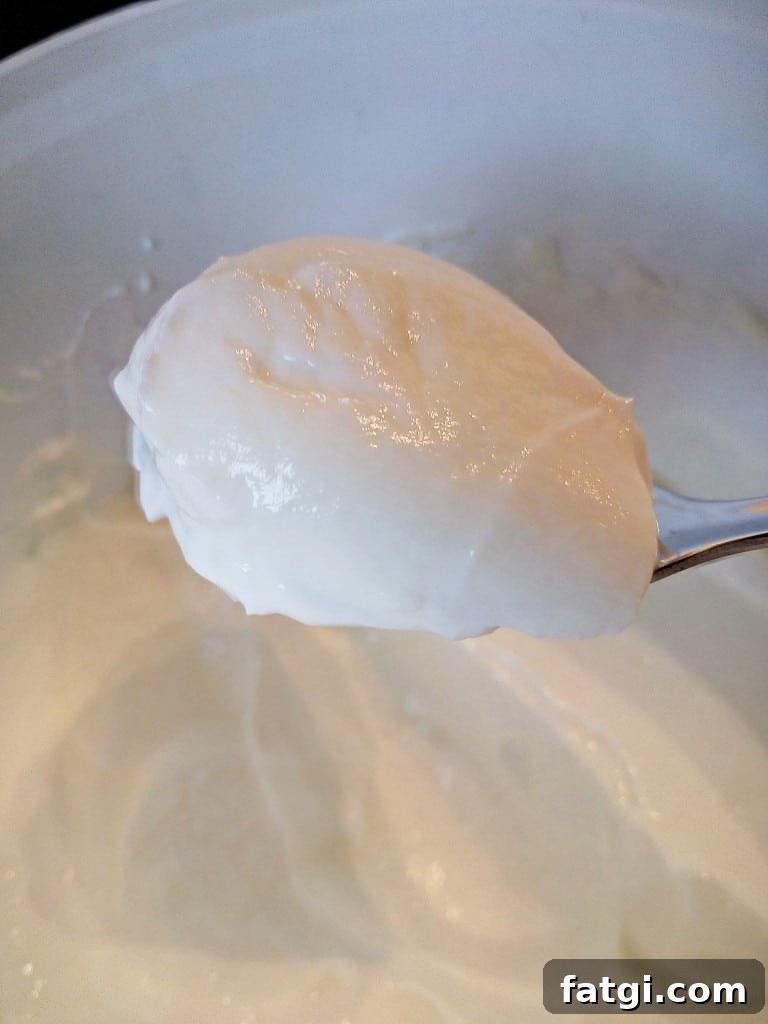
There you have it: a creamy, sugar free low carb strained Greek-style yoghurt you can make at home with minimal effort.
Enjoy!
UPDATE: If you can get Lidl Greek-Style Yoghurt, it is worth trying — I find it tastes even better with comparable or lower carbs and protein.
- 1 kg plain whole milk yoghurt (choose a plain bio or natural variety without stabilisers for best results)
- Optional: 1/2 tsp pure stevia powder, or sweetener of your choice, to taste
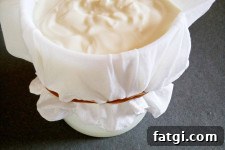
- Place a muslin cloth over a deep jug (mine is about 16 cm deep and 14 cm in diameter).
- Secure the cloth with two elastic bands and arrange it so the cloth is suspended inside the jug, creating a well in the middle.
- If needed, press down in the centre to make a deeper well for the yoghurt to sit in.
- Tie the corners of the cloth so they do not touch the fridge surface when chilled.
- Spoon the yoghurt into the cloth well.
- Place the jug in the fridge and allow the yoghurt to strain for 3–4 hours, or longer for a thicker result.
- Scoop the thickened yoghurt back into its original container or another storage vessel.
- Stir in stevia or other sweetener if desired, cover, and store in the fridge for 3–4 days.
- Serve plain or with berries, nuts, or chia seeds as preferred.
Your feedback matters! Please leave a comment below. If you try this recipe, share a photo with the hashtag #queenketo.