This is a sponsored conversation written by me on behalf of Wagner SprayTech. The opinions and text are all mine.
I recently moved into a new house and wanted to refresh my decor without overspending. Since buying a house a few months ago left me budget conscious, I decided to update a piece I already owned instead of buying new furniture. The most noticeable item in any living room is usually the TV stand, so I chose to give mine a fresh, modern look.
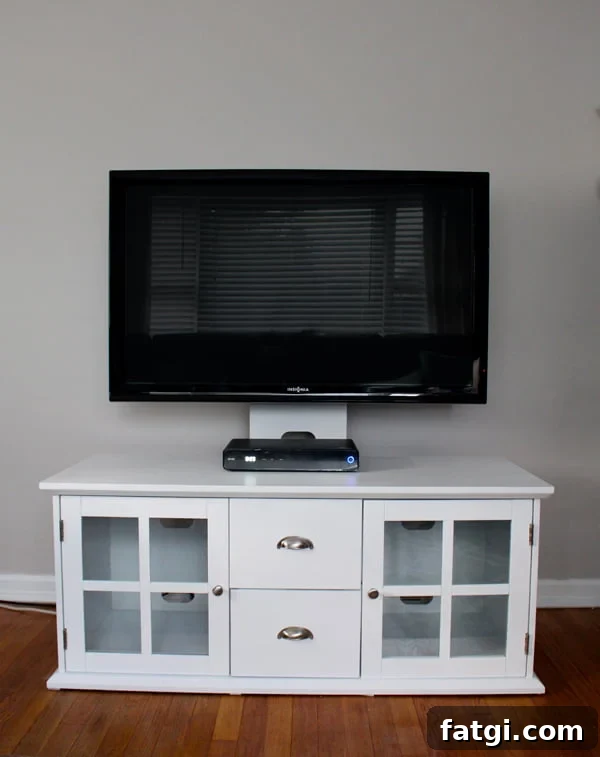
This TV stand has seen a lot of life — it’s moved back and forth between several states over the years. Despite the wear and many moves, it remained a solid, well-built piece. For the new house I wanted to move away from dark woods in favor of bright white paint and a cleaner, more modern style with some subtle contrasts.
I was excited when Wagner sent me their Home Decor paint sprayer. I knew that spraying would be much faster and give a smoother finish than brushing, which often leaves visible brush marks. I also liked that using a sprayer would let me finish the project quickly so I wouldn’t be without my TV for long.
My original plan was to work outside on the back porch, but the weather didn’t cooperate — it snowed — so I set up in the basement on my workbench. The bench is on wheels, which made it convenient to move the piece as needed. If you spray indoors, be sure to open windows and ventilate the room well.
Preparing the piece is as important as the spray finish. I removed all hardware, including knobs, pulls, tracks, and the glass from the doors so I wouldn’t need to tape them. To keep everything organized, I labeled separate sandwich bags for each set of screws and took photos of tracks and hinges so I could reassemble everything correctly. Taking pictures is a helpful habit for any furniture project.
Sanding is essential for a durable finish, especially when using enamel latex paint. I used an orbital sander, starting with 60-grit paper to remove the top layer and then progressing to 150-grit for a smooth surface. If you choose chalk paint, sanding requirements may differ, but for enamel I recommend thorough sanding.
For paint I used a Behr Ultra White paint-and-primer-in-one with an eggshell enamel finish. That choice gave me good coverage while keeping the project economical — the whole stand used about one quart plus a quarter of another.
One crucial thing I learned is that you must thin your paint for spraying. For latex paint, thin it with water. Wagner includes a handy yellow measuring tool: fill the paint to a mark, then add water to the next mark to reach a 10% dilution. Also check the paint can for thinning instructions. Achieving the right consistency required a bit of trial and error, so I practiced on a piece of plywood until the spray pattern looked right.
After practicing, I started spraying the stand using smooth, sweeping motions. I left smaller pieces like drawers for last. At first the spray looked like hundreds of tiny dots hitting the surface — that’s normal. If the paint starts to drip, you may have thinned it too much or are applying too much in one pass. Patience is key: I sprayed light coats and allowed each to dry before applying the next. I ended up with three thin coats for a durable, even finish.
Spraying turned out to be much faster than brushing. I completed the whole project in about a day and a half. If I had used chalk paint and skipped sanding, this could have been finished in a single day.
The final result exceeded my expectations. The white paint modernized the TV stand and made it stand out against the gray wall and white molding in my living room. The smooth, even finish from the sprayer transformed the piece and refreshed the room’s overall look.
If you want to try other painting techniques, consider antiquing, furniture distressing, painting chairs, or other small projects to practice your finishing skills.
For more inspiration and tips, look for Wagner on social media and explore their resources on spray techniques and tools.