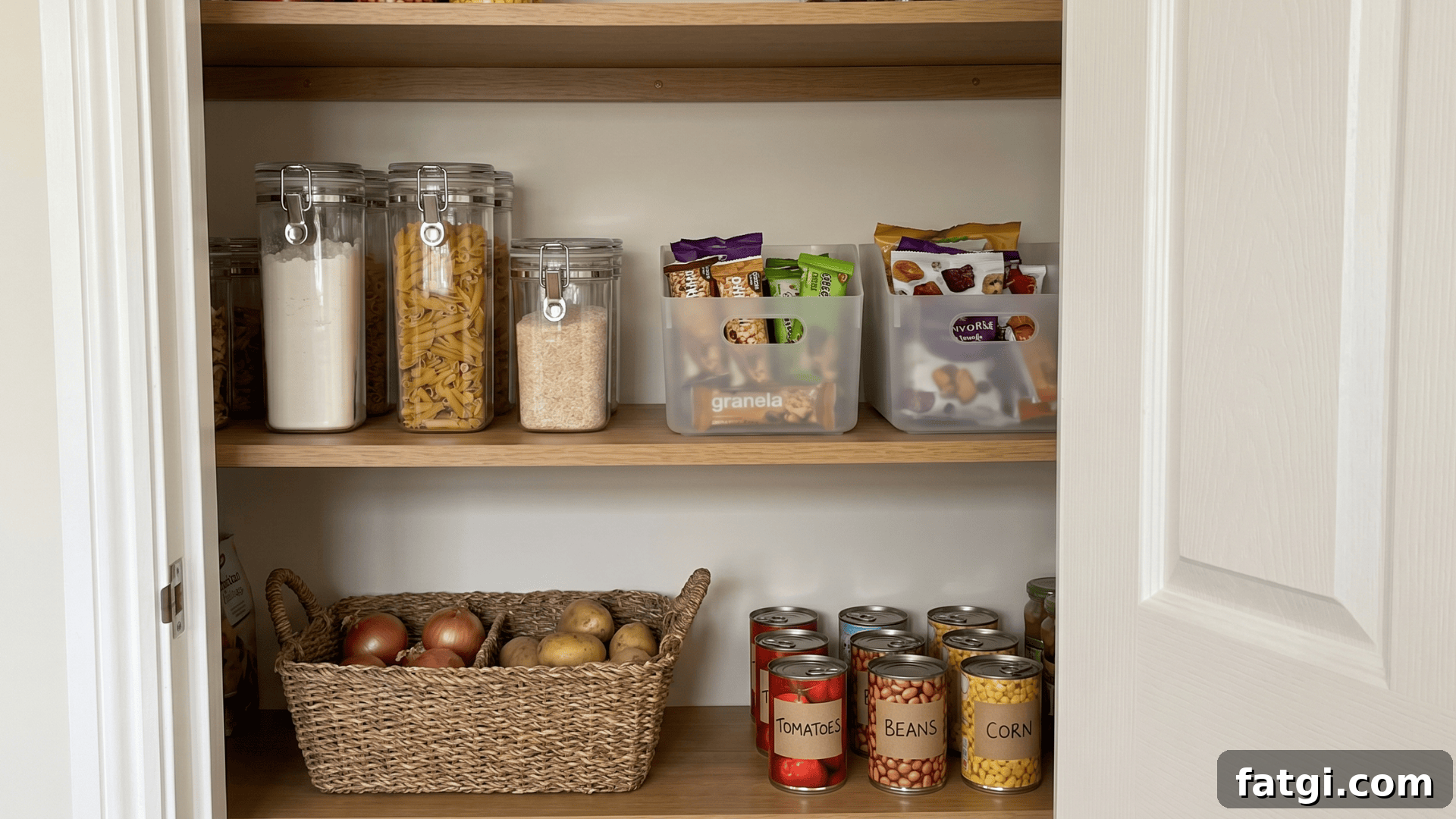
A cluttered pantry doesn’t just waste space — it quietly wastes time, money, and food. The good news: you don’t need a full renovation to fix it. With a few smart pantry organization ideas, small changes can dramatically improve how your kitchen functions.
This guide walks you through a clear reset process: emptying and assessing your shelves, choosing the right containers, arranging zones to match your habits, and keeping the system working long term. These steps focus on practicality — useful solutions you’ll actually use every day.
Why Pantry Clutter Builds Up
Pantry mess usually appears slowly, one bag or box at a time. When you understand how it happens, you can stop it sooner.
- New groceries bury old ones: Fresh items get placed in front of half-used boxes, and older products end up forgotten.
- Good intentions fade: Busy days and one rushed shopping trip can undo careful plans in a week.
- Loose items create visual chaos: Half-open bags, stray packets, and mismatched containers make the space feel messy even when it’s full.
- No zones means wasted time: When pasta, cereal, and baking supplies sit together, finding what you need takes longer. Clear zones make retrieval fast and effortless.
Start Here: Empty and Reset Your Pantry First
Before you buy bins or measure shelves, take everything out. Laying items on the counter shows exactly what you have, what’s expired, and what’s been forgotten.
- Toss expired items: Be honest about what you won’t use.
- Set aside duplicates: Group extras so you stop overbuying.
- Wipe shelves clean: Remove crumbs and sticky spots before returning anything.
- Sort into groups: Snacks, baking, canned goods, breakfast staples — get a rough grouping to guide the layout.
Starting with a clean slate makes the rest of the work faster and more accurate.
Step 1: Plan Your Pantry Before You Buy Anything
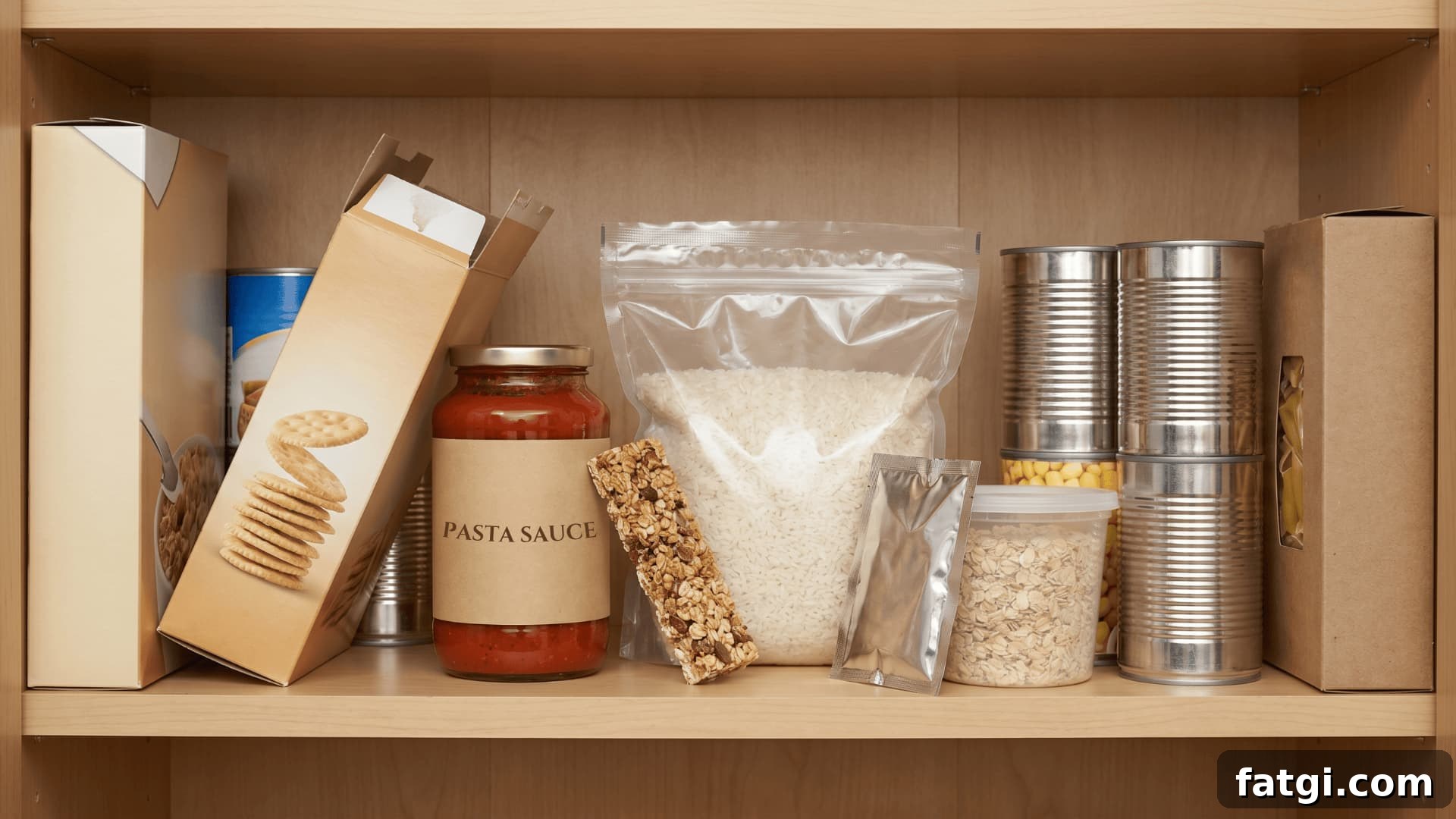
Measure first, shop second. Too many of us bring home organizers that don’t fit. Spend ten minutes with a tape measure and a quick sketch to avoid wasted purchases.
Measure Your Pantry Space
Record three dimensions for each shelf: width (side to side), depth (front to back), and usable height between shelves. Note irregular nooks, shallow spots, or tall gaps that could use a narrow bin or riser.
- Shelf width and depth
- Height between shelves
- Odd corners or narrow slivers
Measure What You Use
Design the pantry around how your household eats, not a staged photo. Look at the items you buy most: cereal, pasta, snacks, spices, and bulk staples. Plan for airtight storage for things that need it and easy-access bins for grab-and-go items.
- Everyday staples: cereal, rice, pasta
- Bulk vs. weekly-use items
- Airtight needs versus loose-pack items
Make a Simple Sketch
Sketch shelf layouts and assign zones before moving heavy bins. Mark where baking supplies, cans, snacks, and breakfast items will live. Adjust the plan as you test different placements.
Step 2: Pick and Buy the Right Containers
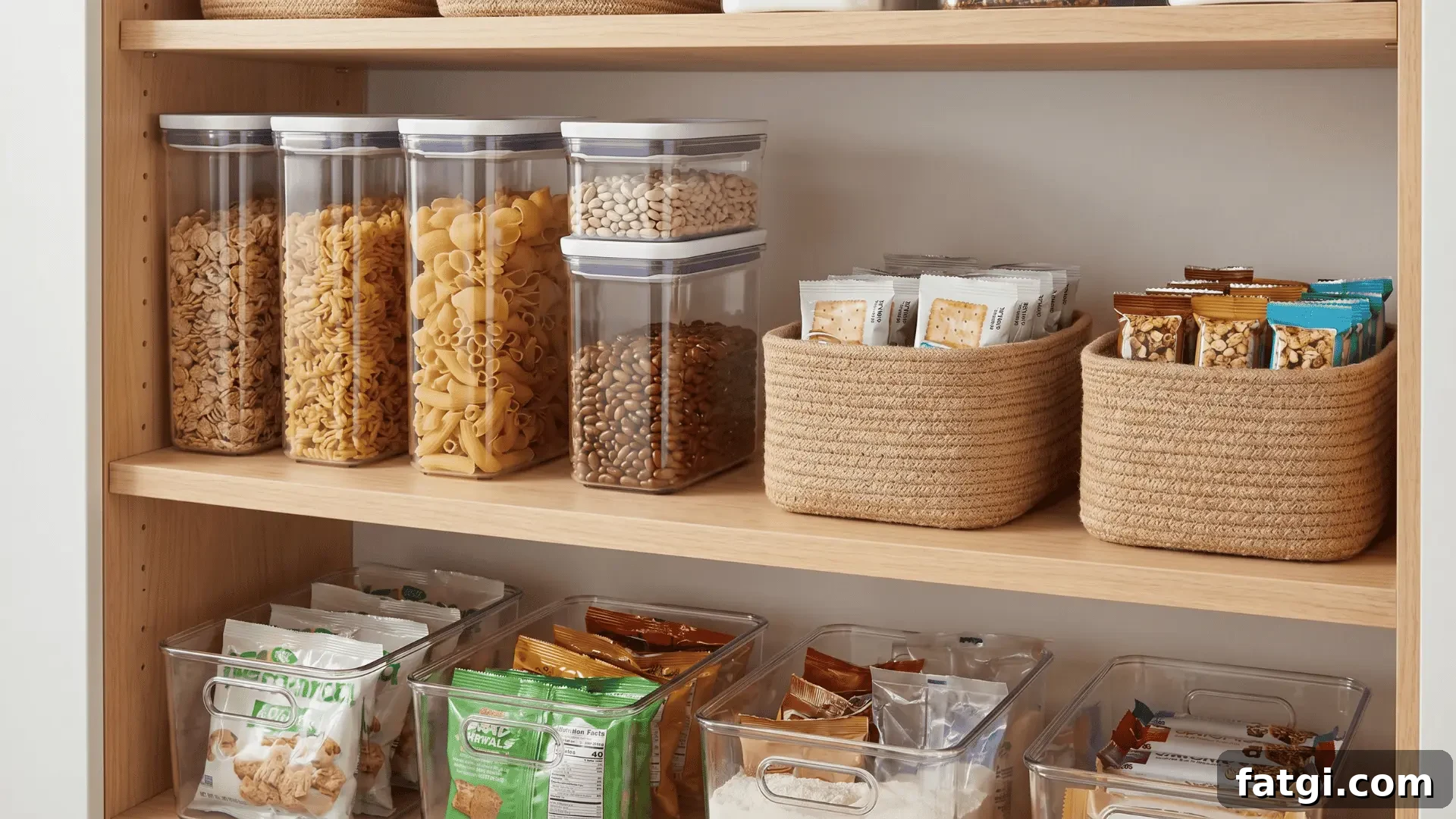
Matching sets look attractive but often include sizes you won’t use. Choose pieces that suit your food and space: a mix of airtight jars, open bins, and baskets usually works best.
Container Types to Know
| Container Type | Best For | Why It Works |
|---|---|---|
| Airtight Pop-Top Containers | Flour, sugar, cereal, pasta, rice | Keeps staples fresh and creates a clean, uniform look |
| Open Plastic Bins | Snack packets, small jars, seasoning mixes | Easy to grab and return without fuss |
| Jute Baskets | Bulk items, drinks, rarely used goods | Hides clutter and adds warmth to shelves |
Clear containers for weekly staples help you see quantities at a glance and reduce duplicates and waste.
- Visibility: You know when you’re running low.
- Consistency: Uniform sizes stack efficiently.
- Quick checks: One look tells you what to replace.
Buy Only the Sizes You Need
Avoid full matching sets. Purchase single pieces as you identify needs so you don’t end up with oversized or unused containers. Check clearance sections at stores for useful single items at a lower price.
Repurpose What You Already Have
Before buying new containers, look around the kitchen. Washed sauce jars, takeout tubs, and larger plastic tubs make excellent storage with a fresh label.
- Takeout containers for grains
- Glass jars for spices or seeds
- Large plastic tubs for bulk packets
Step 3: Arrange Shelves and Make the Most of Every Inch
Put daily-use items where you reach naturally and store heavier or rare items low or high. A few simple accessories can multiply usable space without crowding shelves.
| Shelf Spot | What Goes There | Why It Works |
|---|---|---|
| Eye-Level Shelf | Cereal, coffee, pasta, everyday snacks | Prime space for frequent grabs |
| Waist-Level Shelf | Granola bars, kids’ snacks | Accessible for small helpers |
| Lower Shelves | Large rice bags, cases of drinks | Heavy items stay low for safety |
| Top Shelf | Backup sauces, holiday bakeware | For infrequent use |
| Floor | Oil bottles, soda cases, paper goods | Big items in a bin keep the floor tidy |
Make Every Inch Work
- Shelf risers: Create a second level to make the back visible.
- Under-shelf baskets: Use empty vertical gaps for packets and pouches.
- Narrow pull-out bins: Fit tight spots and slide out for access.
- Wheeled bins: Roll out heavy containers for rice or pet food.
- Hooks on side walls: Hang bags, aprons, or measuring cups.
- Grab-and-go basket: Keep onions, garlic, or frequently used produce handy.
- Lazy Susans: Perfect for oils and sauces in deep or corner shelves.
- Limit backstock: Keep only one backup to prevent overflow.
- Store rare items elsewhere: Move seldom-used items out of the pantry.
Smaller pantries work best when they hold what you use weekly. Use smart storage, not more space.
Step 4: Group Similar Items Together
Grouping similar items stops duplicate purchases and speeds up meal prep. Give every item a consistent home and return it there after use.
| Zone | What Goes In |
|---|---|
| Pasta Corner | Spaghetti, penne, macaroni, lasagna sheets |
| Canned Goods | Beans, soups, tomatoes, tuna |
| Baking Zone | Flour, sugar, chocolate chips, baking powder |
| Breakfast Spot | Cereal, oats, pancake mix, honey |
| Snack Bin | Chips, crackers, granola bars, trail mix |
- Return items immediately: Don’t leave things “for later.”
- Keep backups behind: Use older items first.
- Avoid overflow: If a section is full, remove or relocate items before adding more.
Step 5: Label Everything Clearly
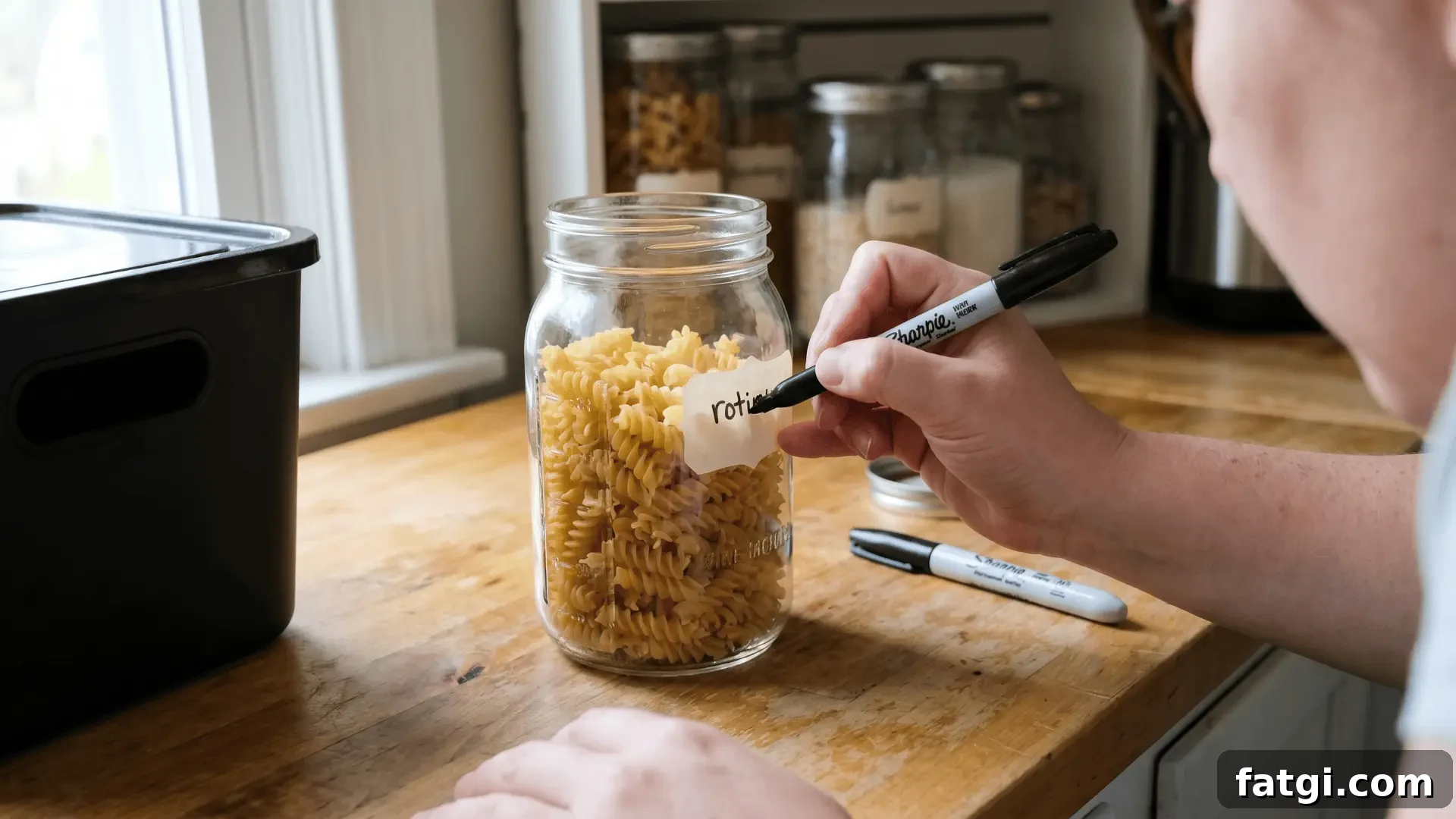
Labels keep the system readable for everyone in the house. Clear labeling prevents mistakes like pouring rice into the flour jar.
Keep It Simple
You don’t need a special label maker. A strip of tape and a Sharpie are effective. Include the item name, expiration date from the original package, and the date you opened it when relevant.
Sharpie Tricks that Last
Use a black marker on clear glass jars and a white oil-based marker for dark or opaque bins. Both wipe clean with rubbing alcohol when you swap contents.
Make Labels Legible
Write big and clear — no cursive. Make labels readable from an arm’s length so anyone packing a lunch or helping in the kitchen can find things quickly.
Step 6: Maintain Your Pantry System
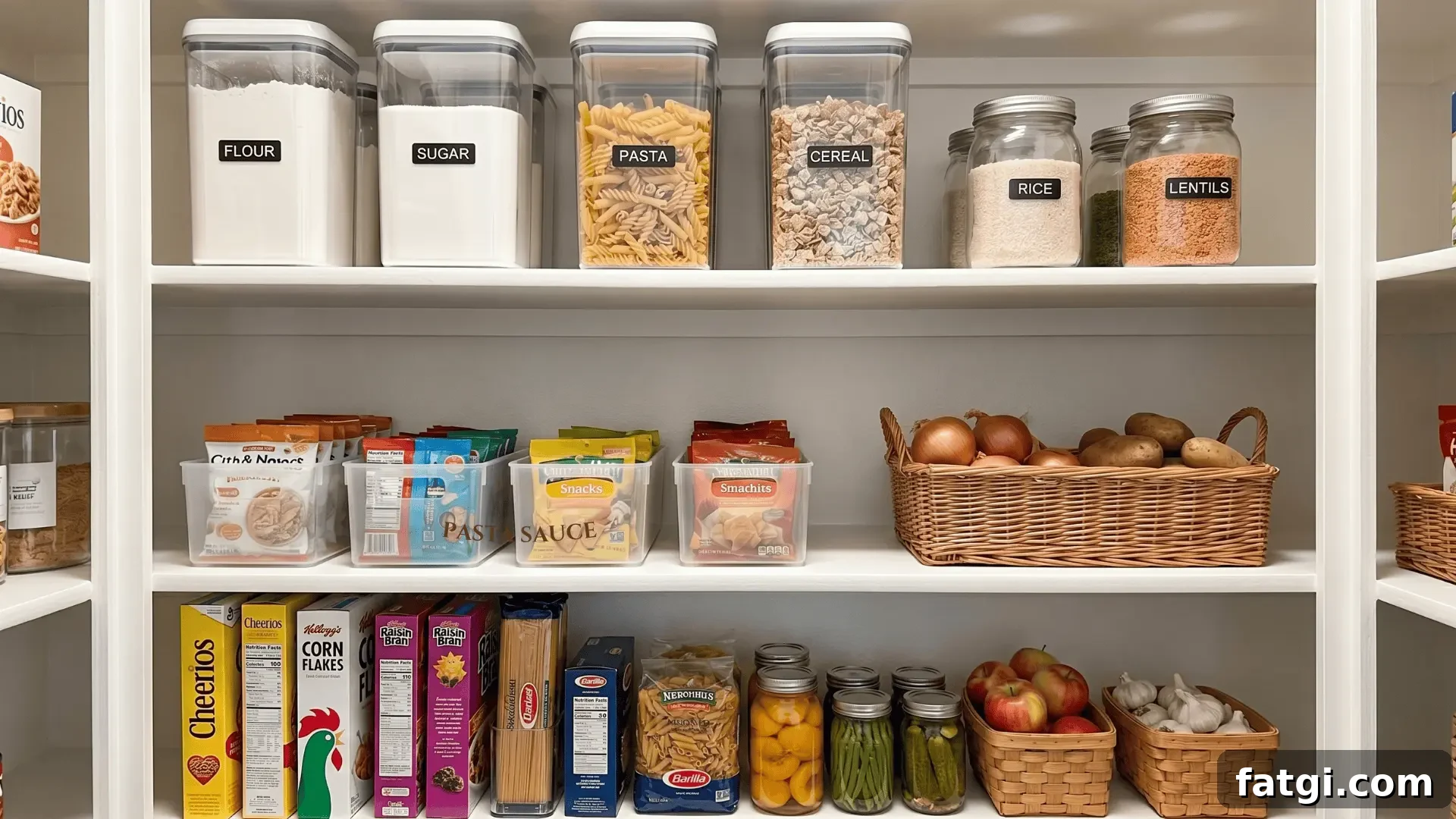
Ten minutes a week keeps most pantries functional. A monthly deeper reset prevents small messes from becoming big ones.
Track What You Have
Before shopping, scan shelves for low items. Keep a simple list you update during the week so you avoid duplicates and unnecessary trips.
- Quick scan before shopping: Take 60 seconds to check each zone.
- Write down low items: Note them as you notice them.
- Avoid duplicate buys: Especially for items with backups already in the pantry.
Weekly Pantry Check
- Put items back: Return anything left out.
- Scan for mess: Check for spills and loose packets.
- Note low items: Add them to your grocery list.
- Rotate stock: Move older items forward to use them first.
Monthly Pantry Reset
- Check expiration dates: Remove expired or stale food.
- Wipe surfaces: Clean shelves, bins, and containers.
- Refresh labels: Replace any faded or inaccurate tags.
- Adjust layout: Tweak zones if your shopping habits change.
Conclusion
Organizing a pantry is about control, not perfection. Set up simple zones, choose containers that match your routine, label clearly, and spend a few minutes each week maintaining the system. Over time you’ll enjoy quicker grocery trips, fewer duplicate purchases, and less food waste. Start with one shelf today — a small change makes the rest easier.
Frequently Asked Questions
What is the First Step to Organizing a Pantry?
Empty the pantry completely, toss expired items, wipe the shelves, and sort remaining items into groups before returning anything.
How Do You Organize a Small Pantry?
Maximize vertical space with risers and door hooks, use stackable or narrow bins, and keep only what you use regularly. Store excess stock elsewhere.
What Should Not Be Stored in A Pantry?
Avoid items that need refrigeration (like soft cheese or eggs), cut produce, or anything that traps moisture or heat.
Should You Decant Food Into Containers?
Decant frequently used staples like flour, rice, and cereal into airtight containers. Skip decanting items you consume within a few days.
How Often Should You Clean out Your Pantry?
Do a quick tidy every week and a deeper clean once a month, checking expiration dates and wiping down surfaces.