How do you pick a good watermelon? Don’t worry—we’ve got you covered with reliable, easy-to-follow tips and tricks to help you choose a ripe, juicy melon every time.
Few things are as satisfying on a hot summer day as a perfectly ripe watermelon. This refreshing fruit is a picnic, barbecue, and beach favorite. With roughly 92% water, watermelon is excellent for staying hydrated during warm months and makes a naturally sweet, cooling snack.
Choosing the best watermelon can feel confusing at first. Supermarket displays and farmers’ markets often present dozens of melons that look similar at a glance. But a few simple techniques can dramatically increase your chances of bringing home a flavorful, sweet watermelon. Read on for the most dependable tips for selecting a great melon.
Ready to become a watermelon-picking pro?
Start with the Appearance
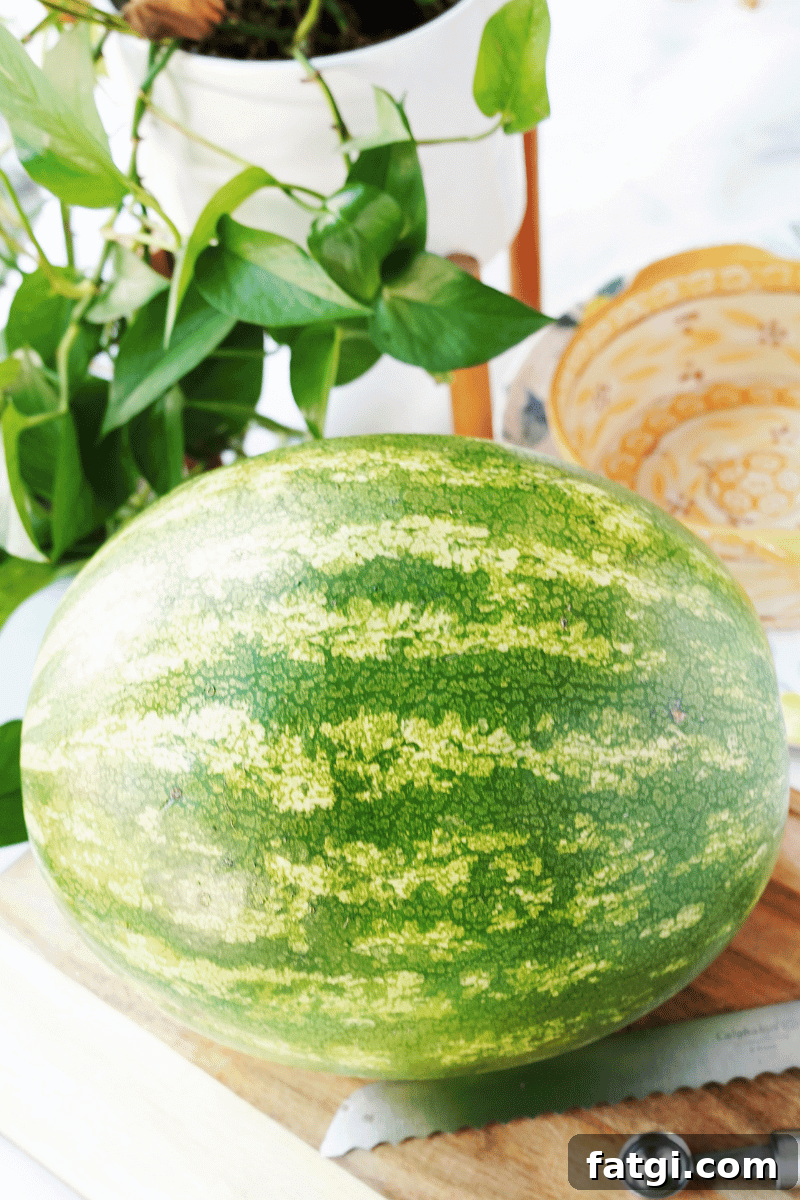
The visual cues of a watermelon reveal much about its ripeness and overall quality. Pay attention to these key aspects:
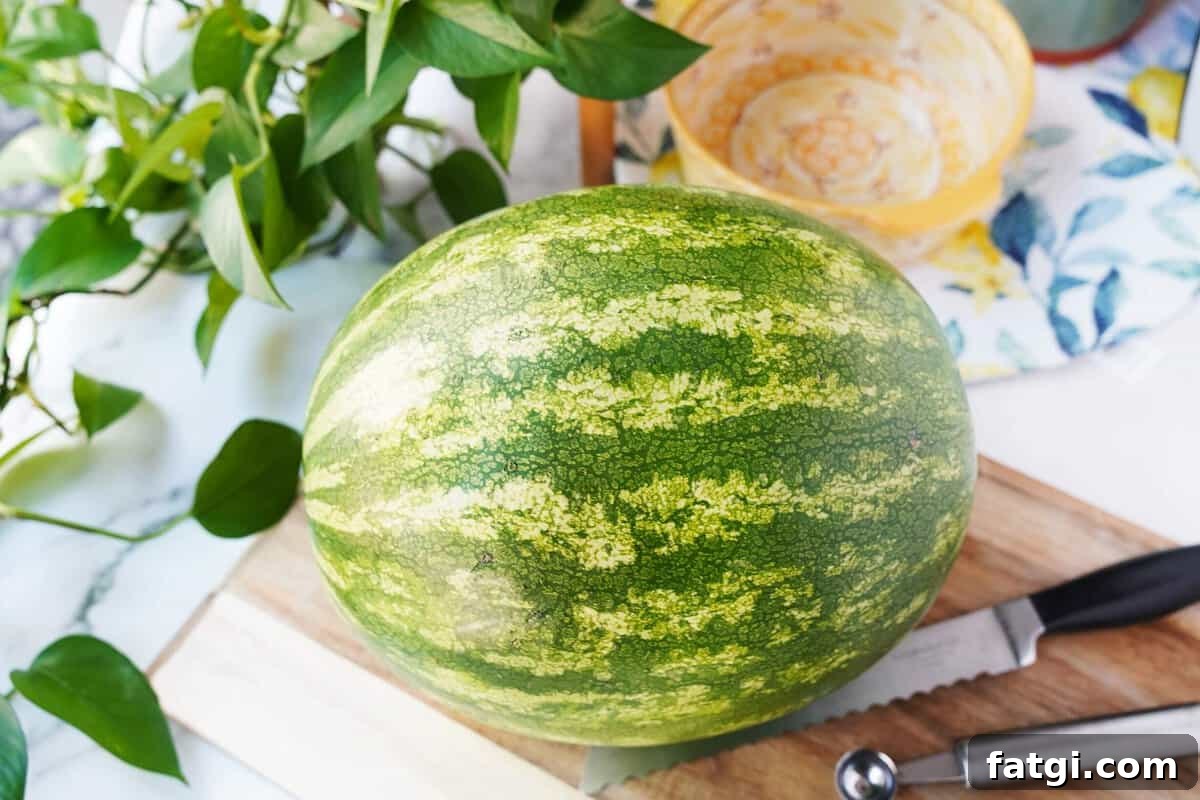
Color: Choose a watermelon with a deep, uniform green rind. A consistent, rich color usually indicates mature fruit. Avoid melons with large dull patches or discoloration beyond the natural ground spot.
Shape: Look for a symmetrical, evenly shaped melon. Irregular bumps, flat sides, or deep scars can suggest uneven growth or internal issues that affect flesh quality.
Size and Weight: Pick a watermelon that feels heavy for its size. Because watermelons are mostly water, heavier melons tend to be juicier and more satisfying. Compare a few similar-sized melons and choose the heaviest.
Can You Thump a Watermelon?
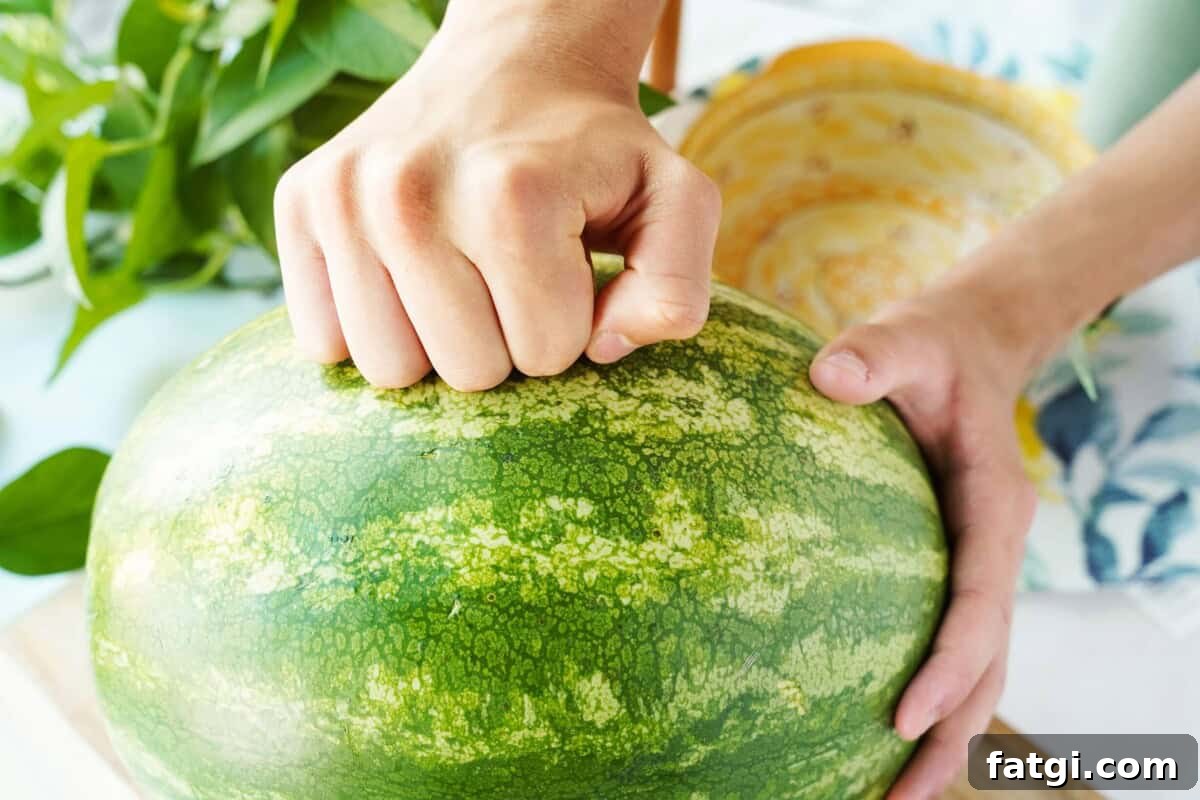
Thumping or tapping a watermelon is a familiar method many people use, but it’s not the most reliable on its own. A better approach is the Look, Lift, Turn Method, which combines appearance, weight, and the ground spot to give you a fuller picture of ripeness.
Look: Inspect the rind for firmness and absence of deep scratches, bruises, or soft spots. A firm, intact rind suggests the fruit inside is healthy.
Lift: Lift several melons of similar size to compare weight. The heaviest melon usually contains the most water and will be juicier.
Turn: Turn the melon and find the underside to examine the ground spot. A properly ripened watermelon will display a creamy yellow or orange ground spot where it rested on the soil while maturing.
Find the Sun Spot
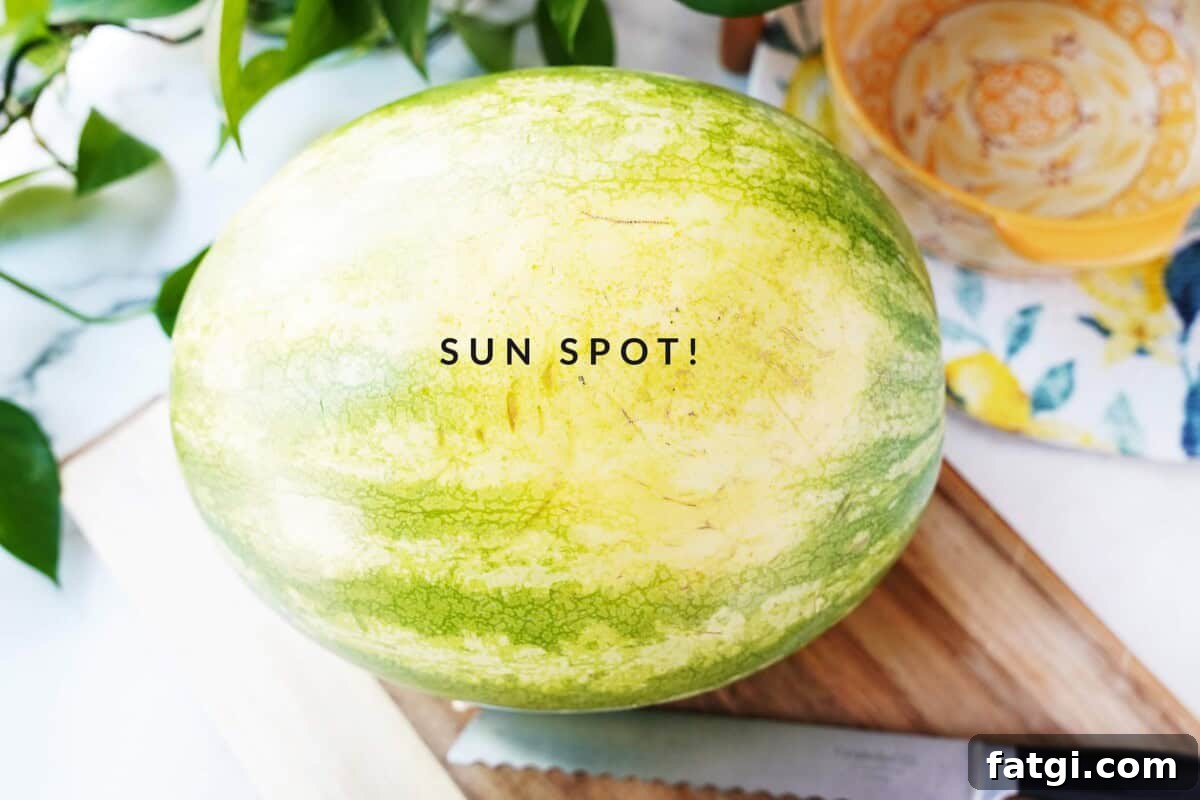
The sun spot—sometimes called the field or belly spot—is a key indicator of ripeness. This is the area that rested on the ground as the melon grew. Inspect this spot carefully:
Creamy Yellow or Orange Spot: A ripe watermelon usually has a creamy yellow or even slightly orange ground spot. That color shows the fruit had enough sun exposure and time on the vine to develop sweetness. If the spot is white or pale green, the melon may not be fully ripe.
How Do You Pick a Good Watermelon?
Combining the Look, Lift, Turn method with a quick visual scan will give you the best odds of picking a juicy, flavorful watermelon. Trust your senses: if the melon looks healthy, feels heavy, and has the right ground spot color, it’s likely ripe and delicious.
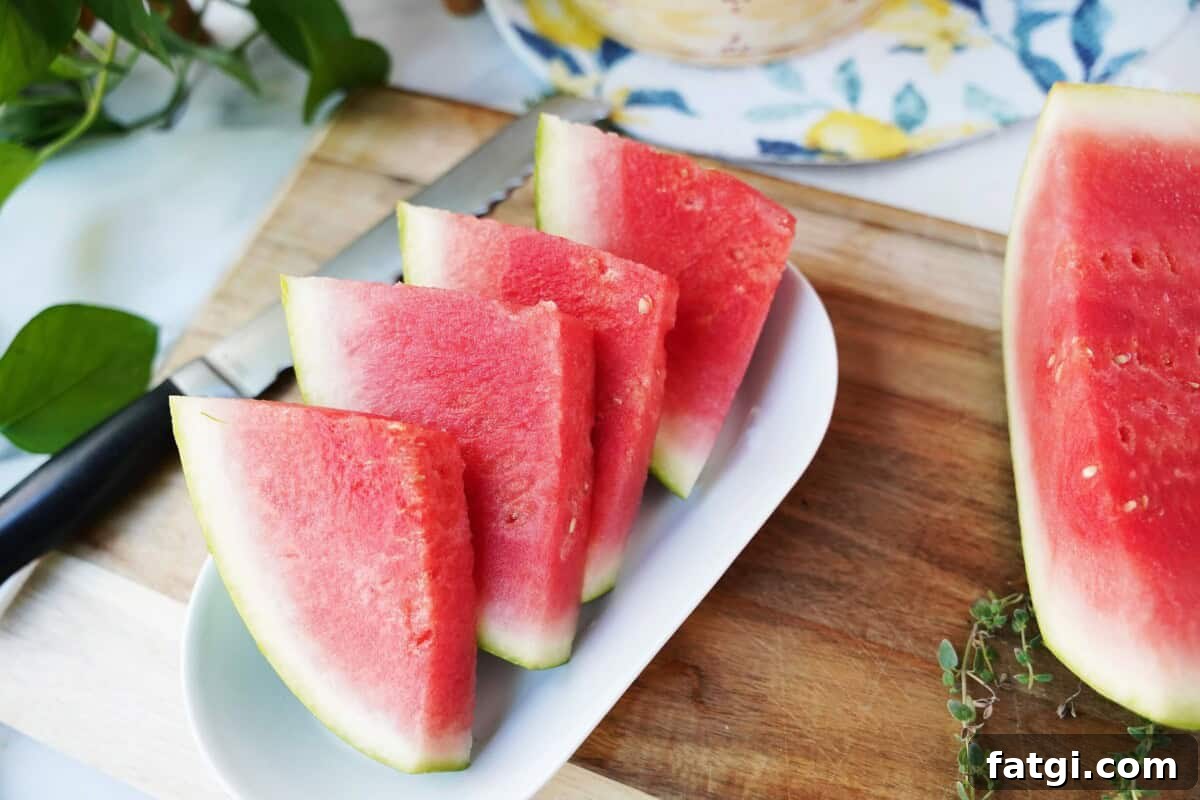
With some practice you’ll quickly learn to spot the telltale signs of a great watermelon. Once you bring it home, slice it open to enjoy the sweet, bright flesh. If it’s slightly underripe, chill and use it in salads or blended beverages; if it’s very ripe, it’s perfect for eating fresh, making fruit salads, or turning into chilled treats.
Enjoy the Whole Watermelon
Did you know you can use nearly all parts of a watermelon? Beyond simple slices and cubes, try grilling thick wedges for a smoky-sweet twist, blending flesh into popsicles or smoothies, or using rind in creative recipes. Many cooks even prepare savory dishes featuring watermelon.
Don’t limit yourself to eating only the red or pink flesh—experiment with recipes that use the rind and seeds for snacks, pickles, or inventive salads. A versatile fruit, watermelon can be transformed into sweet treats, savory pairings, and hydrating beverages.
More Ways to Enjoy Watermelon
- Watermelon and cucumber salad for a crisp, cooling side
- Elote-style watermelon salad with smoky and tangy flavors
- Frozen watermelon slices or blended popsicles for a hydrating snack
- Creative uses for watermelon rind, like quick pickles or fried bites
- Chocolate-covered watermelon bites for a sweet-salty treat
- Watermelon caprese with fresh herbs and a balsamic glaze
Use these tips the next time you shop for watermelon, and you’ll be more confident selecting a ripe, juicy fruit. Happy picking—and enjoy every sweet, refreshing bite!