Freezing fresh raspberries is easy and one of the best ways to preserve the bright flavor and value of raspberries when they’re in season. Once you know how to freeze raspberries properly, the hands-on time is only a few minutes.
Why this method works
- Fast: minimal prep time
- Simple: no special equipment required
- Saves money: preserve berries when they’re cheap and abundant
- Versatile: frozen raspberries are great for smoothies, baking, sauces and more
Step-by-step: How to freeze raspberries
STEP 1. Spread the raspberries on a baking sheet.
Do not wash the berries before freezing. Rinse them with cool water just before you use them. Make sure they are dry before freezing so they don’t stick together.

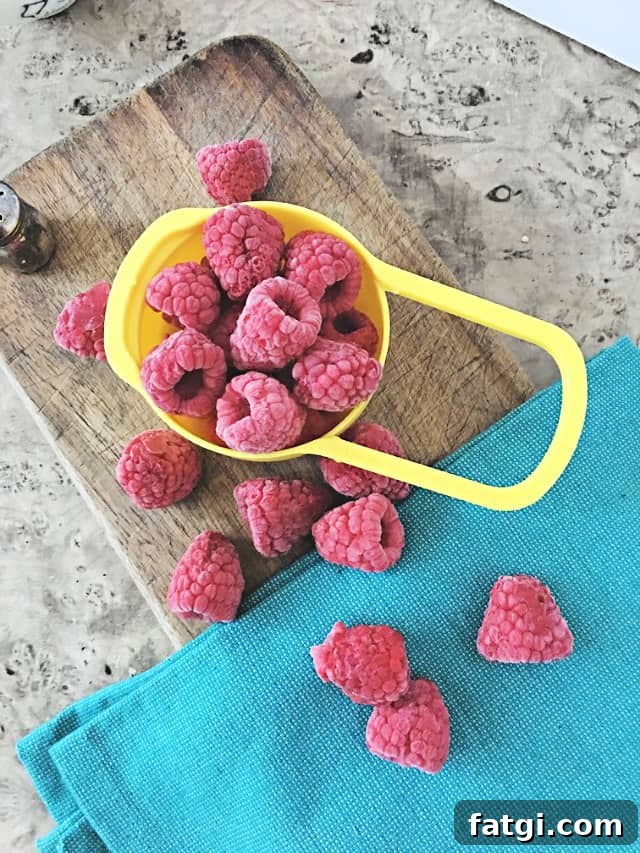
STEP 2. Freeze them on the tray.
Place the baking sheet in the freezer for about 2 hours, or until the berries are firm. This quick freeze keeps individual berries separate so they won’t clump together in the bag.

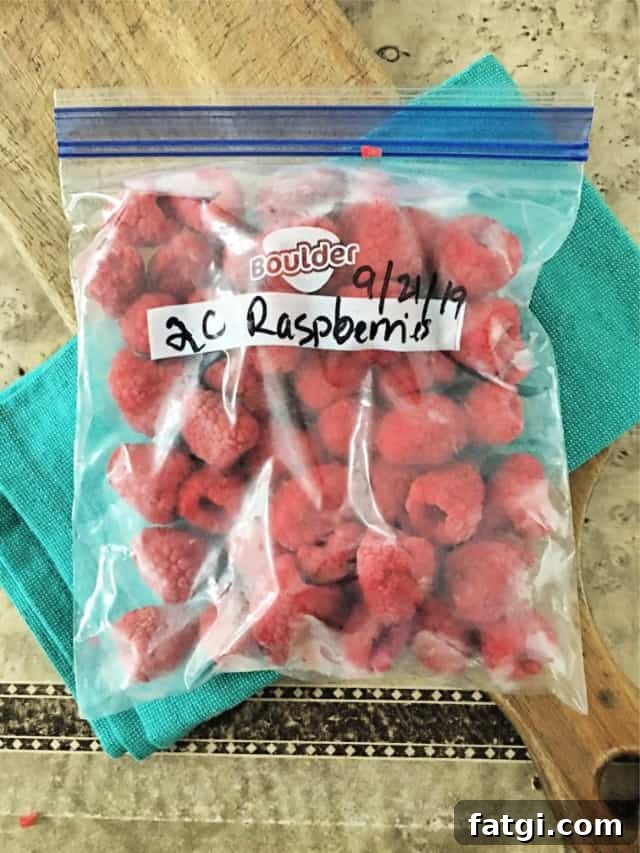
STEP 3. Bag and label.
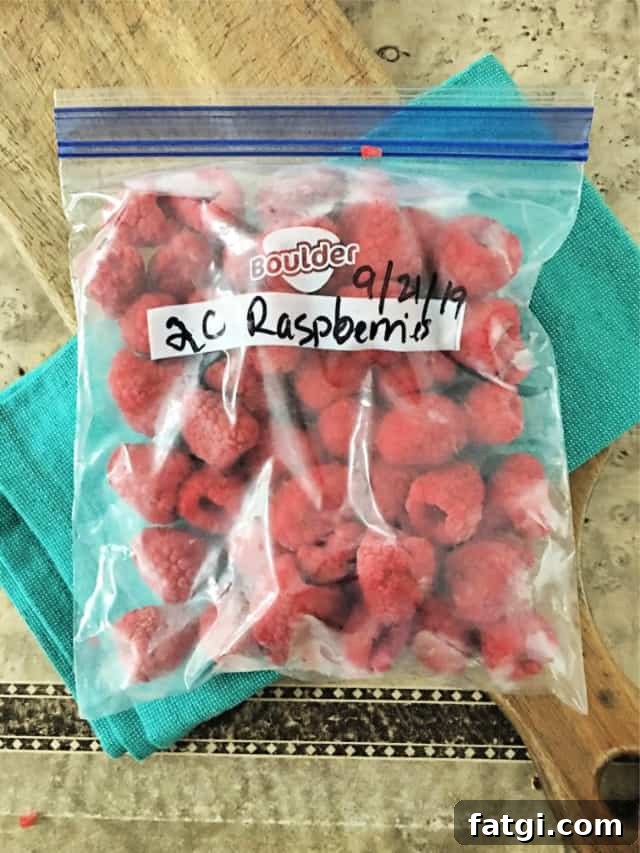
Remove the tray, portion the frozen raspberries into labeled freezer bags, squeeze out as much air as possible, seal, and lay the bags flat in the freezer to save space. Labeling with the date and a suggested use-by date helps you manage your freezer stock.
Do raspberries freeze well?
Yes. Raspberries freeze well and retain their flavor. Texture changes are normal—frozen and thawed berries will be softer than fresh ones—so they are best used in smoothies, sauces, cooked dishes and baked goods rather than as a fresh garnish.
How long do frozen raspberries last?
For best quality, use frozen raspberries within six months to a year. Store them in a standard freezer (0°F / -18°C or colder) and remove as much air from the bag as possible to minimize freezer burn.

Frequently Asked Questions (FAQ)
How do I keep raspberries from getting mushy?
Freezing them individually on a baking sheet so they firm up before bagging prevents large clumps and reduces damage. Even with this method, frozen berries will be softer than fresh after thawing, so plan to use them in smoothies, sauces or baking where texture is less critical.
Do I need to wash raspberries before freezing?
No. It’s best to freeze them unwashed and rinse just before you use them. Washing before freezing can add moisture that causes sticking and ice crystals.
Do frozen raspberries need to be thawed before baking?
Not usually. You can often use frozen raspberries directly in baking or cooking. If a recipe requires thawed fruit, place them in the refrigerator or run cold water over them briefly; expect some liquid to be released.
Can I eat frozen raspberries straight from the freezer?
Yes. Rinse quickly under cool water and enjoy them like tiny fruit popsicles. They make a refreshing, healthy snack.
How do I thaw frozen raspberries?
To thaw quickly, run cold water over them in a colander for a minute or two (if they’re in a sealed bag, open it first). You can also thaw them in the refrigerator overnight. Expect extra liquid; drain if necessary for your recipe.
Can I substitute frozen raspberries for fresh?
Frozen raspberries work well in most cooked or blended applications and smoothies. They are not ideal as fresh garnishes or in fruit salads because thawed berries lose firmness and can look mushy.
How can I tell if frozen raspberries are bad?
- The berries are heavily covered in ice crystals or frost (sign of freezer burn).
- The color is faded and the texture is very dry when thawed.
- They have been stored significantly longer than six months to a year.
- There was a lot of air in the packaging, which often leads to freezer burn.
Tips for best results
Select ripe, unbruised fruit for freezing; the quality you freeze is the quality you’ll use later. Use thick, sealable freezer bags or heavy-duty freezer containers. Remove as much air as possible before sealing. Lay bags flat to freeze so they stack neatly and thaw evenly. Store newer items beneath older ones so you use older items first.
Recipe Card: How to Freeze Raspberries
Ingredients
- 1 lb raspberries (any variety)
Instructions
- Label freezer bags with the contents and date. Optionally add a use-by date about 6 months to 1 year ahead.
- Spread raspberries in a single layer on a baking sheet, ensuring they are not touching as much as possible.
- Place the baking sheet in the freezer for at least 2 hours, or until the berries are firm.
- Transfer the frozen raspberries to labeled freezer bags, portioning as desired.
- Squeeze out as much air as possible, seal the bag, and lay it flat in the freezer.
Notes
- Use heavy-duty freezer bags with a good seal to reduce freezer burn.
- Zipper-style bags are convenient but can fail more often than press-and-seal–type or thicker freezer bags.
- Keep a permanent marker near your freezer or in a kitchen drawer so bags get labeled before filling.
- Flat bags save freezer space and make stacking easier.
- Roll bags to push out air before sealing when possible.
Nutrition (per serving)
Calories: 29 kcal
Fat: 1 g | Sodium: 1 mg | Potassium: 86 mg
Carbohydrates: 7 g (Fiber 4 g, Sugar 3 g) | Protein: 1 g
Vitamin C: 15 mg | Calcium: 14 mg | Iron: 1 mg

Enjoy your raspberries
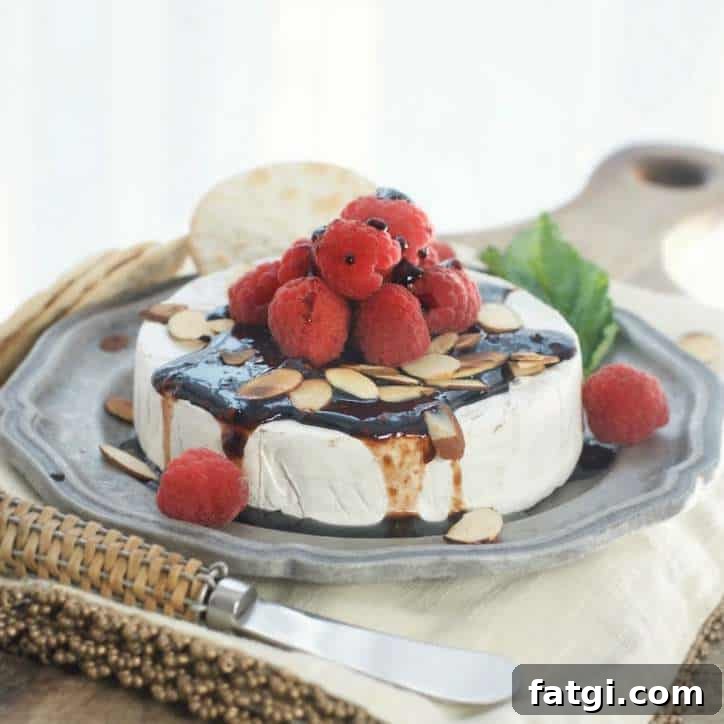
Freezing raspberries is quick, economical and keeps the flavor of summer available year-round. Use them confidently in smoothies, compotes, muffins and sauces, and you’ll appreciate having a ready supply on hand.