
Why I Make Canned Salsa
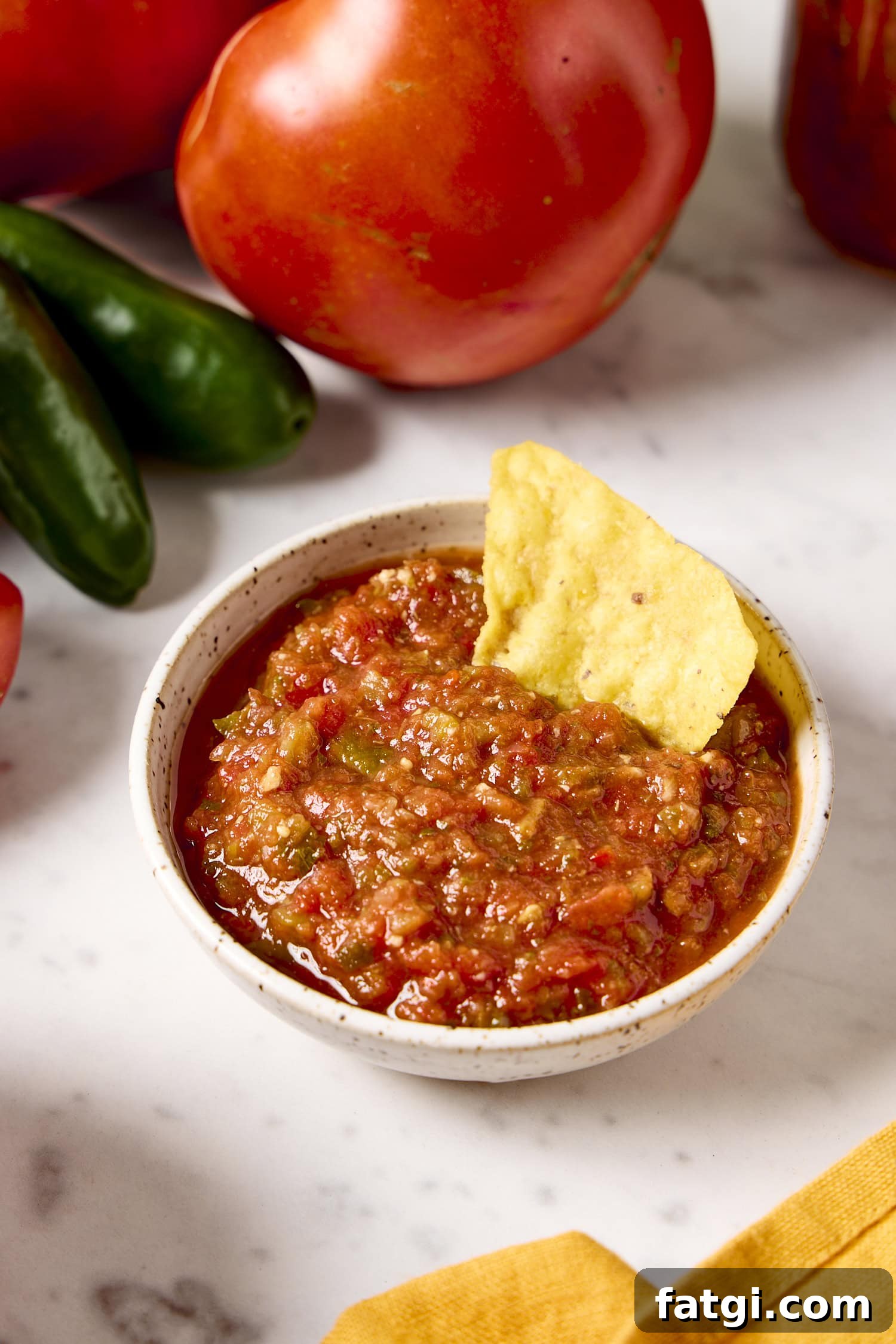
Homemade canned salsa is one of the best ways to capture the flavor of ripe summer tomatoes and enjoy it long after the garden season ends. If you grew up around home-canned food, you know how comforting it is to open a jar in the middle of winter and taste something that still feels fresh, bright, and homemade. This canned salsa recipe is built around that feeling: tomatoes picked at their peak, peppers with deep roasted flavor, and enough acidity to make the salsa safe for water bath canning when the recipe is followed correctly.
Over time, this salsa has become a reliable preserving recipe because it balances flavor, texture, heat, and shelf stability. The roasted peppers and tomatillos give the salsa more depth than a simple raw-vegetable version. The tomatoes provide the familiar base, the tomatillos add tang, and the vinegar supplies the acidity needed for safe canning. The result is a homemade salsa that tastes full and fresh without being watery or flat.
This is the kind of canned salsa that works for everyday meals as well as casual entertaining. Serve it with tortilla chips, spoon it over tacos, add it to nachos, or stir it into chili and soups for a boost of tomato and pepper flavor. When properly processed and sealed, the jars can be stored in a cool, dark place and used throughout the year.
What makes this canned salsa stand out:
- Roasted peppers and tomatillos create a deeper, slightly smoky flavor.
- The spice level can be adjusted by choosing whether to include very hot peppers.
- Properly processed jars are shelf-stable and convenient for pantry storage.
Food safety tip – Home canning should always be done with tested recipes, accurate measurements, and proper processing times. Improper canning can create serious food safety risks, including botulism. If you are new to canning, review trusted canning guidance before beginning and do not change the vinegar amount or processing method unless you are following an approved canning resource.
Canned Salsa Ingredients
This canned homemade salsa uses familiar garden ingredients with a few important additions for flavor, texture, and safe preservation. Each ingredient plays a specific role, so measure carefully and avoid changing the overall balance of vegetables and acid.
- Tomatoes – Tomatoes form the base of the salsa. Peel, seed, and dice them before cooking so the finished salsa has a better texture and does not become too watery.
- Peppers – Roasted peppers add sweetness, body, and a mild smoky note. A mixture of bell peppers and chili peppers gives the salsa a balanced flavor.
- Ghost or habanero peppers – These optional hot peppers add strong heat. Use them only if you enjoy a spicy salsa, and adjust carefully according to your preference.
- Onion and garlic – These ingredients build savory flavor and give the salsa a classic homemade taste.
- Tomatillos – Roasted tomatillos add brightness, acidity, and a pleasant tang that keeps the salsa lively.
- Cilantro, cumin, and salt – Cilantro adds freshness, cumin adds warmth, and salt helps bring all of the flavors together.
- Distilled white vinegar – Vinegar is essential for safe water bath canning. Use 5% distilled white vinegar as listed in the recipe.
- Tomato paste – Tomato paste is optional, but it helps thicken the salsa and adds a subtle concentrated tomato sweetness.
The exact ingredient amounts are listed in the recipe card below.
How to Make Canned Salsa
Making canned salsa is straightforward once the vegetables are prepared. The most important parts are measuring accurately, cooking the salsa until it thickens, filling the jars with the correct headspace, and processing the jars for the proper amount of time.
Cook the salsa – Begin by preparing the tomatoes. Remove the skins and seeds, dice the tomatoes, and pulse them lightly if you prefer a smoother base. Place them in a large, heavy-bottomed stockpot. Roast the peppers and tomatillos until softened and lightly charred, then chop or pulse them with the garlic until chunky. Add the roasted vegetables, onion, cilantro, optional hot peppers, vinegar, cumin, and salt to the pot. Bring the mixture to a boil, then lower the heat and simmer for 25 to 40 minutes, stirring regularly so the salsa does not stick. If you want a thicker salsa, stir in tomato paste and cook for 5 more minutes.
Add to the jars – Ladle the hot salsa into sterilized pint jars, leaving ½ inch of headspace. Wipe each jar rim with a clean, damp towel so the lids can seal properly. Add the lids and rings, tightening the rings only until fingertip-tight.
Water bath – Process the filled jars in a boiling water bath for 15 minutes if you are at 0 to 1,000 feet elevation. Adjust the processing time for higher elevations as shown in the chart below. After processing, carefully remove the jars and let them cool undisturbed for 12 to 24 hours. Check the seals before storing.
Times & Altitude
Processing time changes with elevation. The times below apply to pint jars. If you live above 1,000 feet, increase the processing time according to the chart so the salsa is safely preserved.
| Elevation | 0 to 1,000 ft | 1,001 to 6,000 ft | 6,001 ft + |
|---|---|---|---|
| Time (for pints) |
15 minutes | 20 minutes | 25 minutes |
Frequently Asked Questions
Roasting brings out richer flavor and a gentle smoky quality. It also softens the vegetables, which helps them blend into the salsa more naturally.
Yes. Removing the skins and seeds improves the texture and helps prevent the salsa from becoming watery. After peeling and seeding, the tomatoes can be diced or lightly pulsed for the consistency you prefer.
Green tomatoes can be used in place of tomatillos, but the flavor and acidity will change slightly. Keep the total volume the same for safety.
No. Use the vinegar exactly as listed in the recipe to maintain the correct acidity for safe preservation.
This recipe is written for water bath canning because it includes the required amount of vinegar. If you choose to pressure can salsa, follow appropriate pressure canning guidance and processing times for salsa.
Follow These Tips
Serving
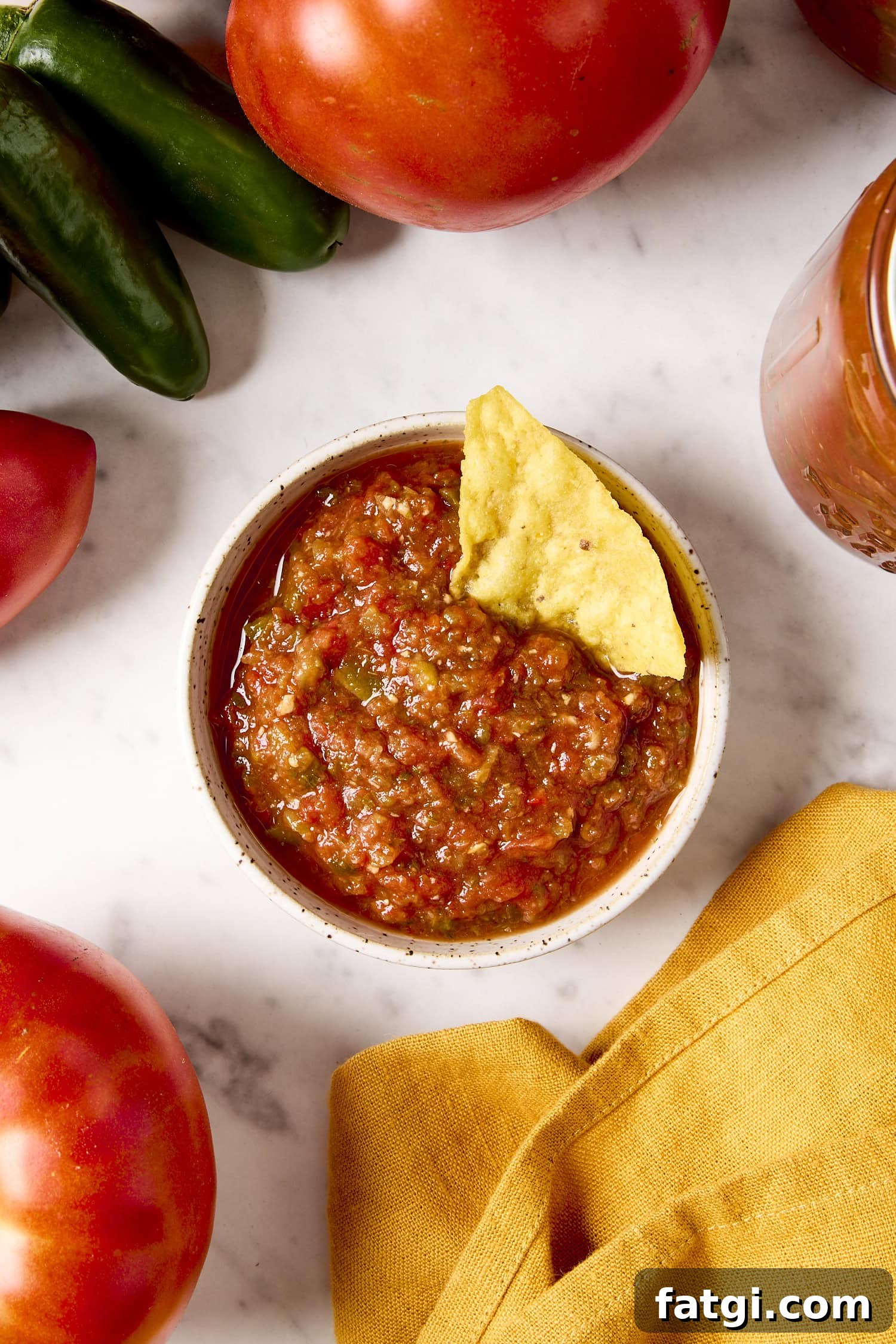
Serve this homemade canned salsa with tortilla chips, tacos, nachos, grilled meats, eggs, soups, or chili. It has enough flavor to stand on its own as a dip, but it is also useful as a pantry ingredient when you want to add tomato, pepper, and roasted vegetable flavor to a meal quickly.
Storage
Refrigerate – Once a jar is opened, store it in the refrigerator and use it within 2 weeks.
Freeze – Freezing is not recommended for this canned salsa because the texture can become watery and soft.
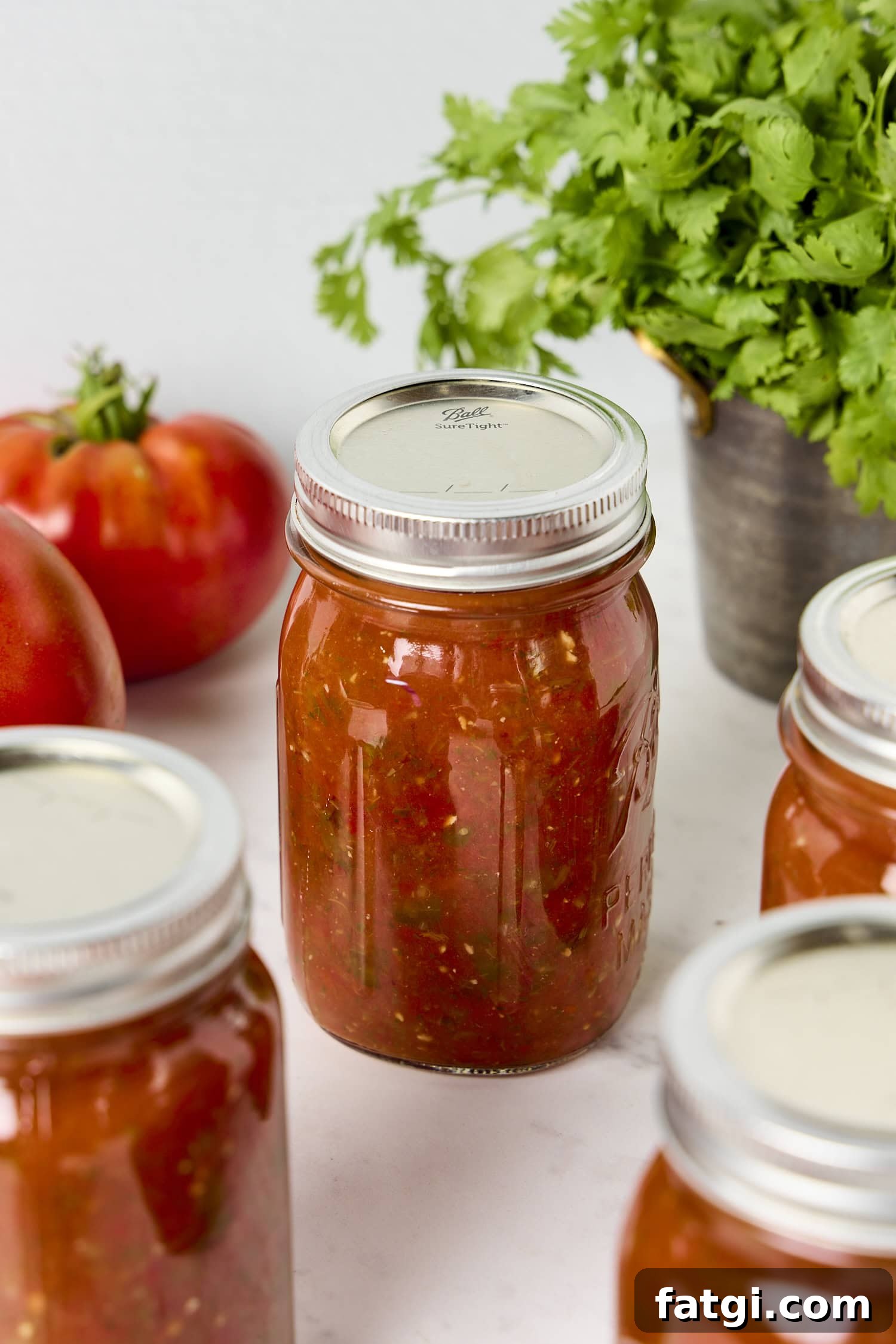
Shelf life – Properly sealed jars can be stored for 12 to 18 months in a cool, dark place such as a pantry, cellar, or basement.
More Preserving Recipes
- French-style cherry jam
- Hot pepper jelly
- Peach chutney
- Strawberry basil preserves
- Peach jalapeño jam
- Canned diced tomatoes
- Review a canning basics guide if you are new to home preserving.
Have I Convinced You to Make This Recipe?
If you enjoy preserving fresh garden produce, this canned homemade salsa is a practical and flavorful recipe to add to your yearly canning list. It uses simple ingredients, creates a reliable pantry staple, and brings summer tomato flavor to meals throughout the colder months.
Canned Homemade Salsa
Equipment
-
1 multi-use water bath canner
-
1 canning funnel
-
1 jar lifter
-
12 regular-mouth lids and rings
-
12 pint jars
Ingredients
- 16 cups peeled, seeded, and diced tomatoes
- 2 cups roasted and diced peppers
- 1-2 hot ghost or habanero peppers, optional
- 1 ½ cups chopped onion, about 2 medium onions
- 2 lbs tomatillos husks removed, roasted, and sliced
- 1 cup fresh cilantro chopped
- 6 cloves garlic
- 1 ¼ cups distilled white vinegar, 5%
- 2 tsp cumin
- 2 tsp kosher salt
- 12 oz tomato paste, optional
Instructions
-
Cook the salsa: In a large heavy-bottomed stockpot, combine the tomatoes, roasted peppers, optional hot peppers, onion, tomatillos, cilantro, garlic, vinegar, cumin, and salt. Stir well and bring the mixture to a boil. Reduce the heat to a simmer and cook for 25 to 40 minutes, stirring occasionally so the salsa does not stick to the bottom of the pot. When the salsa has reduced slightly and thickened, stir in up to 12 ounces of tomato paste if desired. Cook for 5 more minutes to fully incorporate the paste.
-
Add to jars: Remove the salsa from the heat. Ladle it into prepared, sterilized pint jars, leaving ½ inch headspace. Wipe the rims clean, then apply lids and rings.
-
Water bath: Place the jars in a prepared boiling water bath and process for 15 minutes, adjusting the time for altitude as needed. Remove the jars carefully and cool on a rack for at least 12 hours. Check the seals before storing in a cool, dark place for 12 to 18 months.
Notes
Nutrition
Calories: 3 kcal
Nutrition information is automatically calculated and should be used only as an approximation.

Did you make this? Leave a comment below.