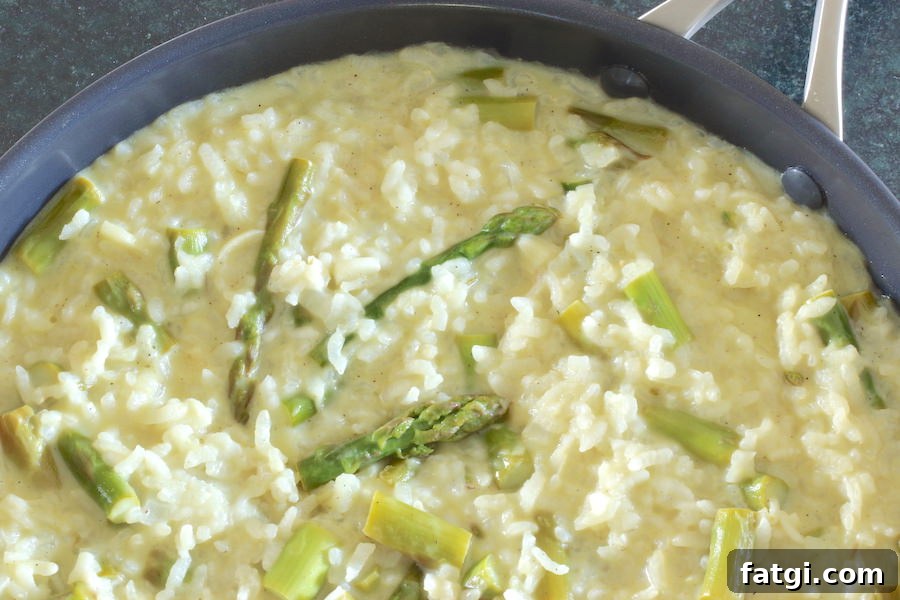
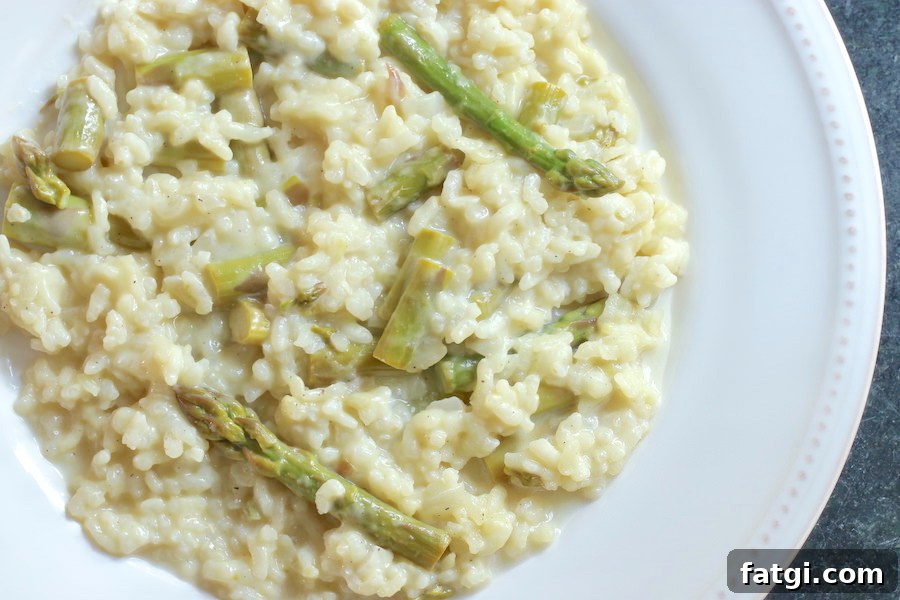
Every spring our garden yields a large crop of asparagus, and I’m always eager to try new ways to prepare it. This week my daughter suggested a simple vegan asparagus risotto, and it turned out to be a brilliant idea.
For this recipe we adapted the no-stir risotto technique developed by chef J. Kenji López-Alt. I previously used this method for a mushroom risotto in my cookbook, and applying the same approach to asparagus made the process fast and reliable while still producing a creamy, restaurant-quality result.
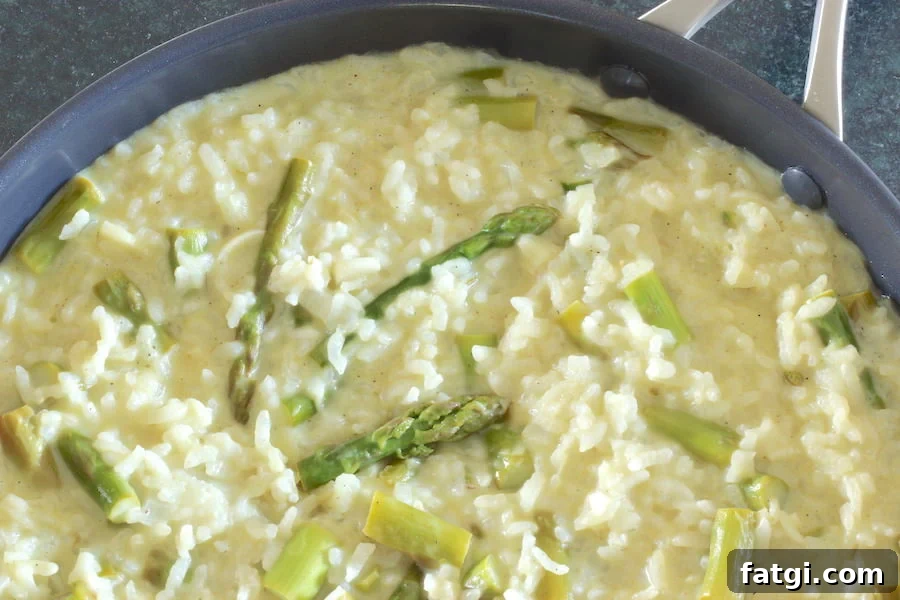
Traditional risotto instructions often insist on constant stirring and adding hot broth a little at a time. López-Alt’s insight simplifies that: the creaminess of risotto comes from amylopectin, a starch released by certain rice varieties when submerged in liquid. You don’t need to stir continuously or use heated broth to extract that starch. The goal is a saucy, flowing risotto with rice that remains al dente. Best rice varieties for this method include carnaroli, vialone nano, bomba, and Arborio.
From chronically ill to vibrantly well: recovery through a plant-based diet
Mead Surprise
I planned to add white wine to deglaze the rice, but I accidentally opened a bottle of homemade mead that a friend had given us. It worked beautifully, giving the risotto a subtle honeyed note. If you prefer, use white wine, or omit alcohol entirely and replace with extra vegetable broth.
Mead is an alcoholic beverage made by fermenting honey with water. It’s sometimes called honey wine and can range from dry to sweet. Alcohol content varies depending on fermentation.
Method Overview
- Whisk rice with broth to release starch.
- Strain the rice, reserving the liquid.
- Sauté onion, garlic, and asparagus pieces.
- Toast the drained rice in the pan, deglaze with mead or wine.
- Add the reserved liquid and simmer covered for about 15 minutes.
- Finish with lemon juice and coconut cream, adjust seasoning, and serve.
Easy Vegan Asparagus Risotto
Course: main course, side dish
Cuisine: Italian
Keywords: vegan, plant based, gluten-free, dairy-free, asparagus, risotto, Arborio
Servings: 4 main course servings
Calories: 323 kcal (per serving)
Author: Judy DeLorenzo
Equipment
- 12-inch skillet with lid
- 2 large bowls
- Fine-mesh strainer
Ingredients
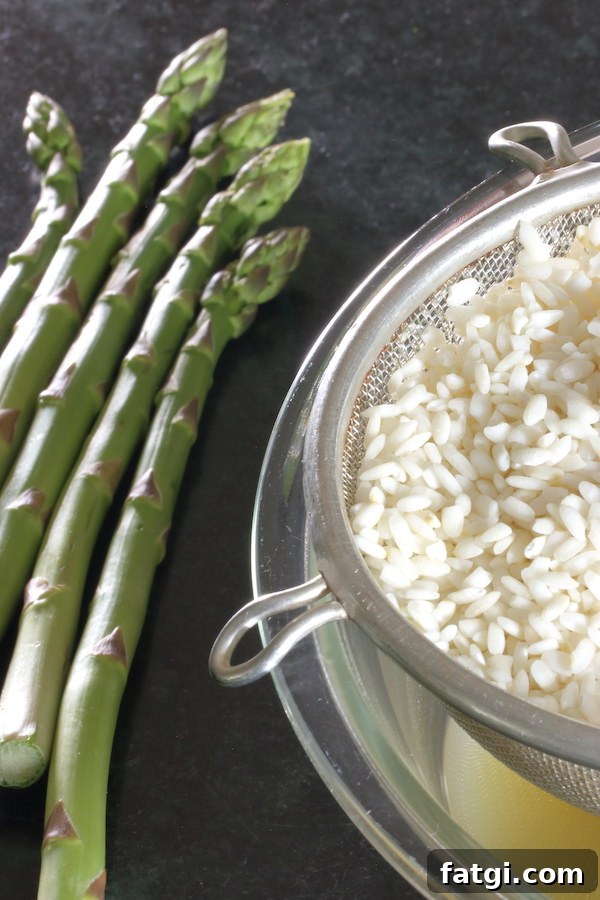
- 1 1/2 cups Arborio rice (or other short-grain risotto rice)
- 4 cups vegetable broth (use asparagus-end broth if you have it)
- 1 pound asparagus
- 2 tablespoons olive oil, divided
- 1/4 cup diced onion
- 2 garlic cloves, diced small
- 1/4 teaspoon freshly ground black pepper
- 1 teaspoon Himalayan sea salt (or to taste)
- 3/4 cup mead (optional) — substitute white wine or an additional 3/4 cup vegetable broth
- Juice of 1 lemon
- 1 (5.4-ounce) can unsweetened coconut cream
- 1/4 cup chopped parsley
Instructions
- Combine the rice and the 4 cups of vegetable broth in a large bowl. Whisk briefly to help release the rice starch. Set a fine-mesh strainer over another bowl and strain the rice, reserving the liquid. Shake the strainer occasionally so all the liquid drains into the bowl.
- Prepare the asparagus: discard or save the tough ends for broth. Cut about 2 inches from each tip and set the tips aside. Cut the remaining spears into 1-inch pieces.
- Heat 1 tablespoon of olive oil in a 12-inch skillet over medium-high heat. Add the diced onion and cook, stirring often, about 5 minutes until softened.
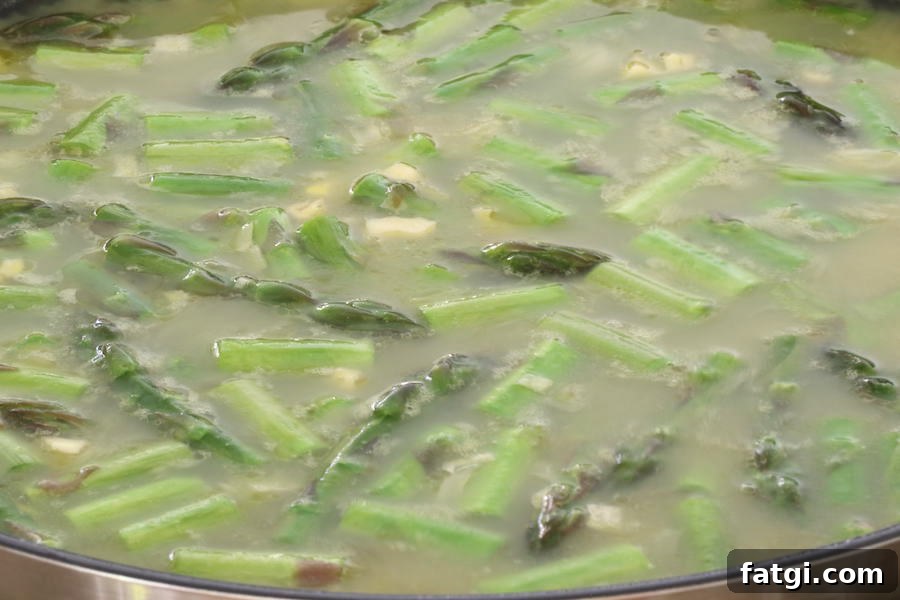
- Add the asparagus pieces (both tips and 1-inch pieces), garlic, salt, and pepper to the pan. Cook, stirring frequently, for about 2 minutes until bright and slightly tender. Transfer the vegetables to a bowl and set aside.
- Return the skillet to medium-high heat and add the remaining tablespoon of oil. Add the drained rice and toast, stirring and tossing, for about 4 minutes until the rice becomes fragrant and begins to turn a light golden color. Raise the heat slightly if needed so the rice gently sizzles.
- Remove the pan from the heat for a minute or two; then slowly pour in the mead or wine and scrape the bottom of the skillet to release any browned bits. Simmer briefly until most of the liquid has evaporated, about 2 minutes.
- Pour the reserved rice-broth liquid back into the pan and return the cooked vegetables. Stir once, then bring the pan to a lively simmer. Spread the rice evenly in the pan, cover with a lid, and reduce the heat to maintain a gentle simmer.
- Cook undisturbed for 15 minutes, stirring once about halfway through. After stirring, quickly shake the pan so the rice redistributes evenly and recover immediately to retain heat.
- Uncover and add the lemon juice and coconut cream. Cook uncovered, stirring, until the rice reaches an al dente texture and the risotto is creamy and flowing rather than sticky and clumpy. Add a splash more broth or water if needed to loosen the texture. Taste and adjust seasoning.
- Serve warm on plates and garnish with chopped parsley. For non‑vegans, grated pecorino Romano or Parmesan can be added to individual servings.
Notes
Omnivore variation: Stir grated pecorino Romano or Parmesan into individual portions for a non-vegan finish.
Leftover risotto: Leftover risotto can be shaped into patties and pan-fried for a crispy treat. Heat a neutral oil (refined avocado oil works well) in a nonstick or seasoned cast-iron skillet over medium-high heat. When the oil sizzles, fry patties until both sides are golden and crisp.
Nutrition (per serving)
Calories: 323 kcal | Carbohydrates: 35 g | Protein: 6 g | Fat: 15 g | Saturated fat: 7 g | Sodium: 351 mg | Fiber: 5 g | Vitamin A and C present from asparagus and lemon
If you have a surplus of asparagus, consider making asparagus pickles or preserving the ends for a flavorful vegetable broth.