Our Love for Rhubarb
Mid-May always feels like the start of a brighter baking season. The days are longer, the weather in the UK begins to warm up, and fresh seasonal ingredients suddenly feel more inviting. After months of cozy winter recipes, rich desserts, soups, and warming spices, spring and early summer bring a welcome change: lighter flavors, fresh fruit, and colorful bakes that taste as cheerful as they look.
Rhubarb is one of the ingredients we look forward to most at this time of year. Its sharp, tangy flavor works beautifully in sweet baking, especially when softened with sugar and a little vanilla. It brings a lovely balance to buttery pastry, making desserts feel fresh rather than overly sweet. This rabarbersnitter recipe is exactly the kind of bake that suits sunny days, afternoon coffee, picnics, and simple weekend baking.
Today’s Recipe
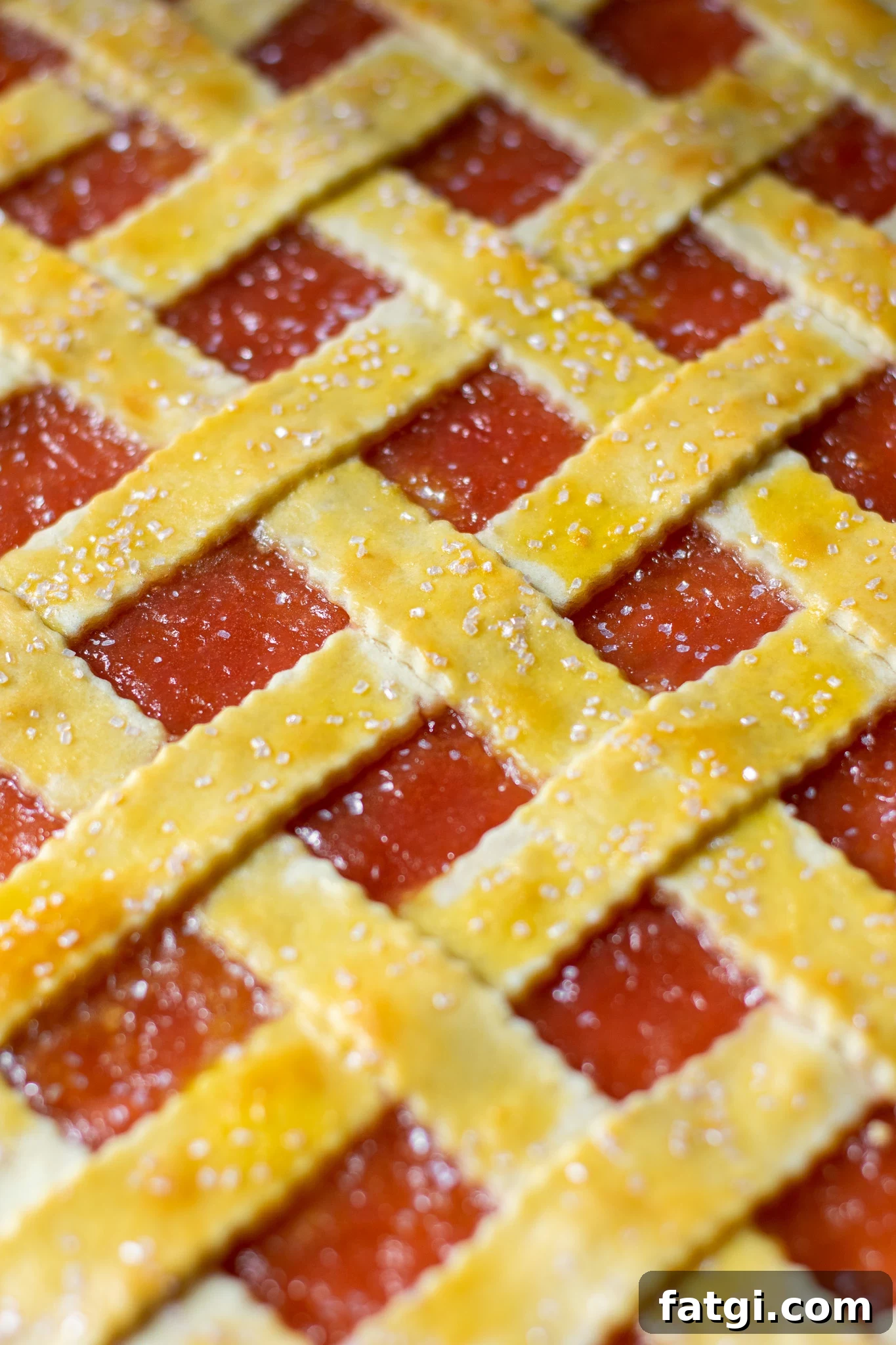
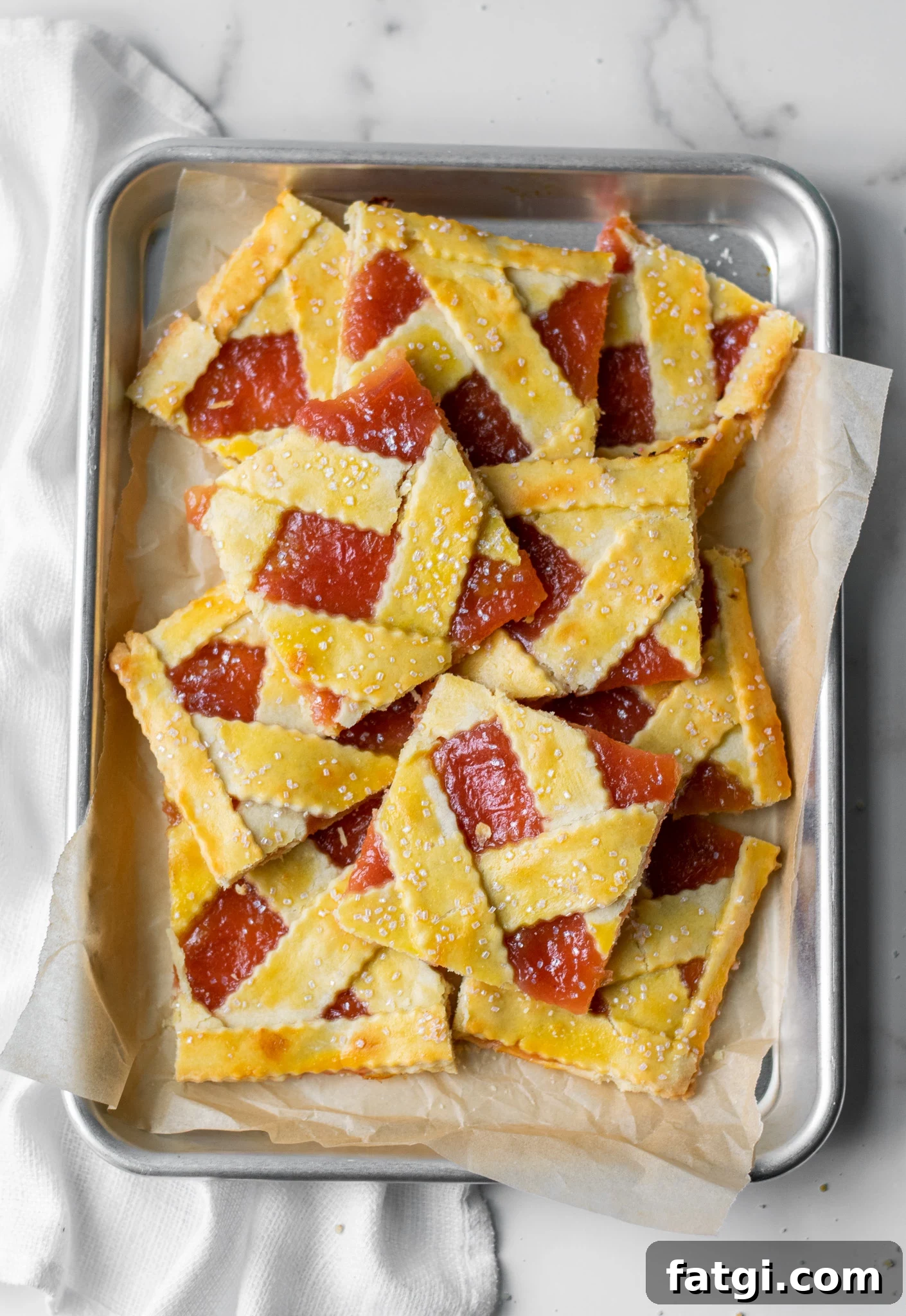
Today we are making rabarbersnitter, or Danish rhubarb bars. The idea is inspired by the much-loved Danish pastry known as hindbærsnitter, which means raspberry slices. In this style of bake, tender shortcrust pastry is paired with a fruit filling, then cut into neat slices. The fruit name is placed before “snitter,” so raspberry slices become hindbærsnitter, while rhubarb slices become rabarbersnitter.
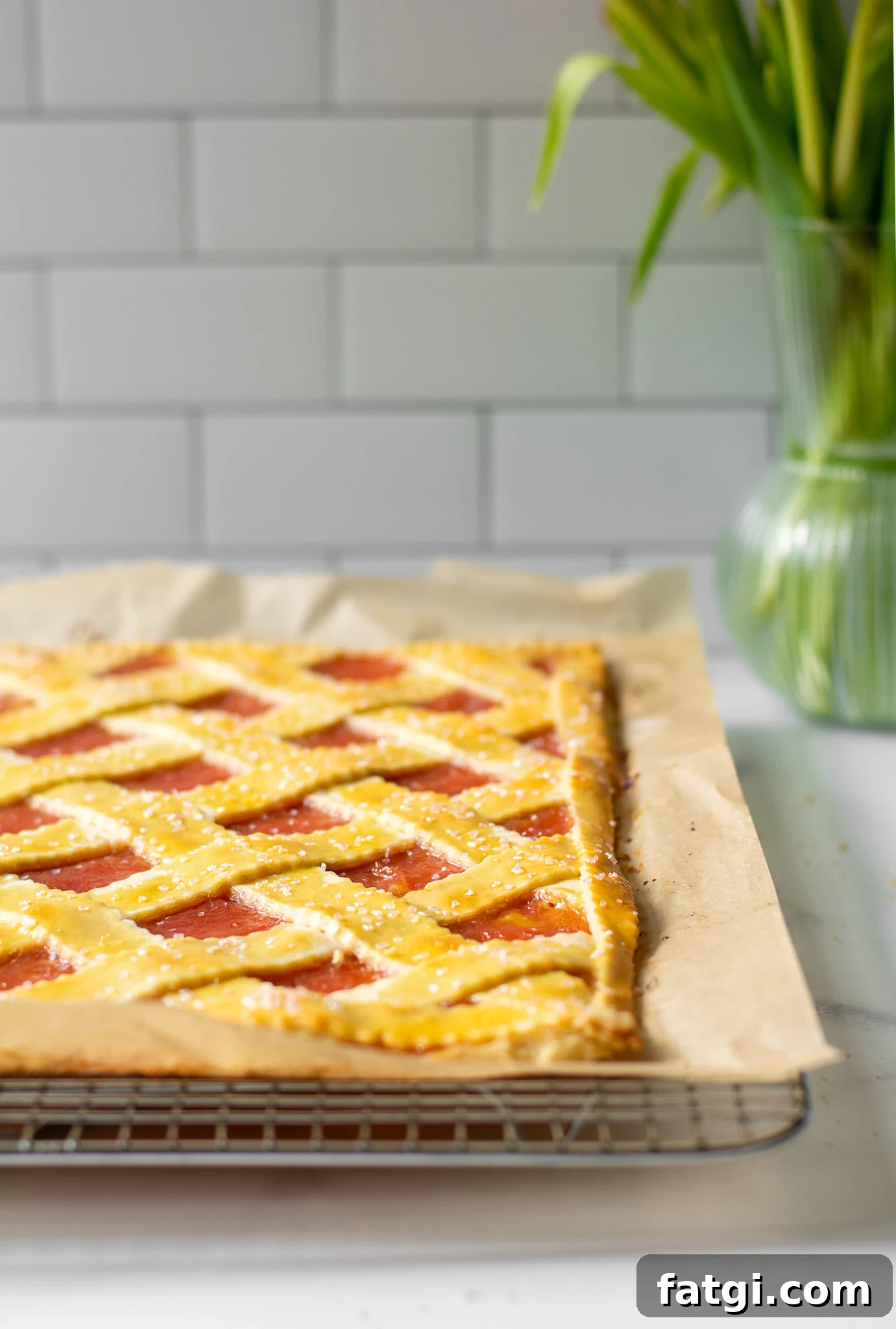
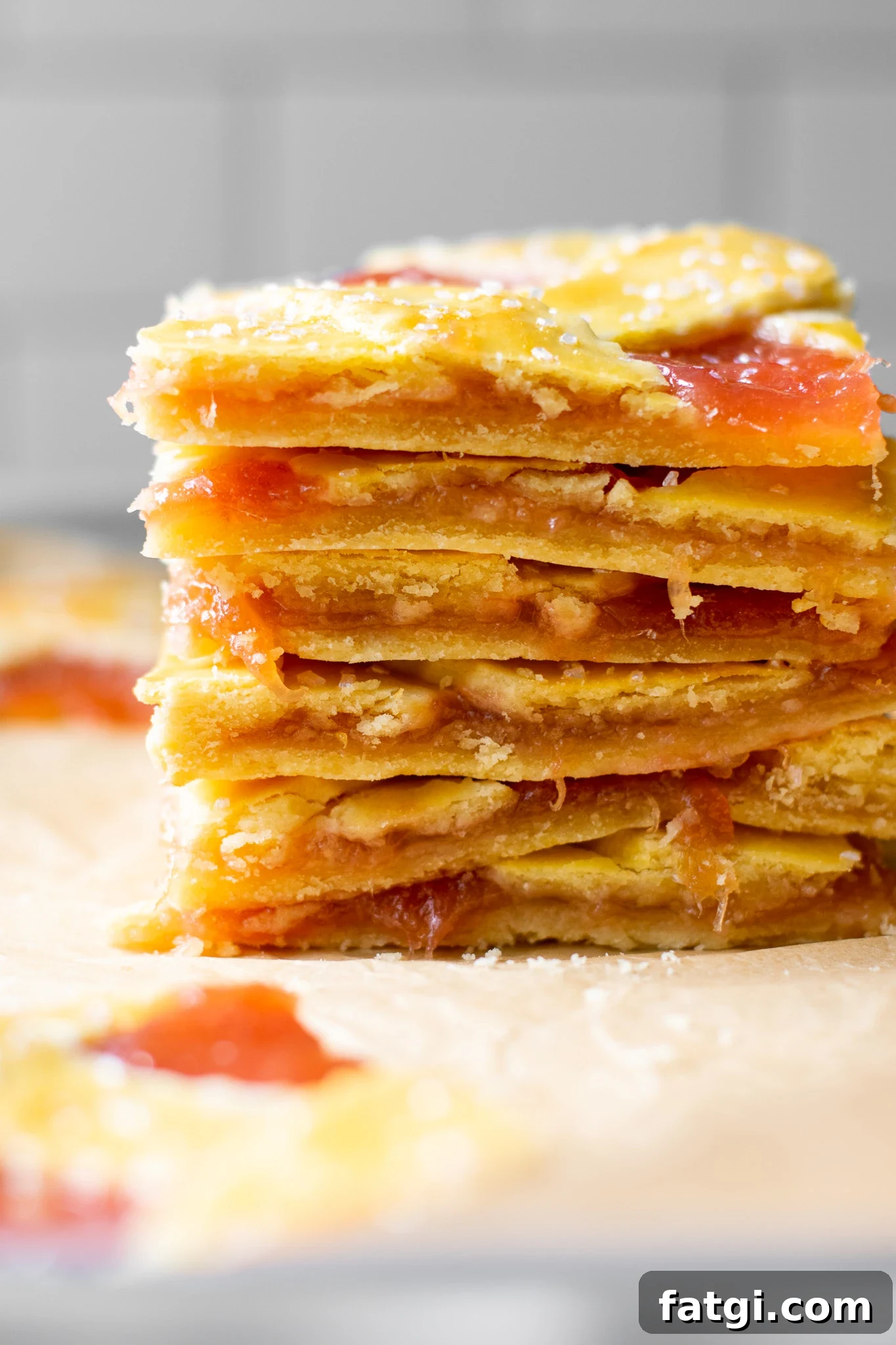
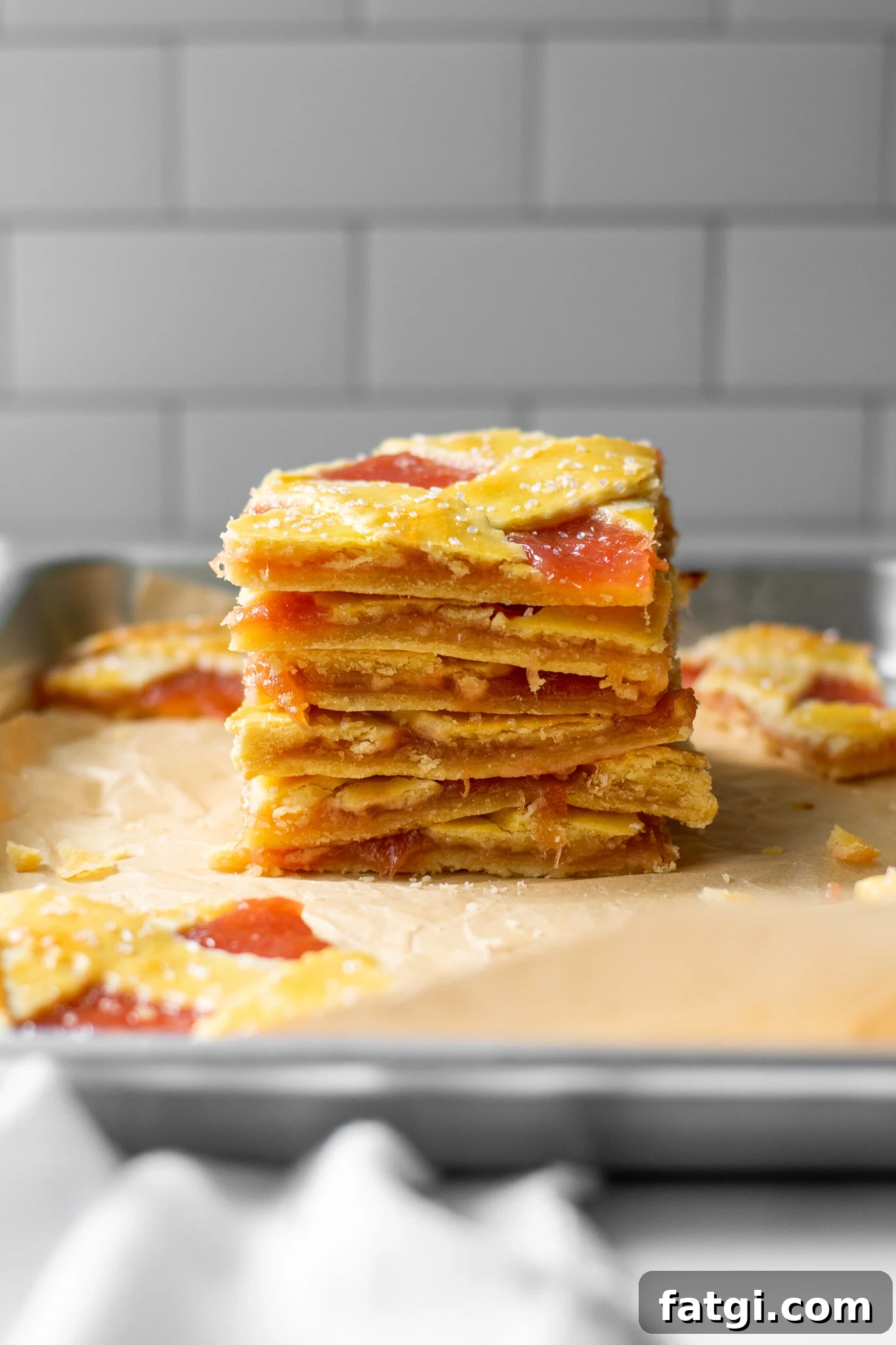
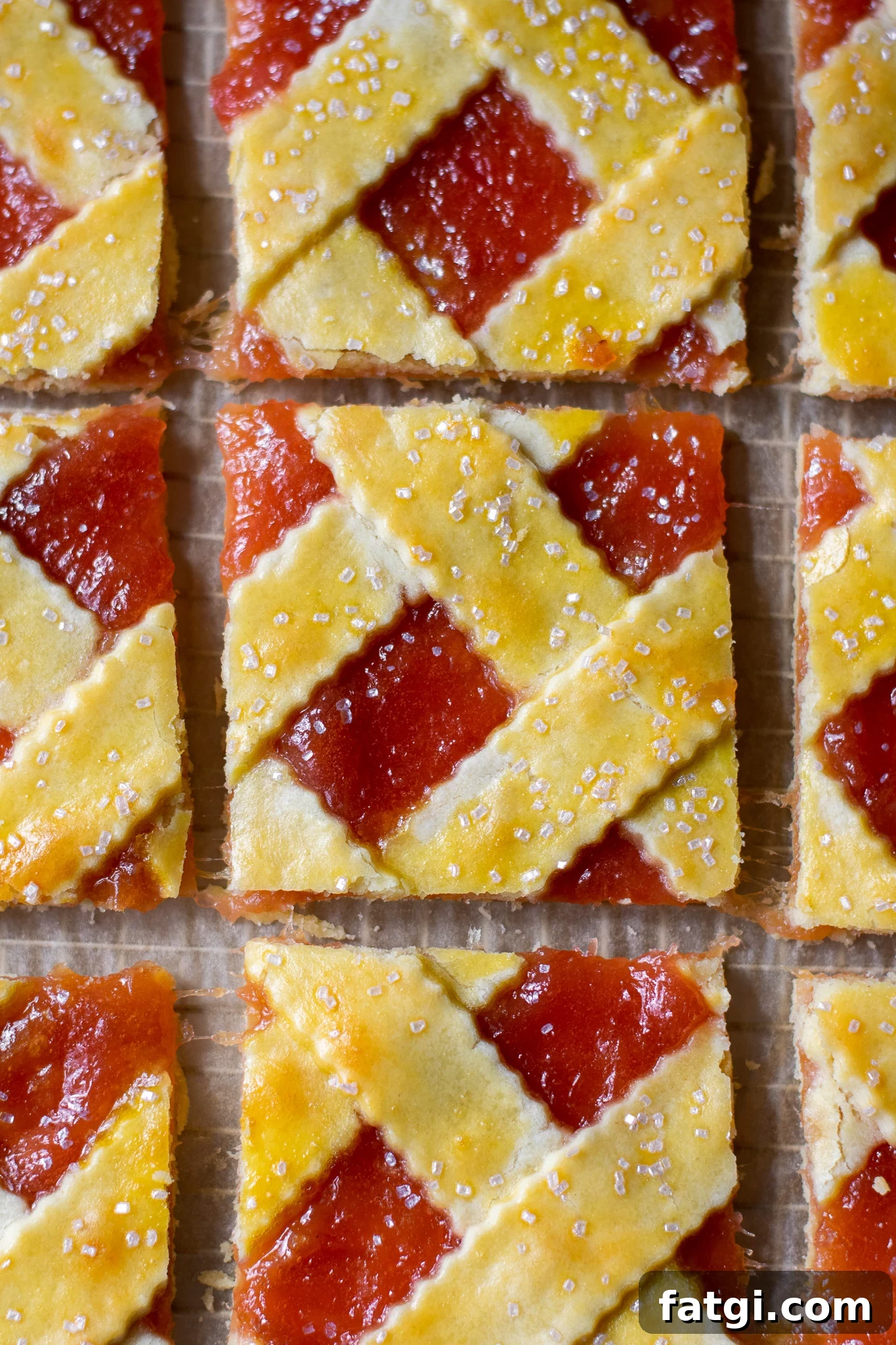
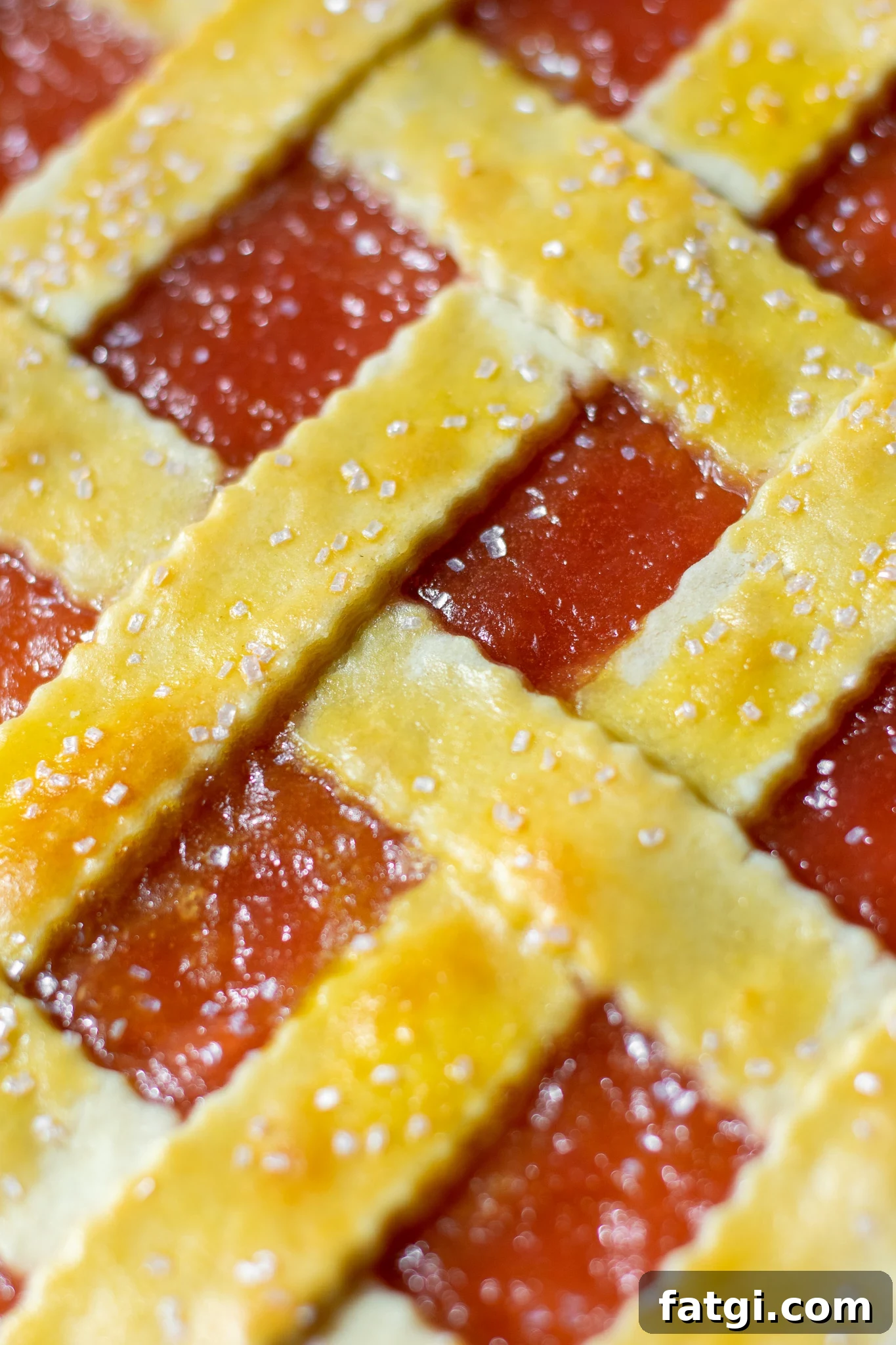
This version uses homemade rhubarb filling and a buttery shortcrust pastry with a decorative lattice top. The rhubarb cooks down into a thick, jam-like layer that is tart, fragrant, and gently sweet. The pastry is crisp at the edges, tender in the middle, and rich enough to balance the sharp fruit. It is a wonderful spring or summer dessert, but it also works beautifully as a sweet snack with coffee or tea.
How to Make Rabarbersnitter
These Danish rhubarb bars look impressive, but the process is straightforward. Start with the filling, because it needs time to cool and thicken before it is spread over the pastry. Rhubarb, sugar, vanilla, and a pinch of salt are cooked until the mixture becomes soft and jammy. While it cools, prepare the pastry dough.
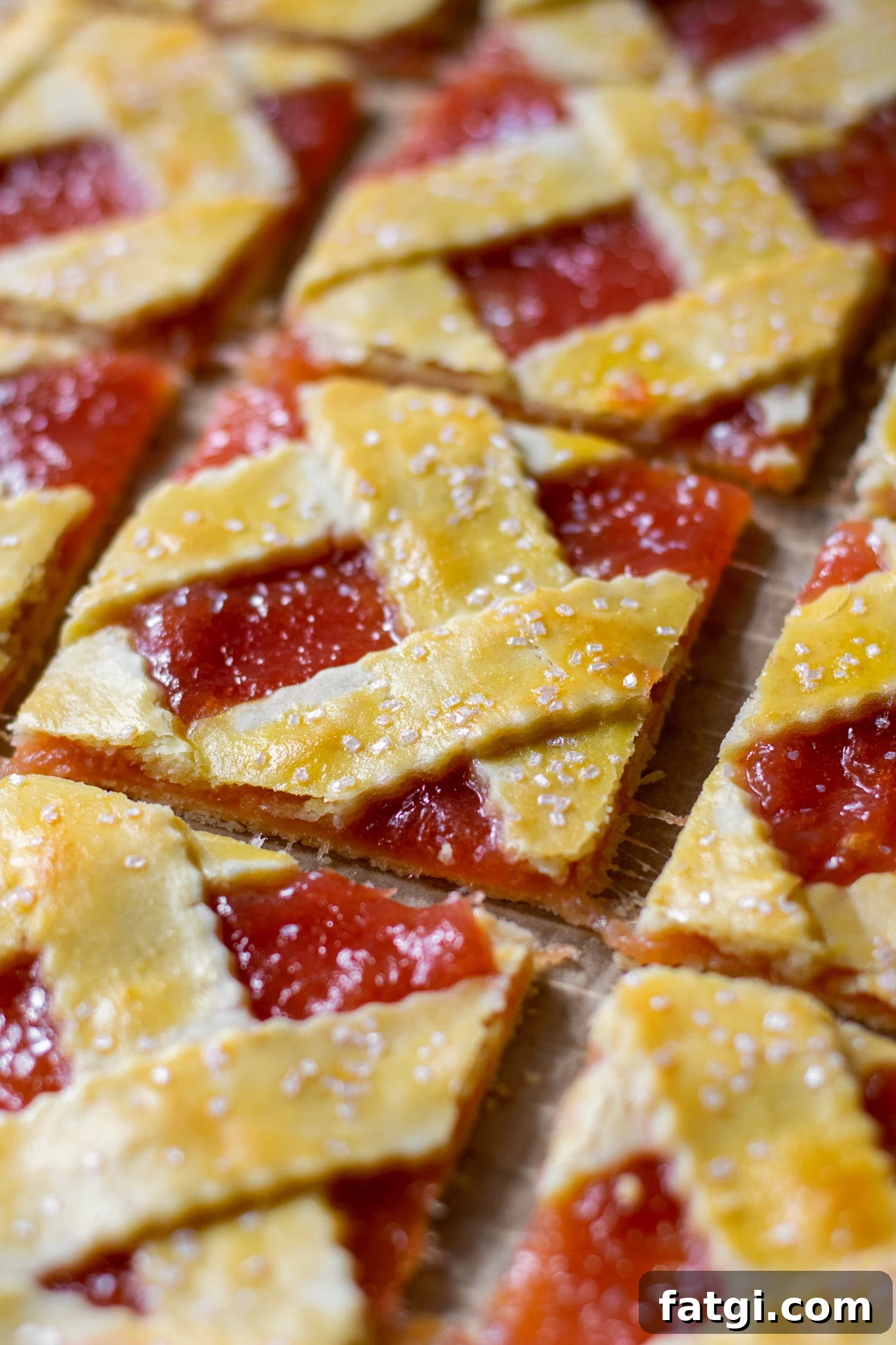
The shortcrust dough is made by combining flour, powdered sugar, salt, and cold butter until the mixture resembles fine crumbs. Egg and vanilla are then added just until the dough comes together. Handle the dough gently and avoid overworking it, as this helps keep the finished pastry tender. After chilling, roll out most of the dough for the base, spread the rhubarb filling over the top, and use the remaining dough to create a lattice. A light egg wash and a sprinkle of sugar are optional, but they give the pastry a polished finish and a little extra crunch.
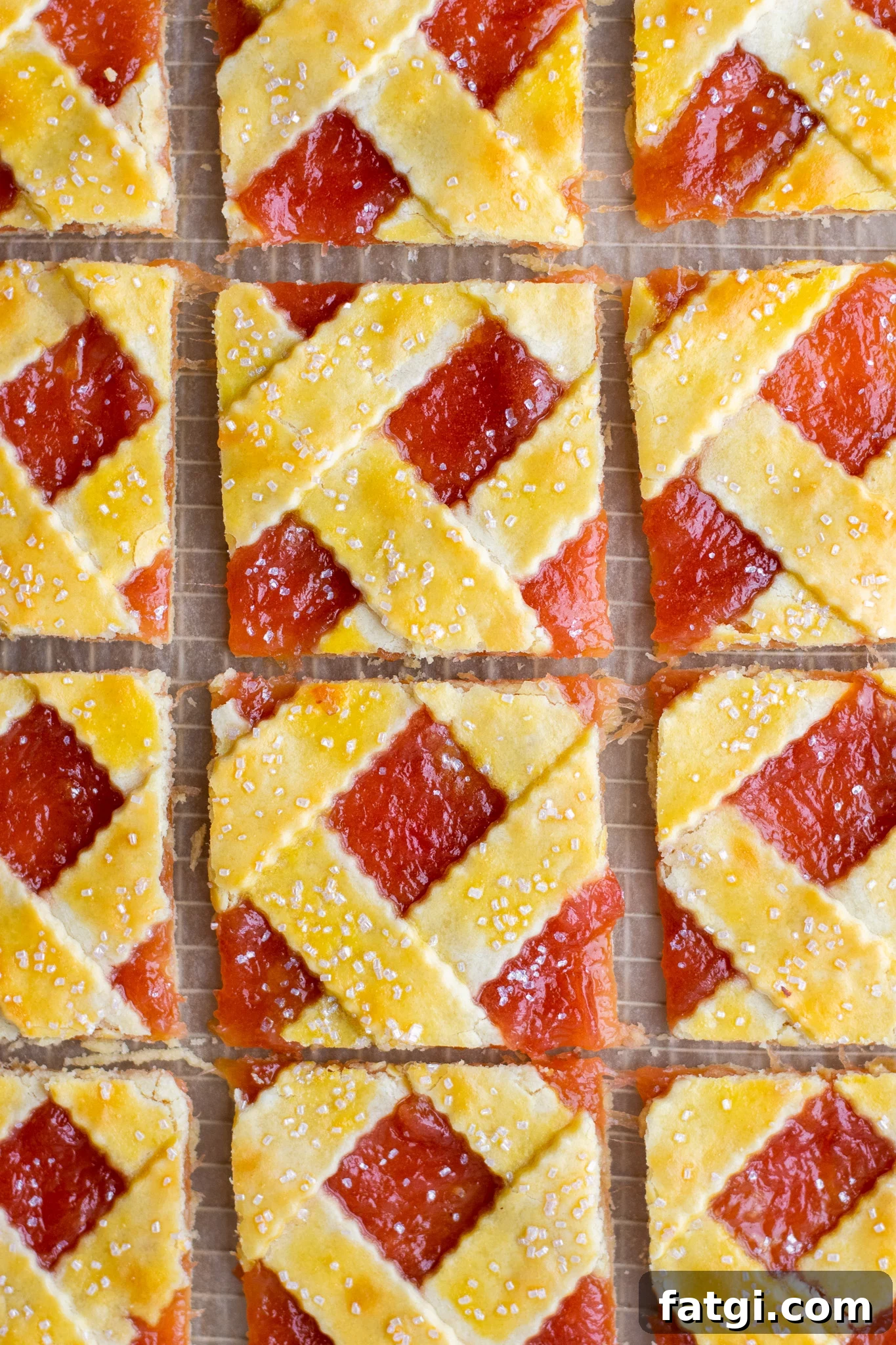
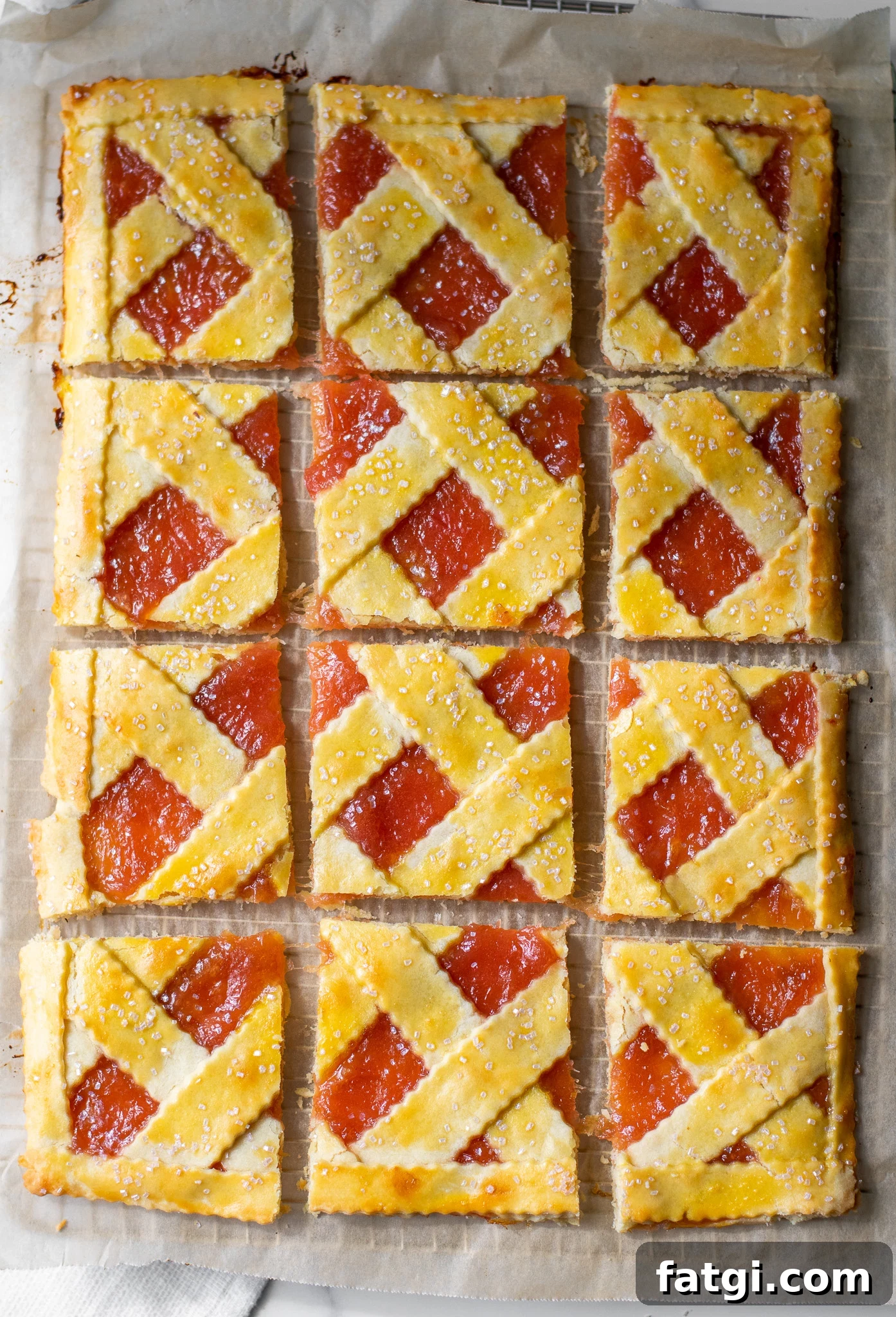
Once baked until lightly golden, the pastry is cooled briefly and sliced into squares or bars. The result is a beautiful rhubarb dessert with a classic Danish feel: buttery, fruity, tangy, and perfect for sharing.
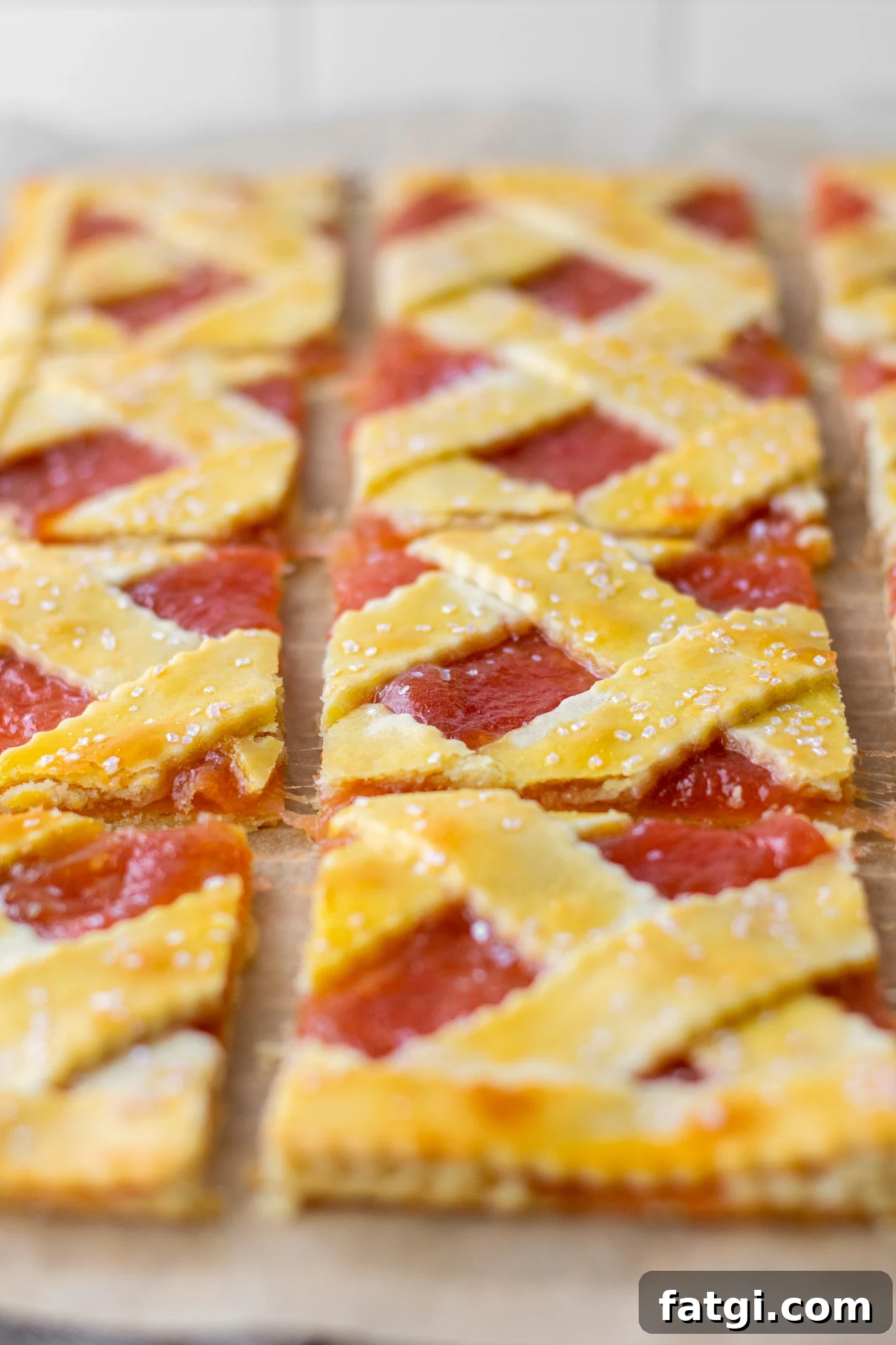
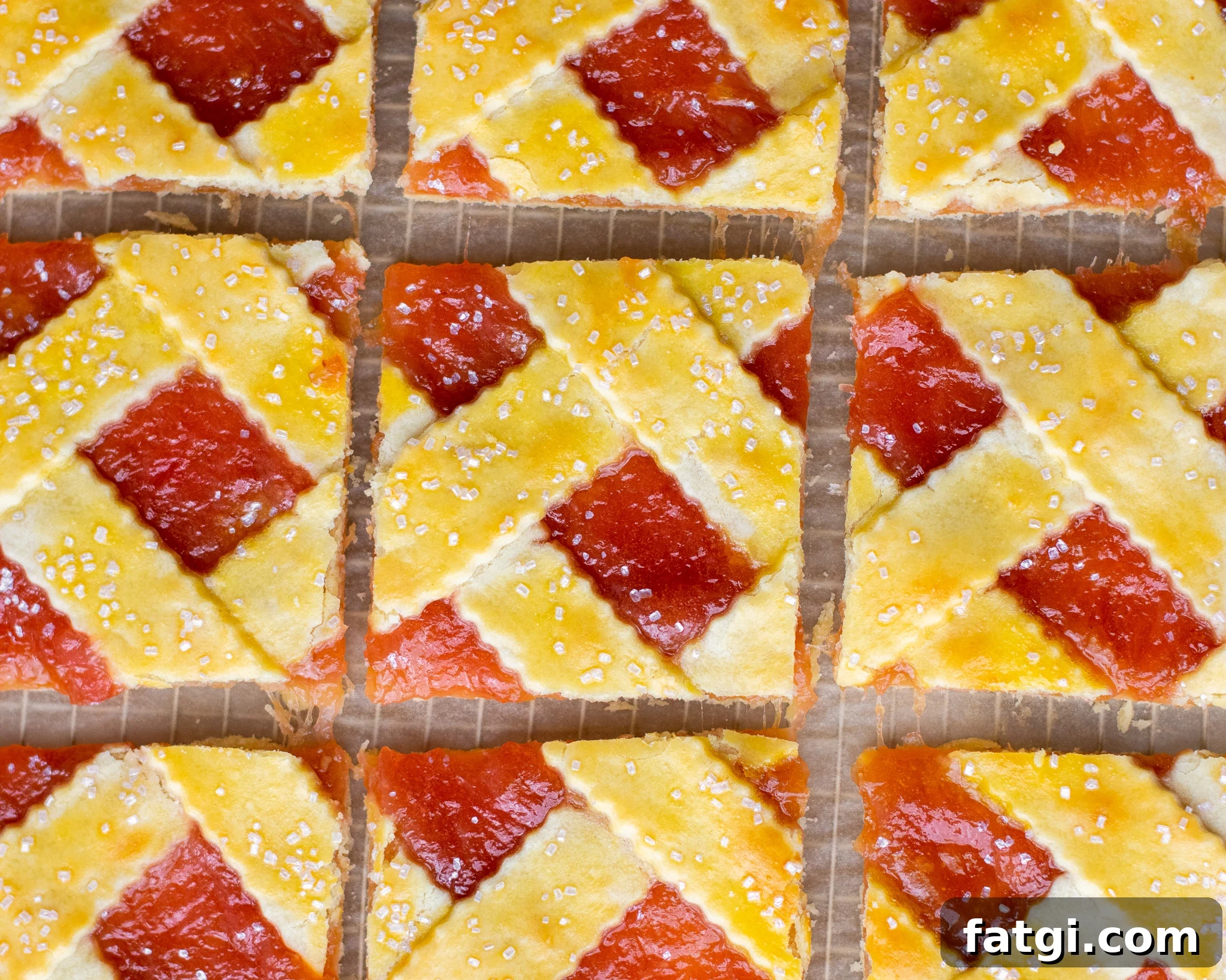
Rabarbersnitter (Danish Rhubarb Bars)
Important Note:
For the most accurate results, use a digital scale and measure in grams and milliliters. Cup measurements can vary. This recipe was developed in a convection fan oven.
Ingredients
Pastry Dough
- 300 grams (2 1/2 cups) all-purpose flour
- 200 grams (14 tbsp) cold unsalted butter
- 50 grams about 1/2 cup powdered sugar
- 1 large egg
- 1/2 tsp vanilla extract
- 1/4 tsp salt
- Egg for egg wash, optional
- Sugar or sprinkles for topping, optional
Filling
- 340 grams (2 to 3 stalks, about 3 cups chopped) rhubarb
- 150 grams (3/4 cup) granulated sugar
- 1/2 tsp vanilla extract
- Pinch of salt
Instructions
-
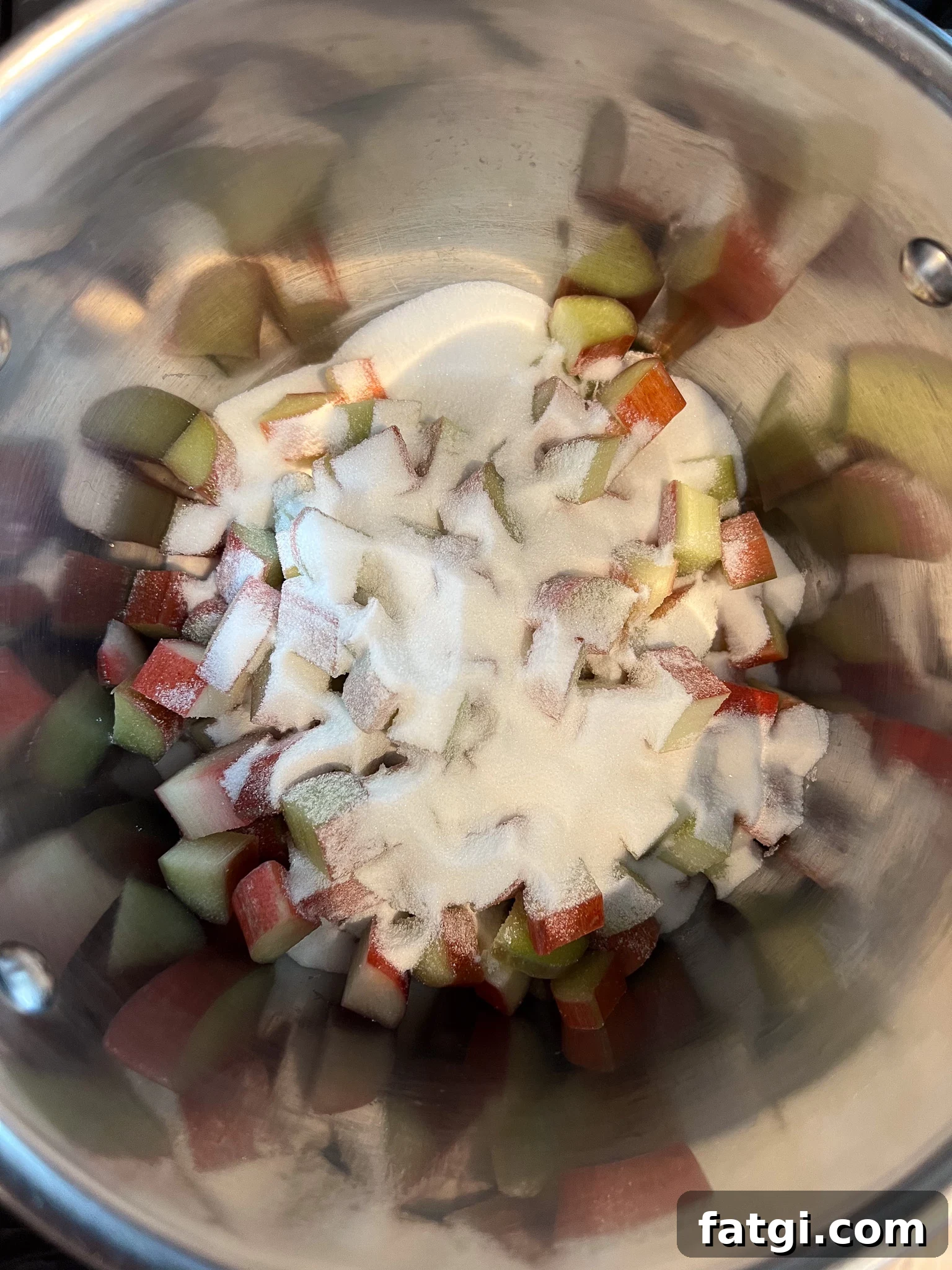
Make the rhubarb filling 1 to 2 hours before assembling the pastry. Combine the chopped rhubarb, granulated sugar, vanilla extract, and a pinch of salt in a small saucepan.

-
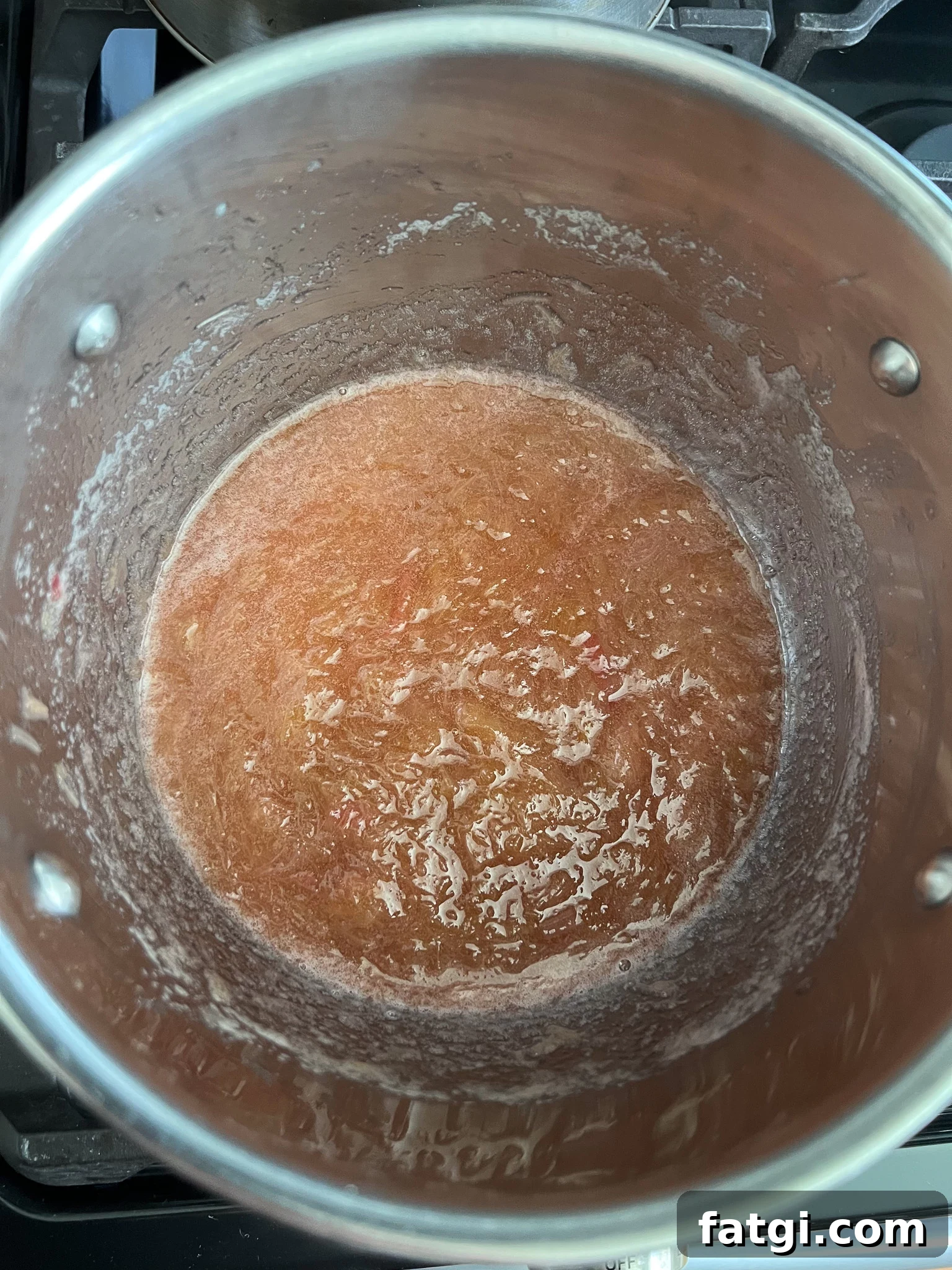
Cook over medium-low heat for about 15 minutes, stirring occasionally, until the rhubarb breaks down and the mixture becomes thick and jam-like. Transfer to a container, cool, then refrigerate so it firms up further.
-
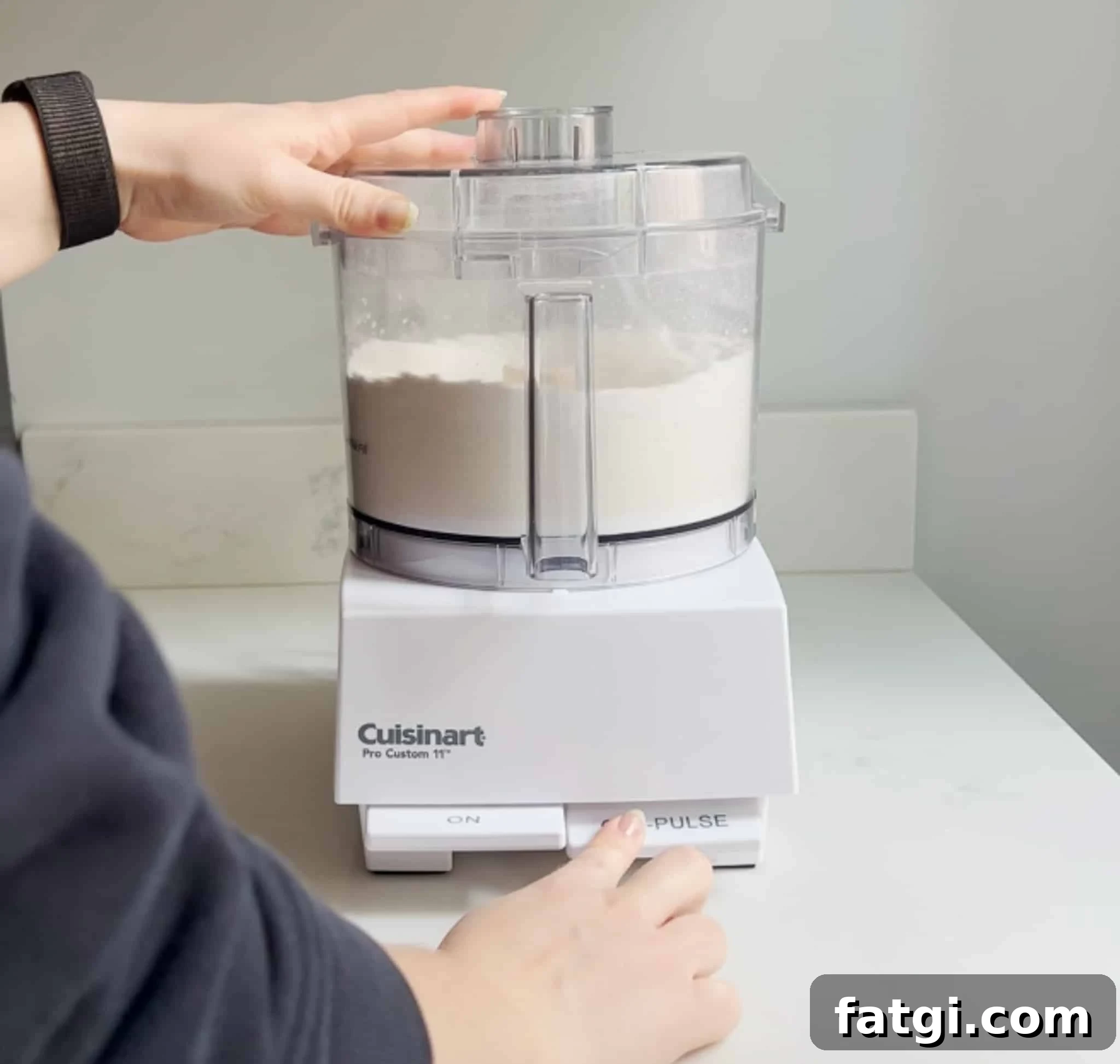
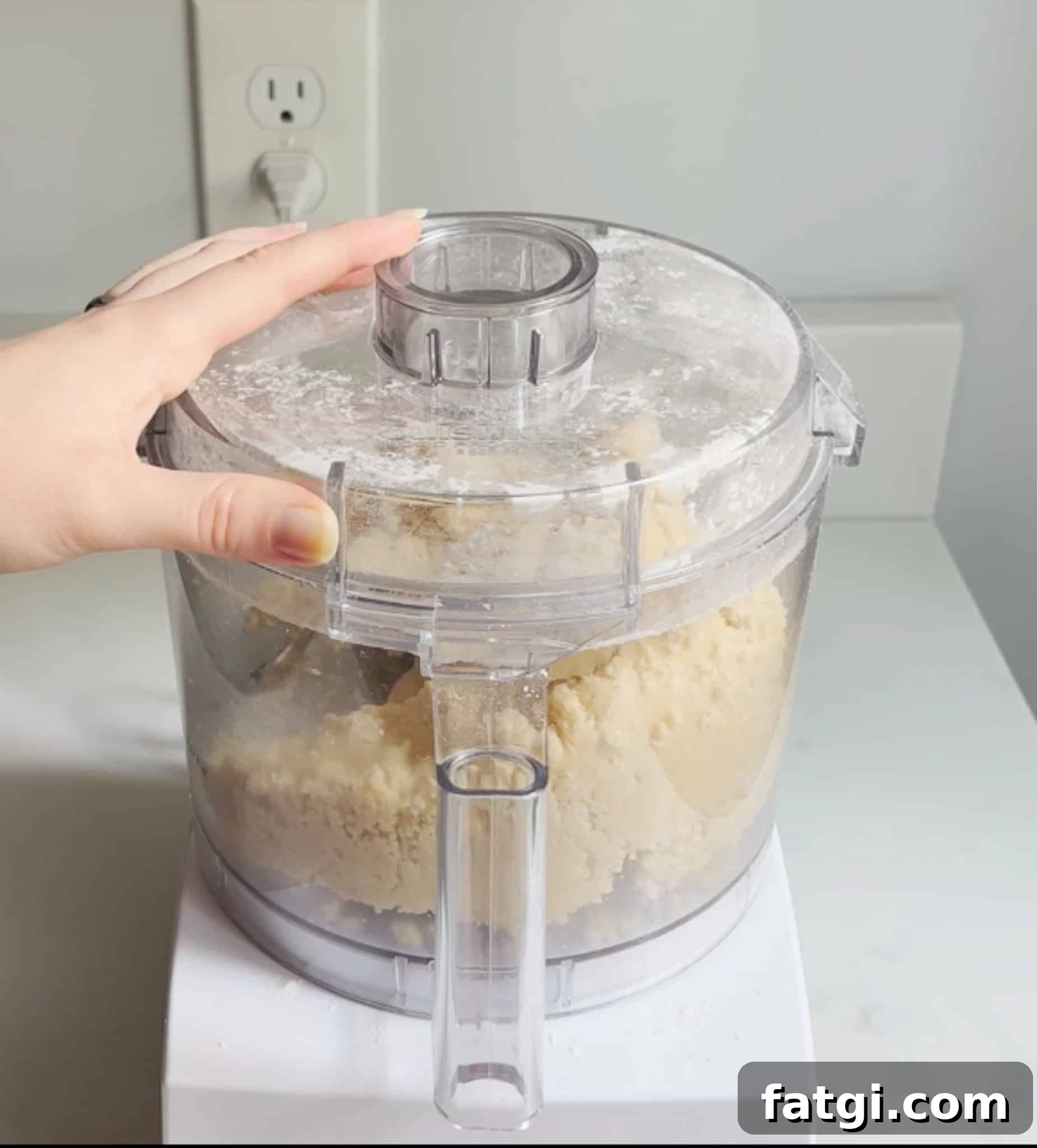
While the filling cools, add the flour, powdered sugar, and salt to a food processor and pulse to combine. You can also mix the dry ingredients by hand in a large bowl.
-
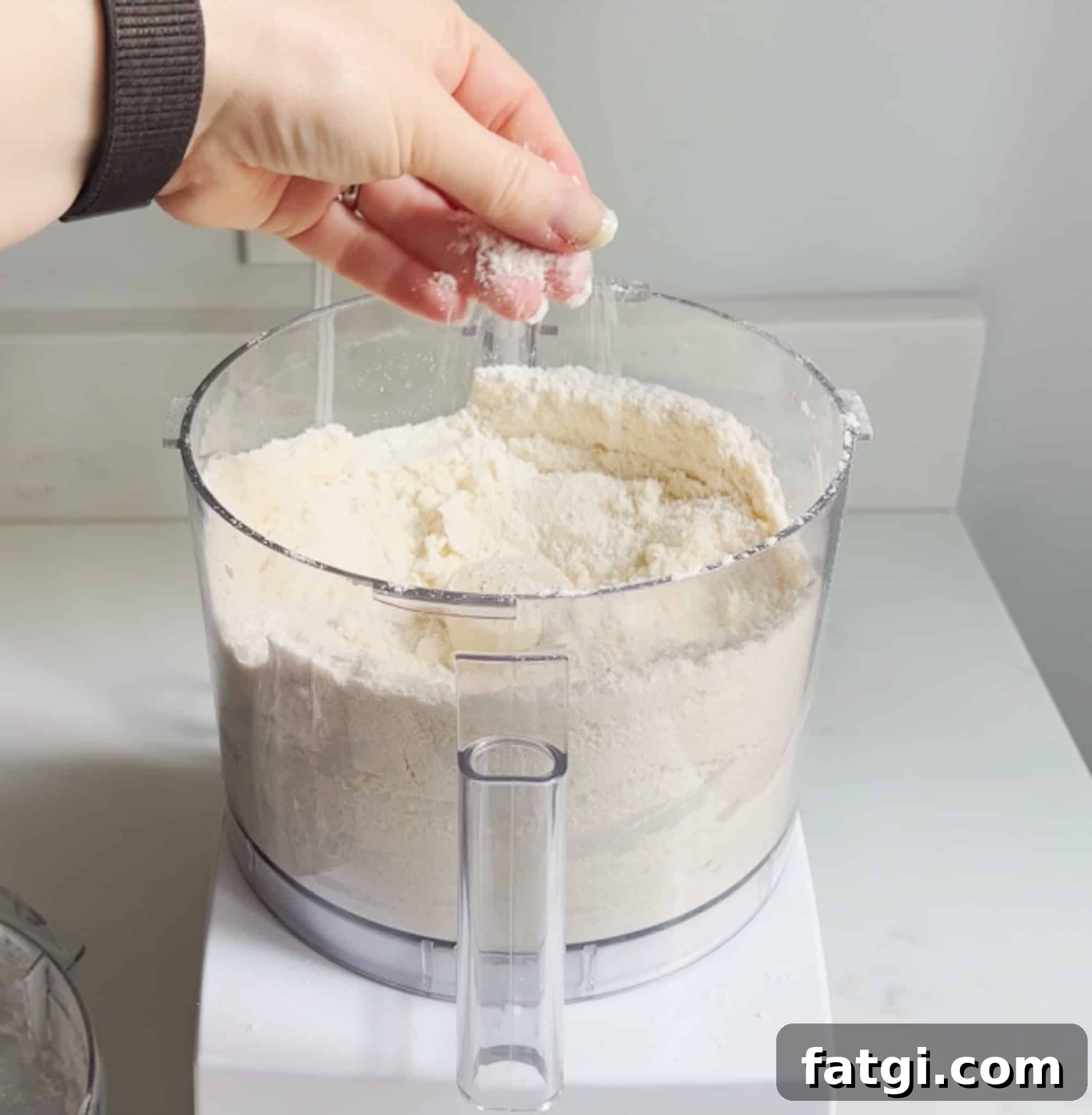
Add the cold butter and pulse until the mixture resembles fine sand. If making the dough by hand, rub the butter into the flour mixture with your fingertips until you reach the same crumbly texture.
-
Add the egg and vanilla extract. Pulse just until the dough begins to come together. If mixing by hand, stir briefly, then gently press the dough into a ball without kneading it too much.
-
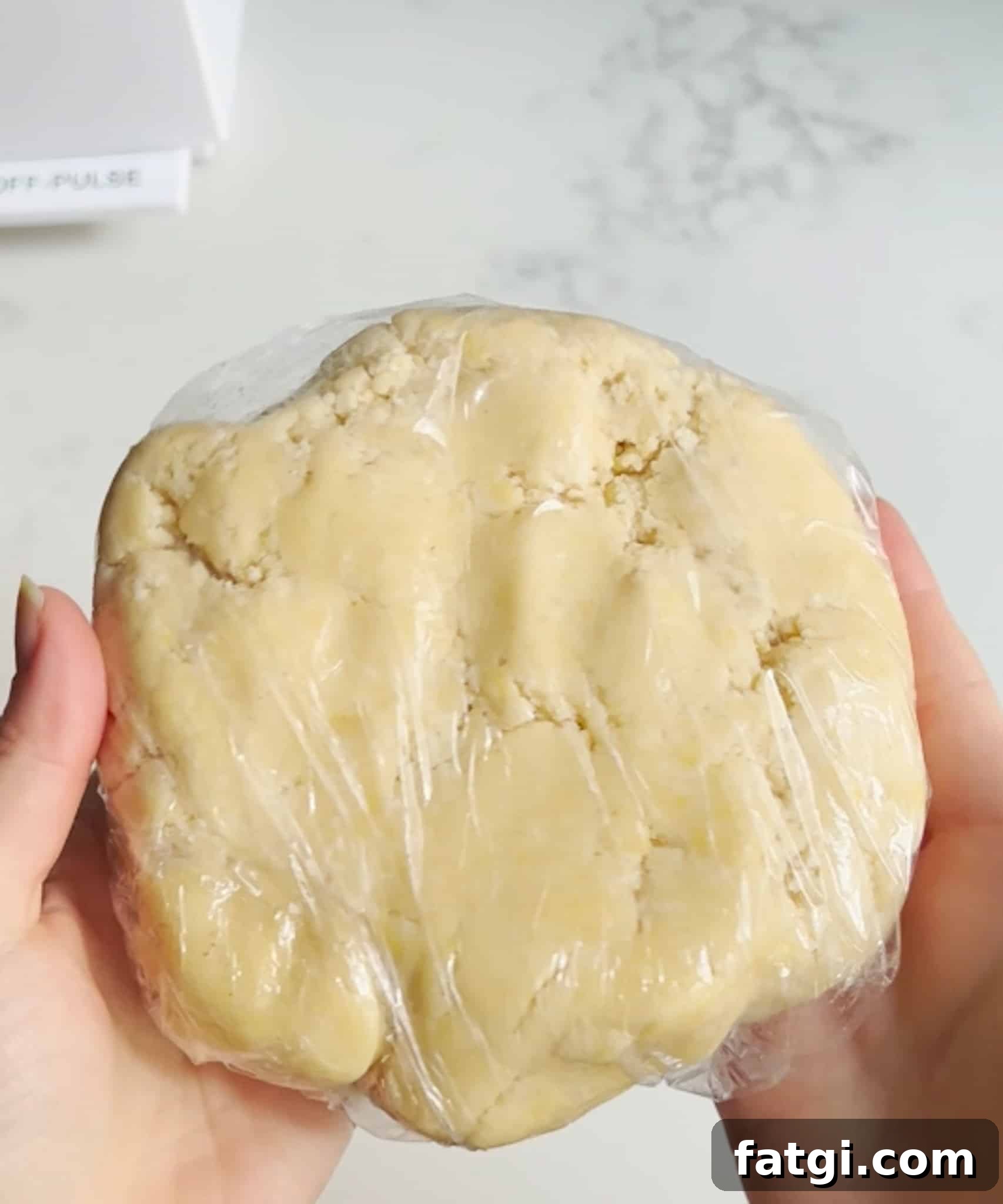
Wrap the dough in plastic wrap and refrigerate for at least 30 minutes. Chilling makes the dough easier to roll and helps the pastry hold its shape.
-
Preheat the oven to 375°F (190°C). Line a baking sheet with parchment paper.
-
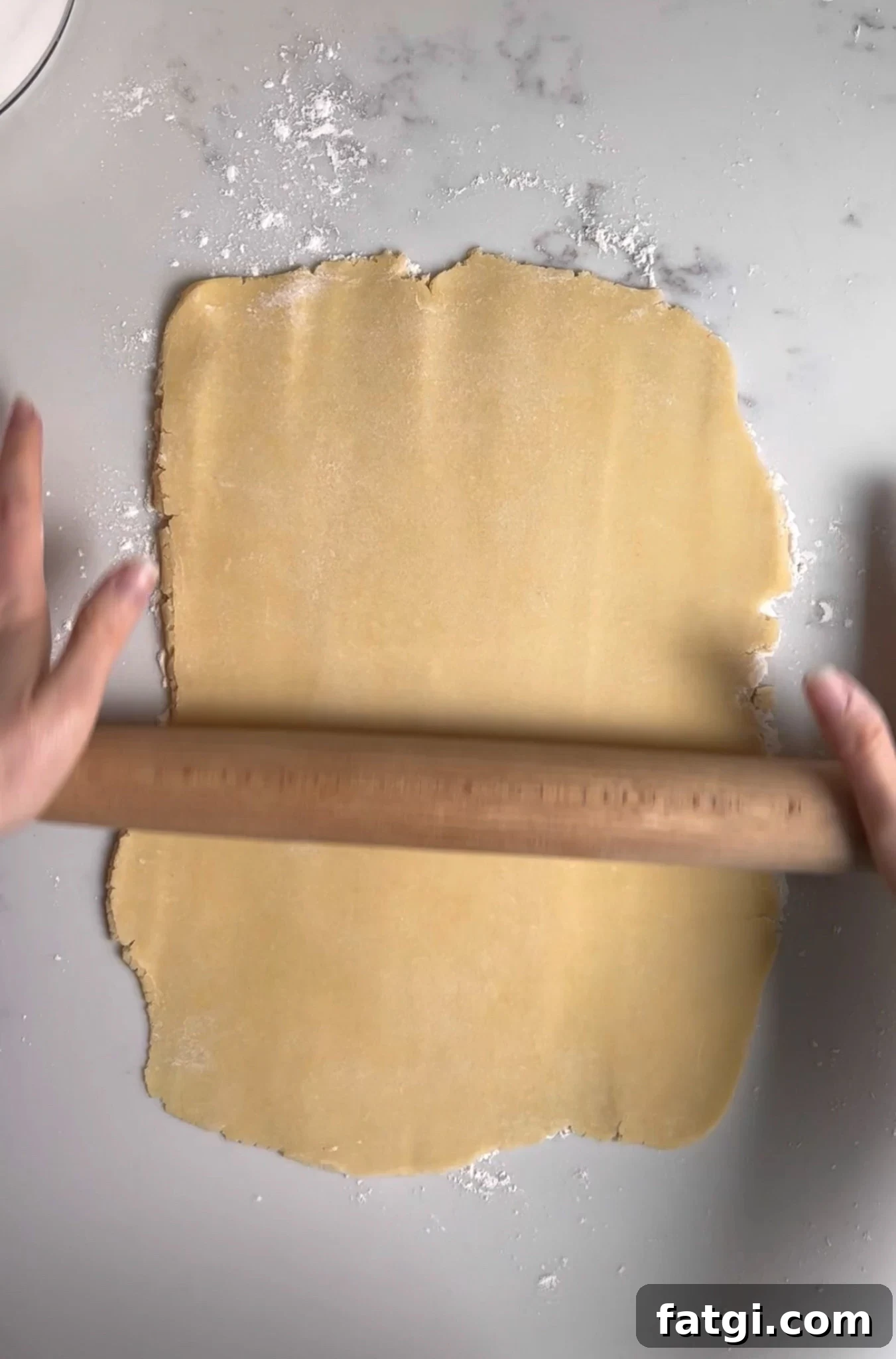
Roll out about two thirds of the chilled dough into a rectangle about 1/4 inch thick, roughly 9 x 13 inches or 10 x 14 inches. Trim the edges and save the scraps for the lattice or border.
-
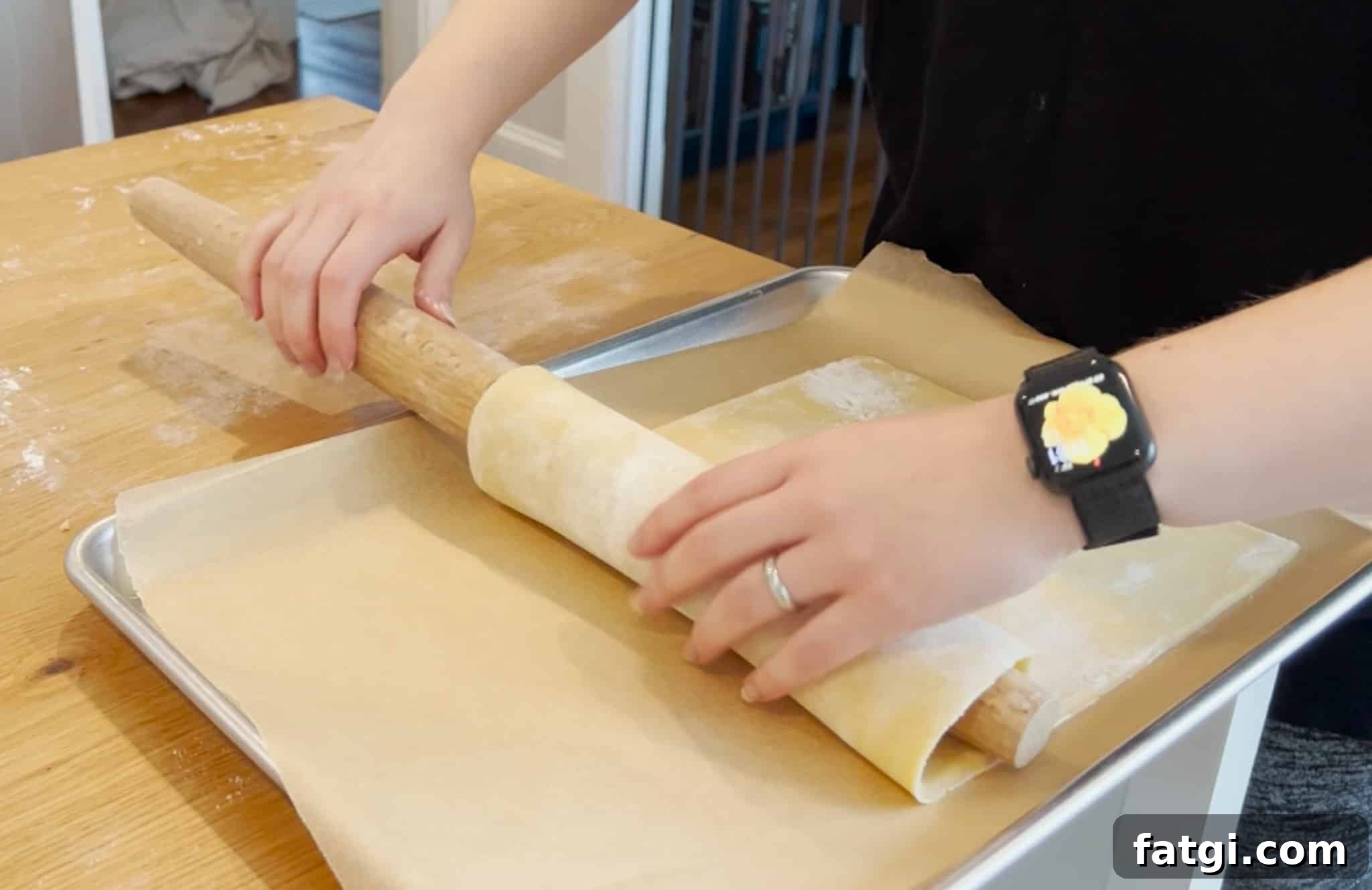
Transfer the pastry base to the prepared baking sheet. You can slide it carefully onto the sheet or roll it around the rolling pin and unroll it onto the parchment.
-
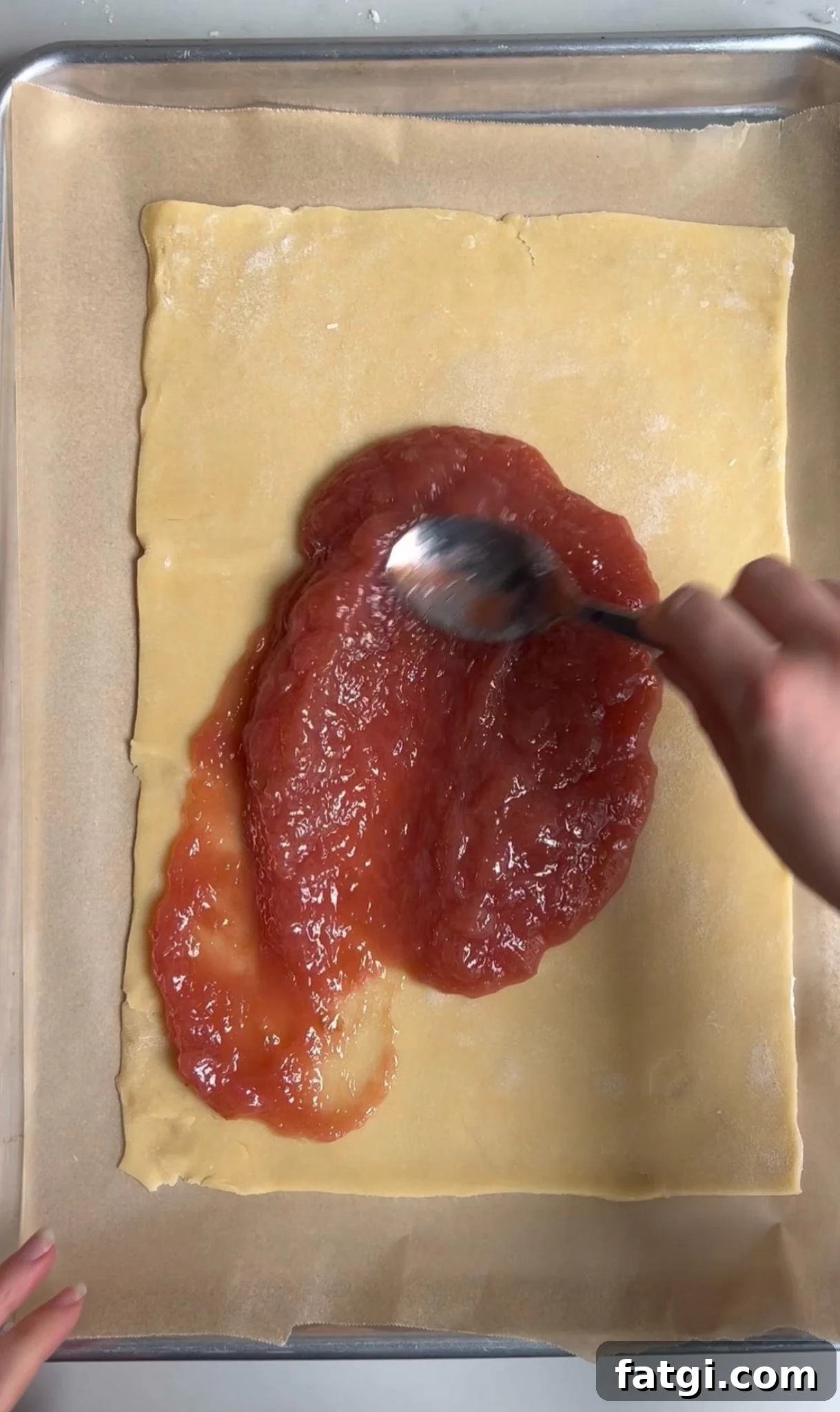
Spread the cooled rhubarb filling evenly over the dough in a thin layer, taking it close to the edges.
-
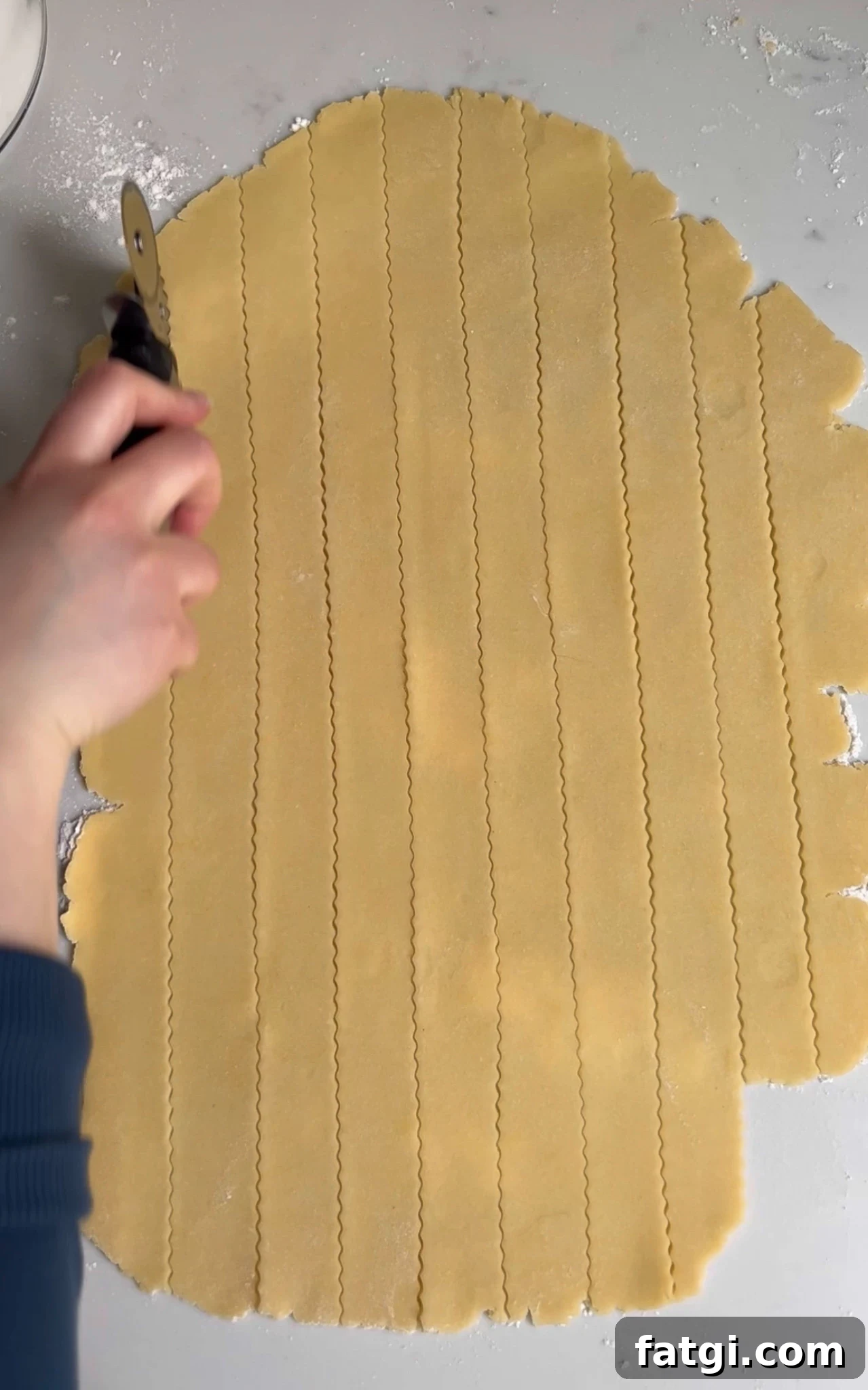
Roll out the remaining third of the dough into a rough rectangle. Cut it into strips about 3/4 to 1 inch wide. A fluted pastry cutter gives a decorative edge, but a knife works well too.
-
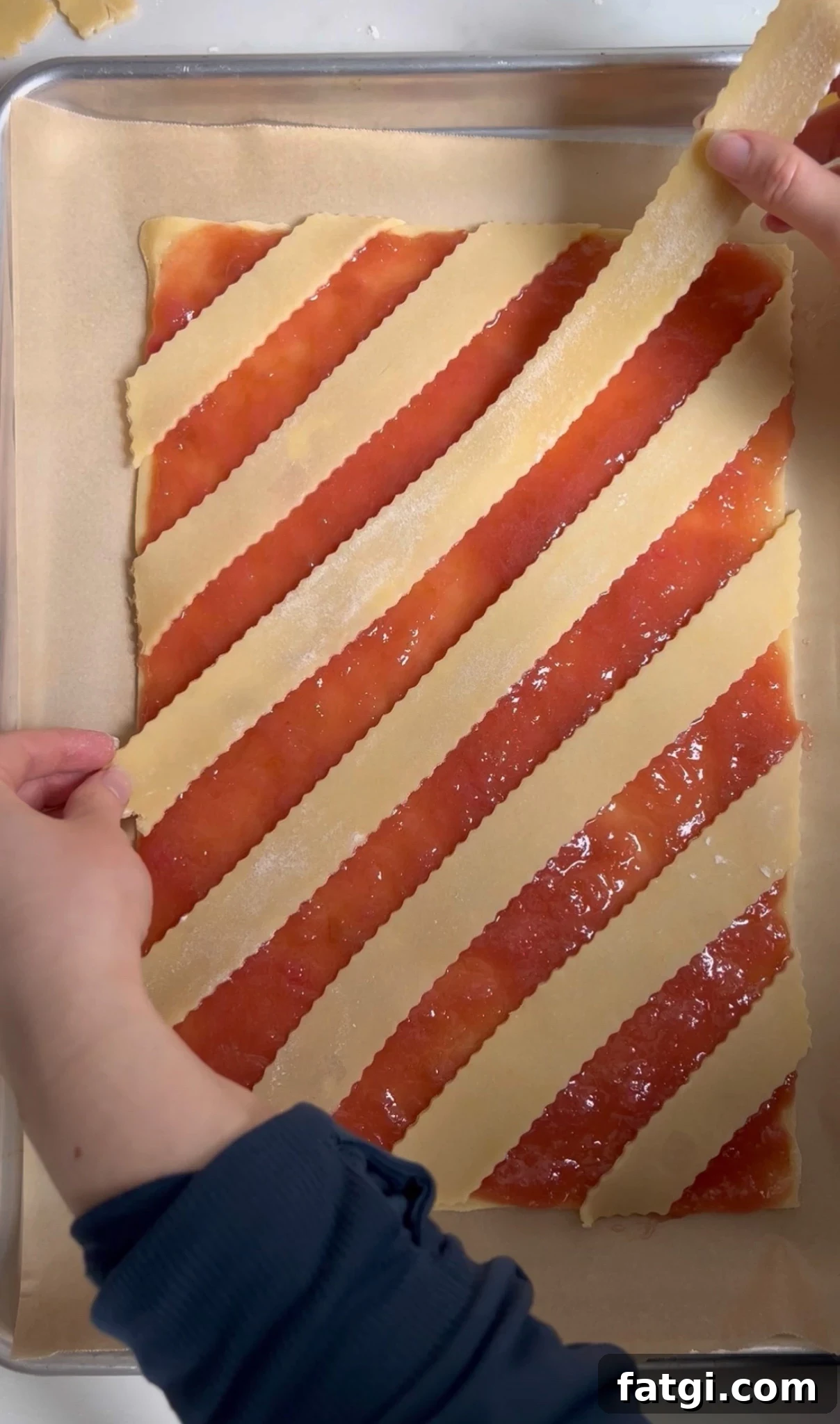
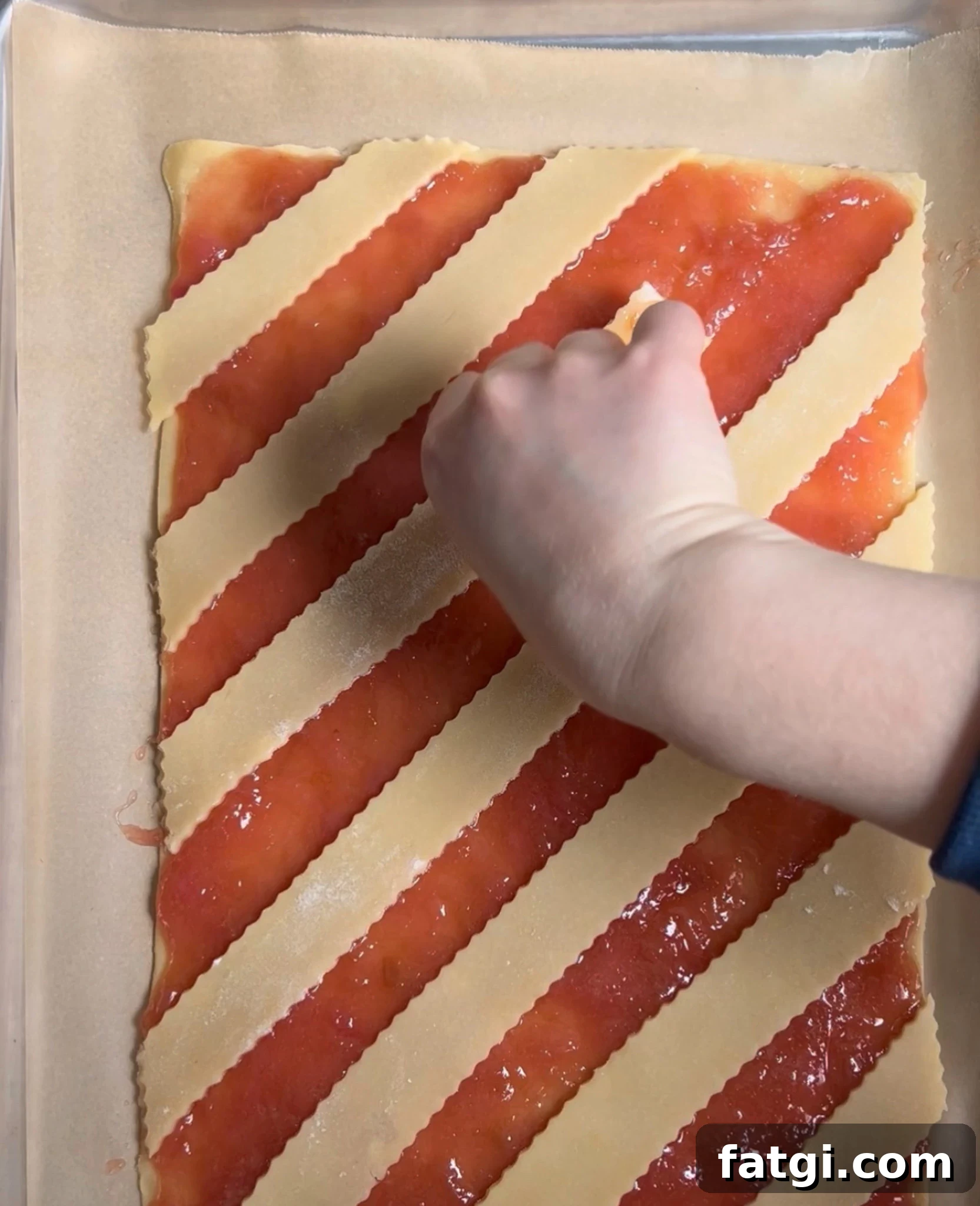
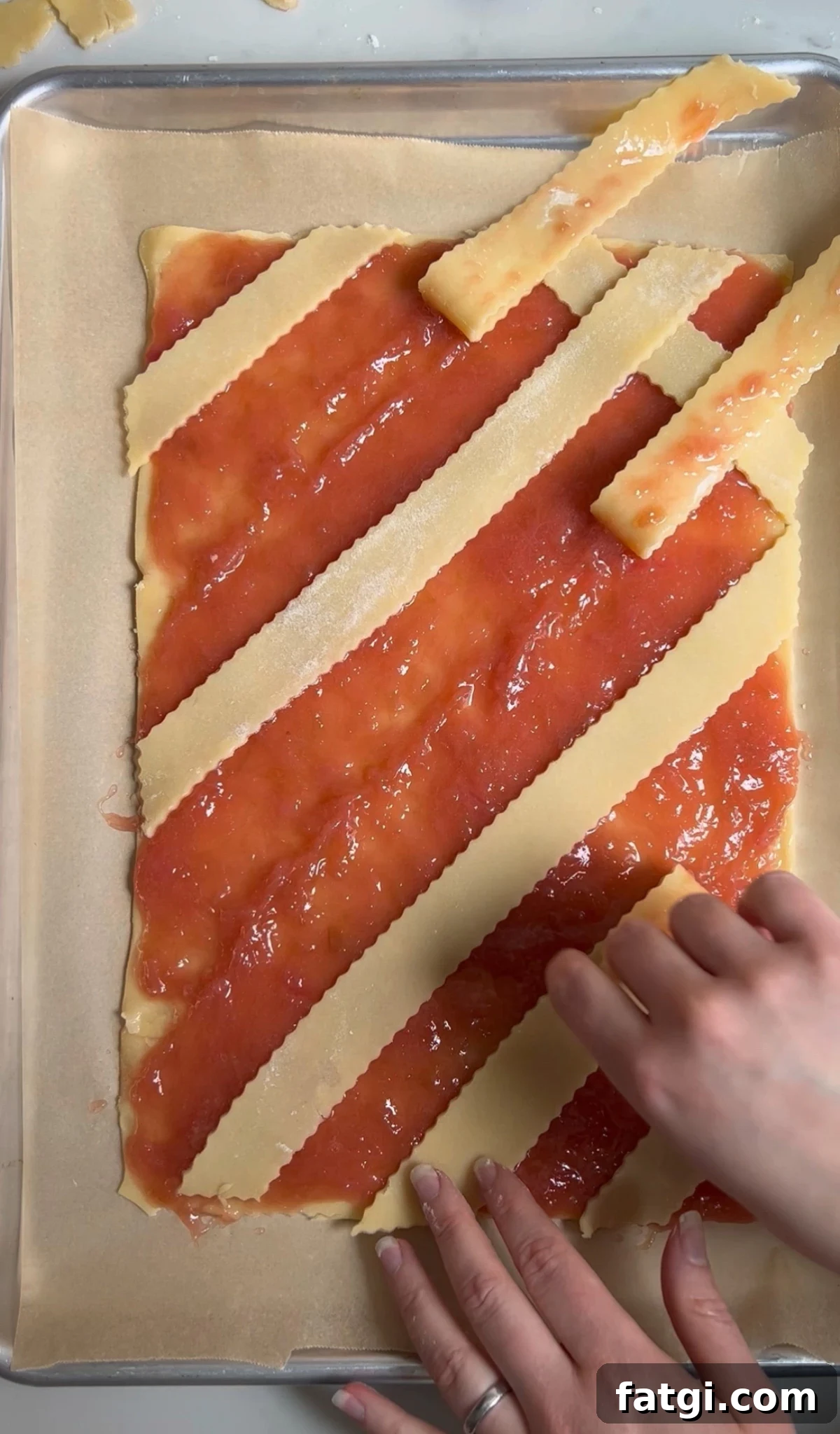
Begin the lattice by laying several strips diagonally across the rhubarb filling in the same direction. Trim the ends so they sit neatly along the edge of the pastry base, and keep any scraps.
-
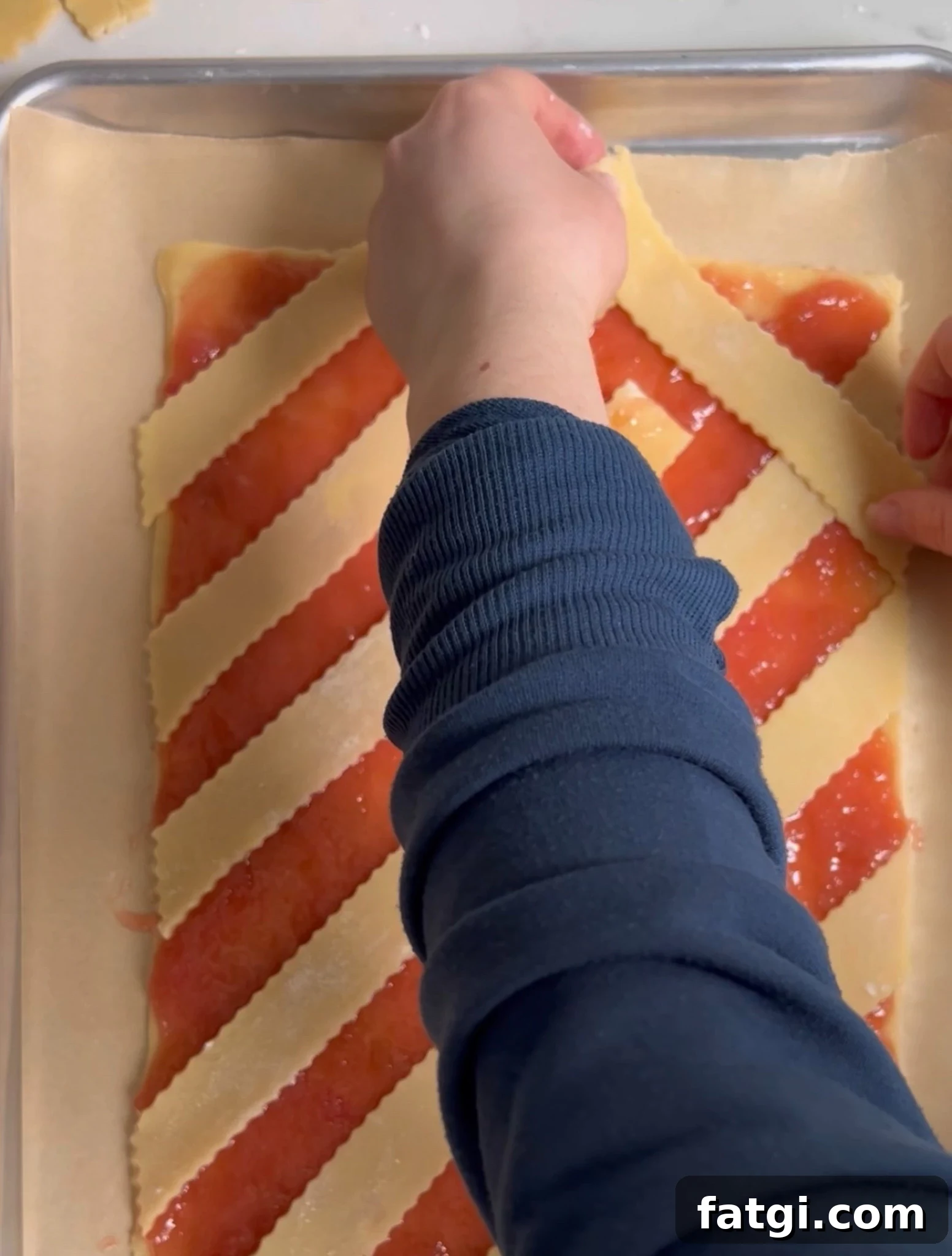
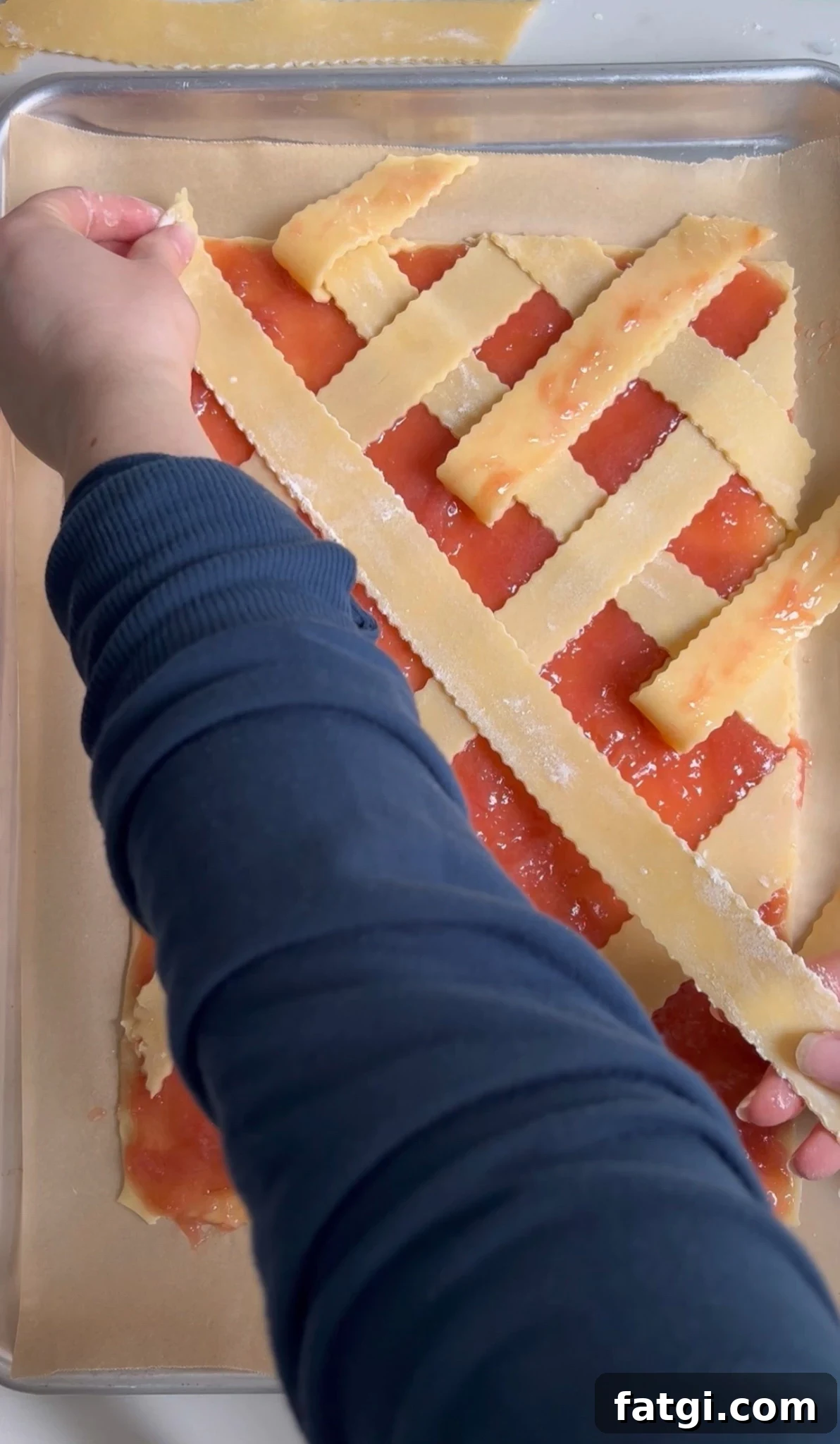
To weave the lattice, start near one corner. Fold back every other strip that is already on the pastry, so you can place a new strip in the opposite diagonal direction.
-
Place the first strip in the opposite direction, then trim any overhanging dough so the edge remains tidy.
-
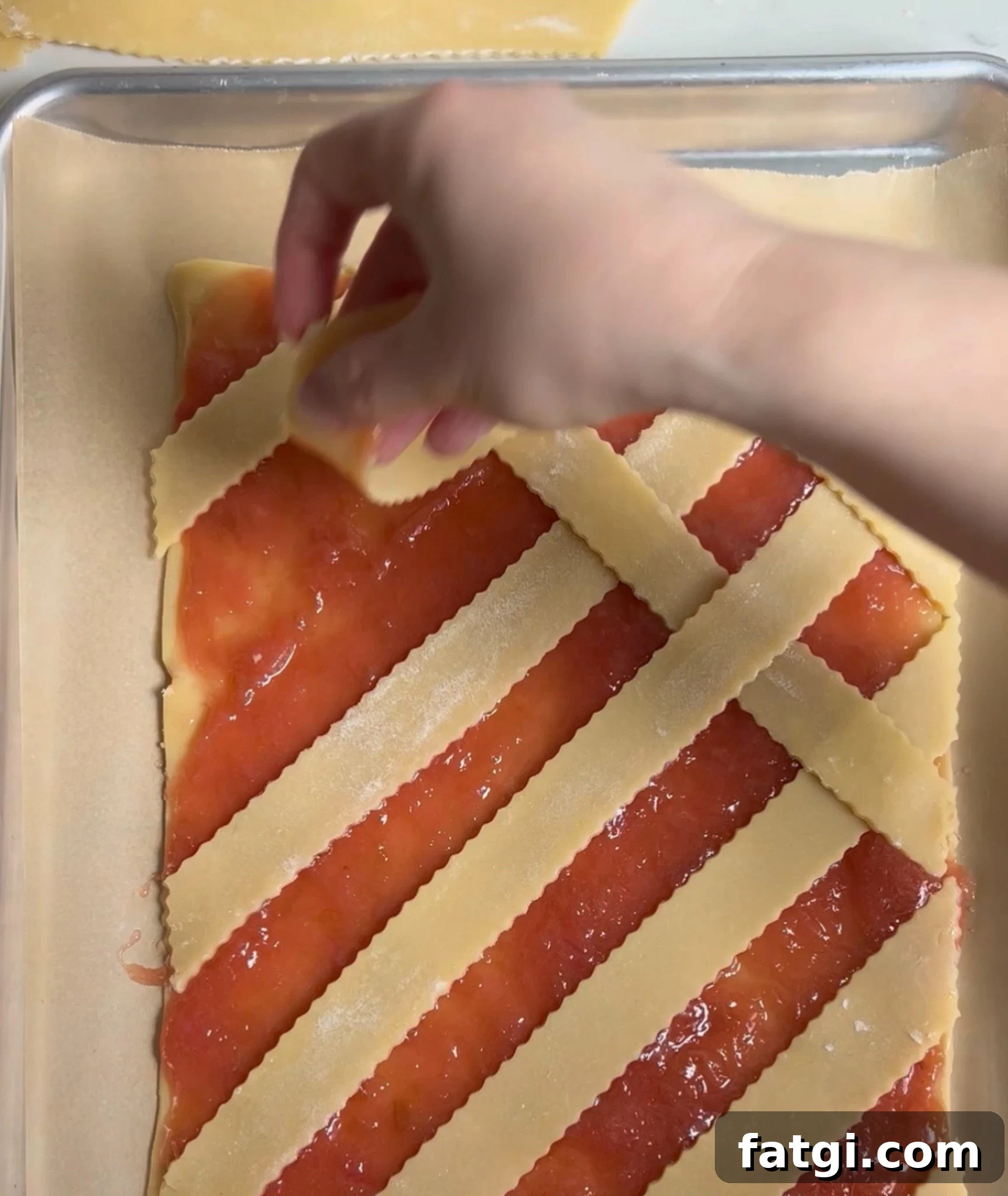
Fold the lifted strips back into place over the new strip. The goal is to alternate over and under, creating a woven pattern.
-
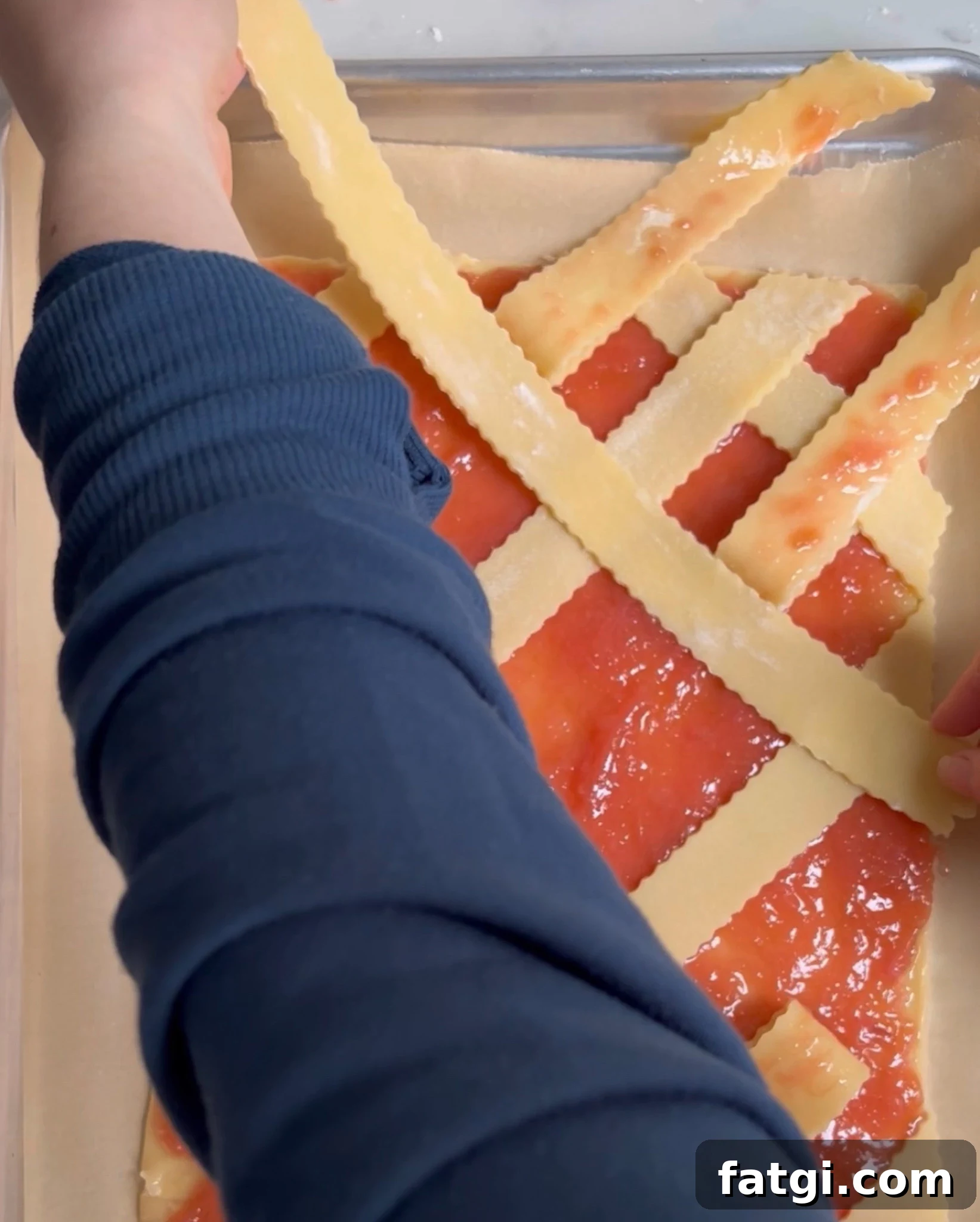
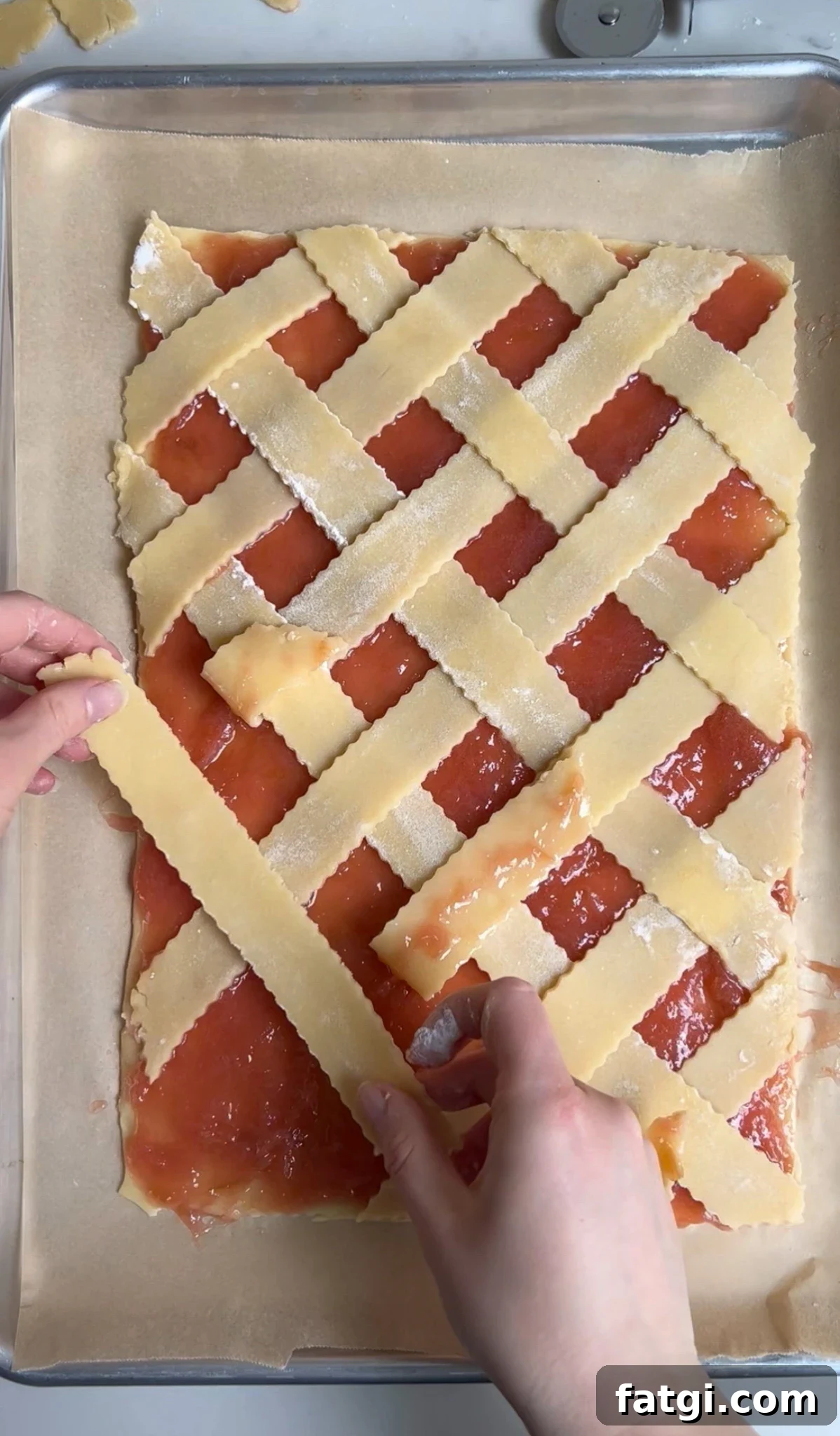
For the next strip, fold back the opposite set of strips before placing it.
-
Lay the strip across the pastry in the opposite diagonal direction.
-
Fold the lifted pieces back over the new strip so the weave continues neatly.
-
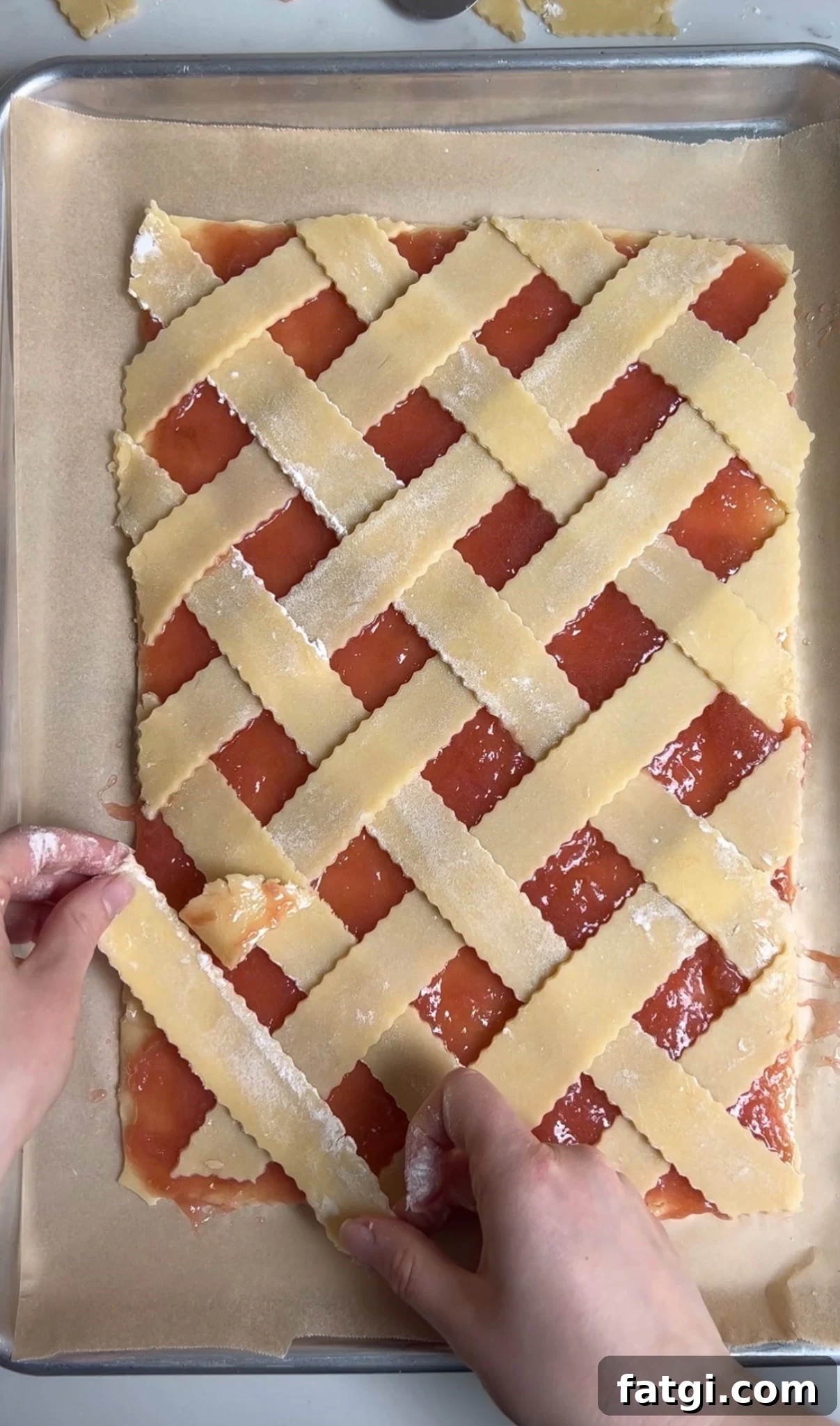
Continue alternating which strips are folded back each time you add a new strip. This creates the classic lattice effect.
-
Repeat until the lattice covers the rhubarb filling. Use trimmed pieces where needed, and keep the edges as even as possible.
-
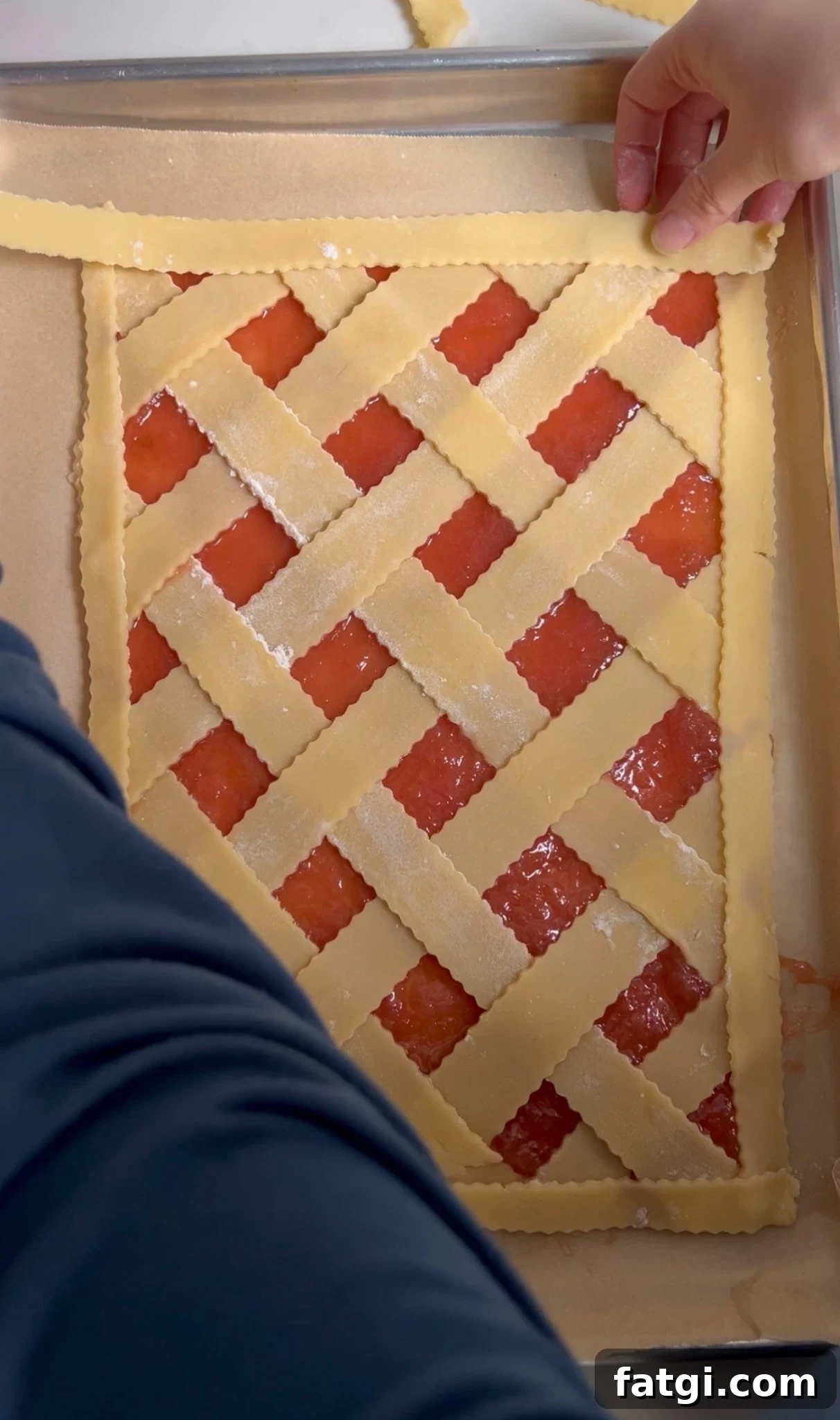
When finished, the pastry strips should alternate over and under across the whole surface.
-
If desired, roll leftover dough scraps into thin strips and place them around the edge for a cleaner border. This step is optional but gives the bars a neat finish.
-
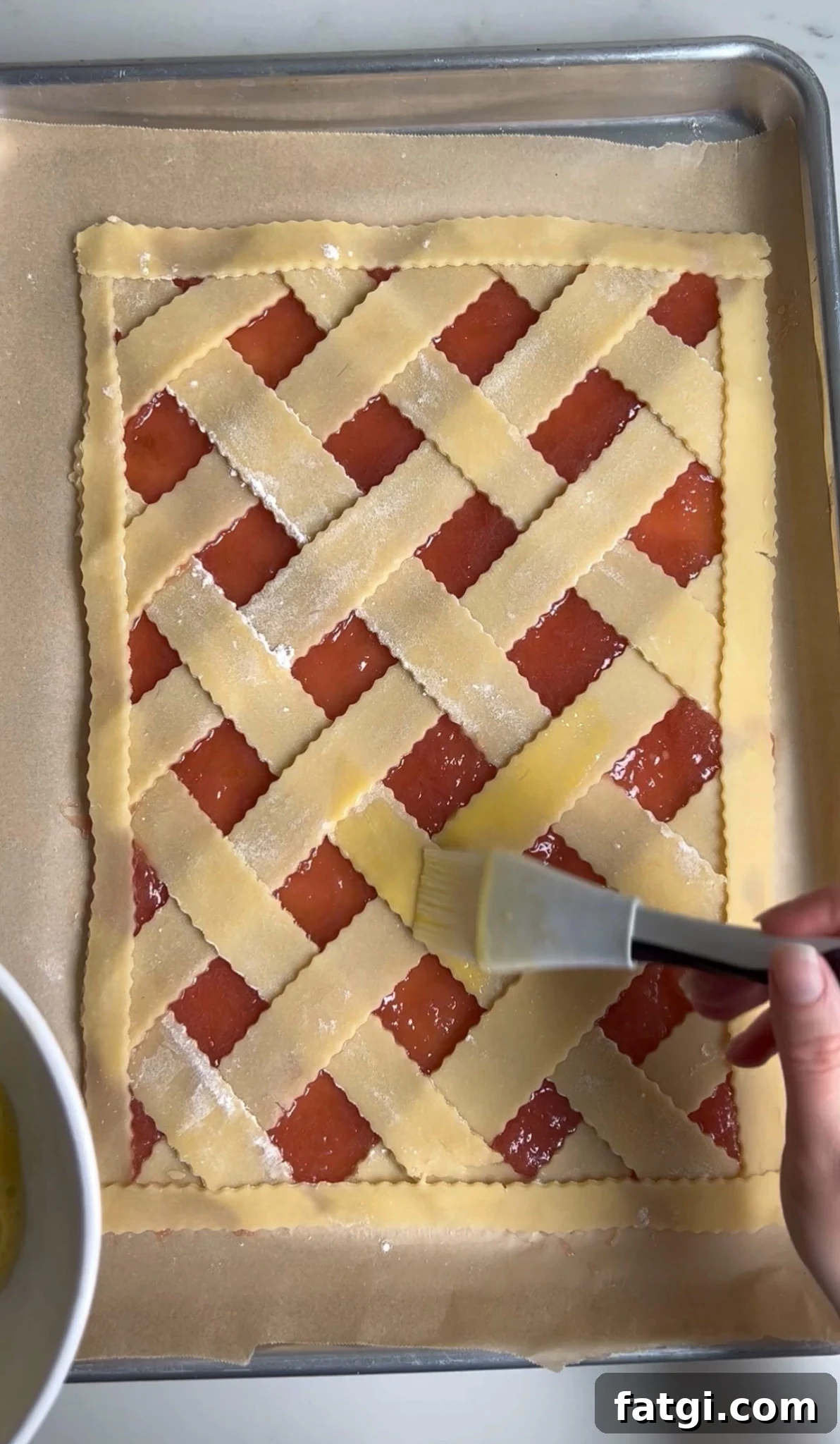
Brush the lattice with egg wash if using, then sprinkle with sugar or sprinkles for extra texture and decoration.
-
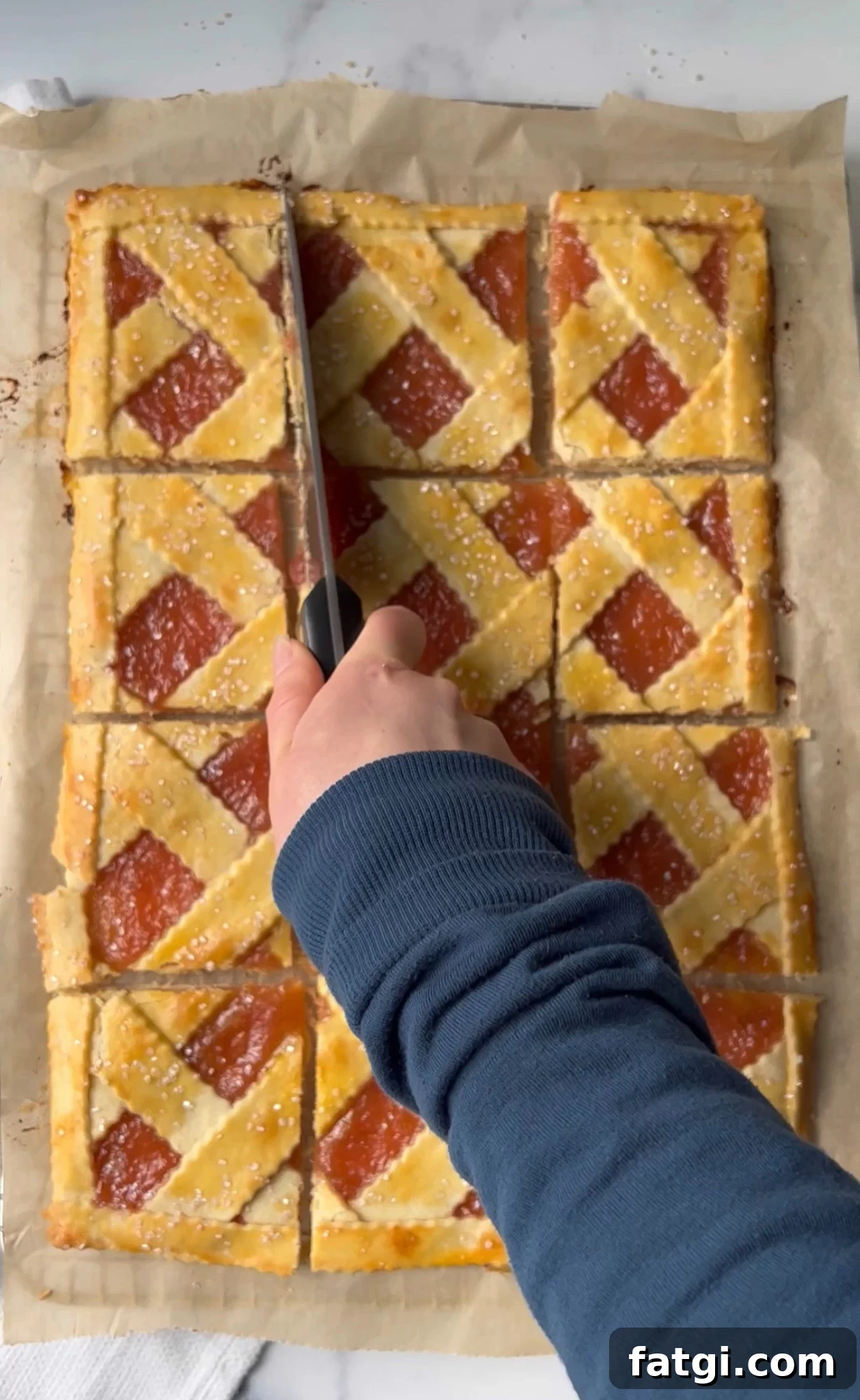
Bake for 10 to 15 minutes, or until the pastry is lightly golden on top and around the edges. If it still looks pale after 15 minutes, continue baking in 5-minute intervals until golden. Let the pastry cool briefly, then slice into 12 square or rectangular bars. Serve and enjoy.