When I first began researching my family history, one of my main goals was to learn more about my great-grandmother, Esther Richardson, and the Richardson family of Pittsylvania County, Virginia. I was new to genealogy, but I quickly discovered how exciting it can be to search for records, follow clues, and connect with other researchers who are working on the same family lines.
One of the most helpful parts of that early research was reaching out to other Richardson family researchers. Their knowledge and generosity led me to an important clue. A response to a query in a Richardson genealogy forum mentioned that my family line had been documented in a printed family history book titled The Collie Family of Pittsylvania County, Virginia: Their Scottish Origins, Relatives, and Descendants: Including Connecting Families of Cornwell, Jennings, and Richardson by Betty Cox Collie and Robert E. King.
That sounded like exactly the resource I needed. Unfortunately, the book was out of print, and I could not find a copy available to purchase.
But that did not mean the search was over.
That is when I turned to WorldCat.
What Is WorldCat?
WorldCat is one of the most useful online tools for genealogy research. Think of it as a massive worldwide library catalog. It allows you to search for books, articles, manuscripts, family histories, local histories, and many other resources held by libraries and repositories around the world.
For genealogists, WorldCat can help locate hard-to-find family history books, county histories, church records, published genealogies, and regional research materials that may not be available online. If a book is out of print or unavailable for purchase, WorldCat can show you which libraries own a copy and how close those libraries are to your location.
Using the Collie and Richardson family history book as an example, here is how to search WorldCat for genealogy resources.
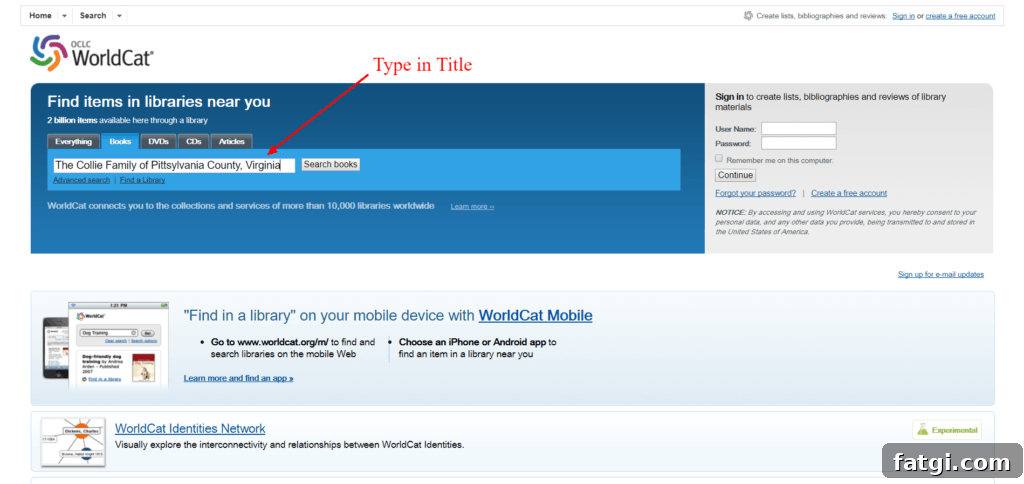
1. Search for the title or keywords on the WorldCat homepage.
Begin by typing the full title of the book into the search bar. If you do not know the complete title, you can use a partial title or general search terms. For example, I could have searched for “Collie Family Pittsylvania County VA” or “Richardson family Pittsylvania Virginia.” Using different keyword combinations can help you uncover resources that might not appear in your first search.
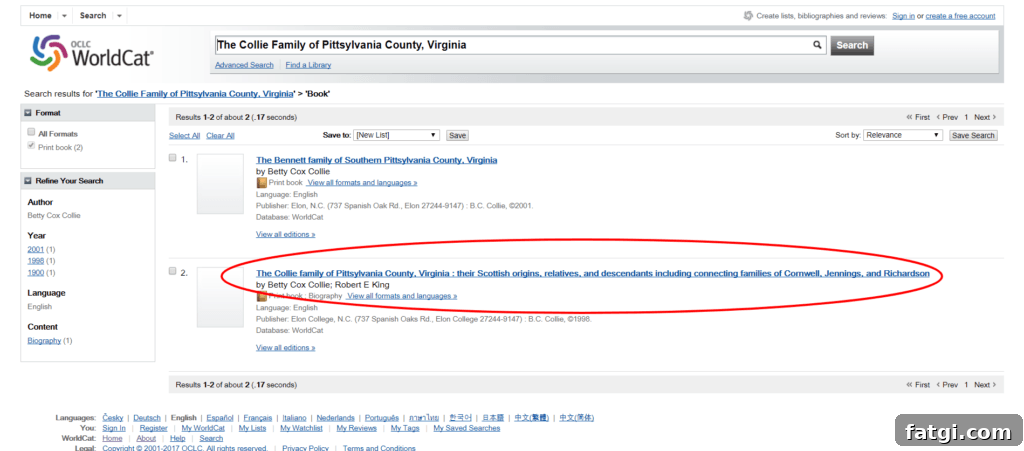
2. Review the search results.
In this example, WorldCat returned two results. The second result was the family history book I was hoping to find. Search results may include books, articles, archival materials, maps, or other types of resources, so take time to read each entry carefully.
Clicking on the correct result opens the detailed entry page for that item. This page usually includes the title, author, publication details, subjects, and library availability.
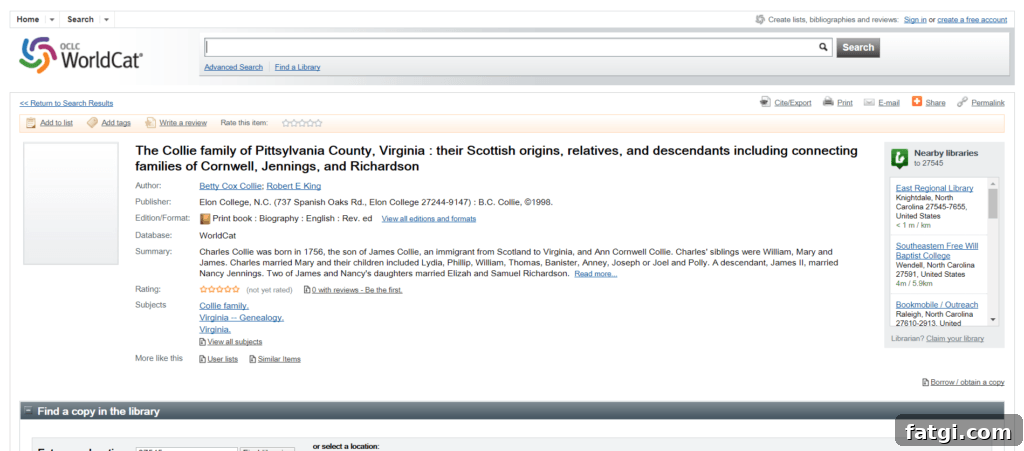
Once you confirm that you have found the right book, the next step is to determine where you can access a copy.
3. Scroll to the “Find a copy in the library” section.
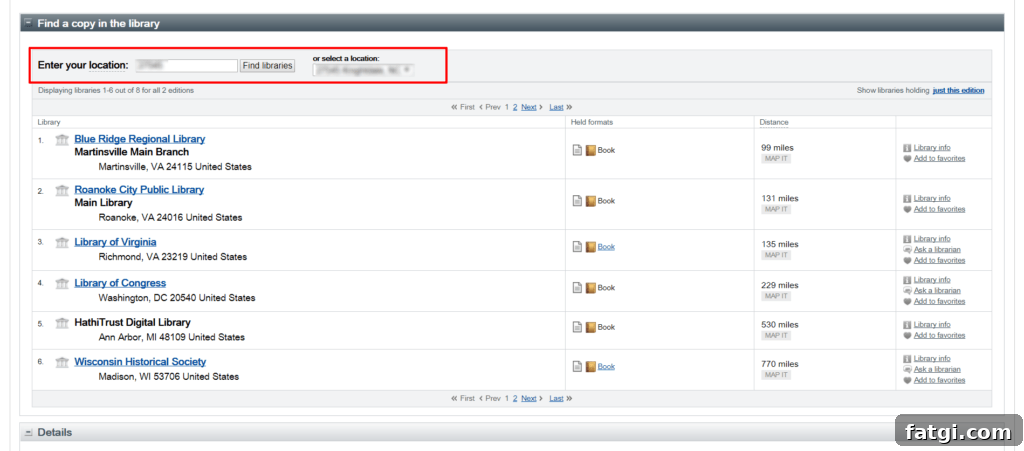
This section shows libraries and repositories that hold the item. WorldCat typically lists the closest libraries first, based on your location. If one of the listed libraries is nearby, you may be able to visit in person and view the book there.
However, many genealogy books are held by libraries far from where you live. That can feel discouraging, but you still have options.
4. Interlibrary Loan
If you cannot travel to the library that owns the book, contact your local city or county library and ask about an interlibrary loan. Through interlibrary loan, your library may be able to borrow the book from another library on your behalf.
This service can be especially helpful for genealogy researchers trying to access out-of-print books, county histories, and specialized family history publications. Requirements and availability vary by library, so speak with a librarian to learn what is possible. If you do not already have a library card, this is a good reason to get one.
5. Continuing Your Genealogy Search
WorldCat can also help you expand your genealogy research beyond one specific book. On the item page, continue scrolling until you find the “Similar Items” section.
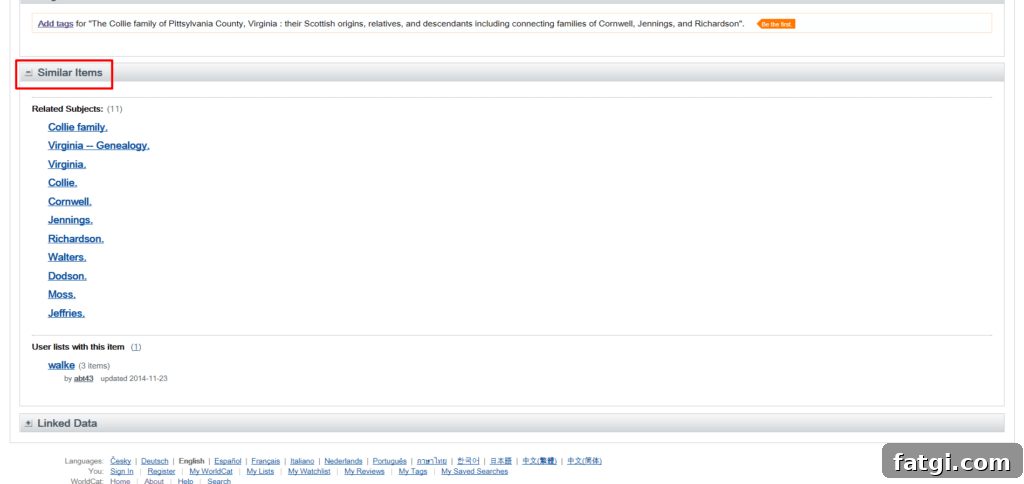
This section may include related subjects, names, locations, and topics. Some may be familiar, while others may introduce new research paths. These subject headings can be valuable clues, helping you locate additional books and records connected to your ancestors, their communities, and the places where they lived.
Other Types of Information Searches Useful on WorldCat
The example above focused on one specific family history book, but WorldCat is useful for many types of genealogy searches. Try searching for broader terms related to your family, location, or research problem. You may find resources connected to:
- Local area histories
- Specific family histories
- Records related to Southern plantations
- Religious records in a region, such as Methodist records in Pennsylvania
Tip: If you are unsure how to search effectively, ask your local librarian for help using WorldCat. Librarians are excellent research partners and can often suggest better search terms or help you request materials through interlibrary loan.
Your Takeaway
WorldCat is a powerful tool for genealogy research. It can help you locate family history books, county histories, local records, and other research materials that may not be digitized or easy to find elsewhere.
Spend time experimenting with different searches. Try surnames, county names, town names, religious denominations, and book titles. The more you explore, the more likely you are to discover valuable resources for your family history research.
Other Posts of Interest
- How to Create Your Genealogy Research Plan
- How To Perform Your Genealogy Searches More Successfully
- Using Google Image Search in Your Research
Listen to this blog post on YouTube!
Pin for Future Reference!