Following my previous post, here’s a reader question from James about leggy chilli seedlings and grow lights.
Question
I started some plants from seed. They took a couple of weeks to germinate, and when they finally emerged the outdoor sun was too intense for such young seedlings, so I moved them under a grow light purchased from Home Depot. The bulb is an incandescent Phillips bulb placed in a desk lamp shining down on the seedlings. After a week or two the seedlings have grown noticeably taller, but they are mostly stem and have not developed true leaves, even though they are 3–4 inches tall. Is this normal?
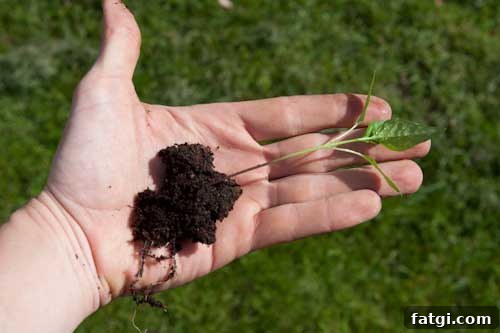
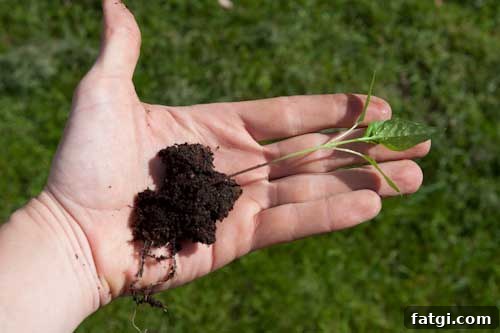 Is this seedling leggy?
I have seen photos of much smaller plants that already have at least two sets of true leaves and appear more compact. I thought possibly the light spectrum or frequency is wrong and that I should change lights. What are your thoughts?
Answer
There are a few distinct points to consider from your description: variety differences, light type and placement, cultural care, and simple corrective steps you can take to produce more robust seedlings.
Variety matters. Different chilli varieties show very different early growth habits. Some types, like Cayenne, naturally develop a taller, more open seedling form, while others—such as some hot varieties—tend to be compact and put early energy into leaf production rather than stem extension. What you’re seeing may partly be down to the cultivar you’re growing. If you’re unsure of the variety, check the seed packet or supplier notes for typical growth habit.
Lighting type and heat. Incandescent bulbs produce a lot of heat relative to their light output in the useful photosynthetic wavelengths. To be effective for seedlings, they must be placed very close to the plants, which often results in heat stress or scorching. A plant that is stretching toward a weak or distant light source will elongate its stem in an attempt to reach better illumination—this is the classic “leggy” response.
The better options for young chilli plants are modern grow lights that emit the right spectrum and much less heat. Compact fluorescent (CFL) bulbs and full-spectrum LED grow lights deliver light in the blue and red wavelengths that seedlings need, while keeping temperatures low so lights can safely be placed close to the foliage. Blue-rich light in particular encourages shorter, stockier growth and stronger leaf development.
Light placement and duration. Besides bulb type, the distance from the light and the number of hours of illumination matter. Seedlings do best with bright, even light placed just a few inches above them—close enough to prevent stretching but far enough to avoid direct heat. Aim for 12–16 hours of light per day for seedlings, then give a dark period to mimic natural night and help normal plant metabolism.
Corrective steps for leggy seedlings:
- Switch to an appropriate grow light if possible: CFL or a quality full-spectrum LED. These will provide better light quality with minimal heat.
- Lower the light to maintain only a few inches between the top of the seedlings and the light source, monitoring temperature to avoid warming the leaves.
- When transplanting or potting on, plant leggy seedlings deeper in the new soil so part of the stem is buried. Chilli stems readily produce roots along the buried section, which strengthens the plant and reduces top-heaviness.
- Improve air circulation and keep temperatures moderate. Gentle airflow and slightly cooler conditions help seedlings stay compact and develop stronger stems.
- Use a weak, balanced fertilizer once true leaves appear. Avoid overfeeding early on, but a light feed encourages healthy leaf growth after establishment.
- Avoid overwatering. Waterlogged media can weaken stems and roots; keep growing medium moist but not saturated and allow surface to dry slightly between waterings.
- Consider gently pinching or topping very leggy seedlings once a couple of true leaves form. This encourages branching and bushier growth rather than further vertical extension.
Finally, be patient: some seedlings take longer to produce multiple true leaves, and recovery after moving under new light conditions can take several days. Combining an appropriate light source, correct light distance, careful watering, and deeper planting when potting on will usually convert leggy seedlings into healthy, vigorous plants ready for the next stage of growth.