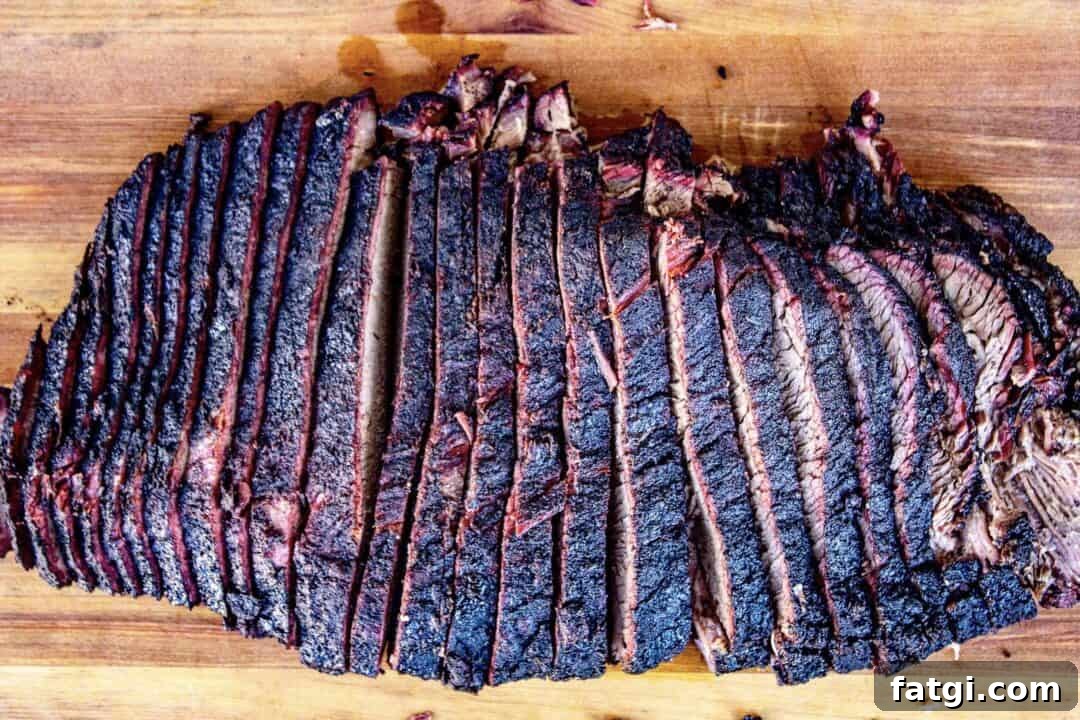
A Smoked Brisket Recipe That Produces Outstanding Results
When I first started smoking meat I was intimidated by large cuts like brisket or pork shoulder. Big pieces can be confusing to handle if you’ve never done it, and it’s easy to waste time and money if the result is tough or dry. This smoked brisket recipe is straightforward and written to help you get consistent, delicious results without unnecessary stress.
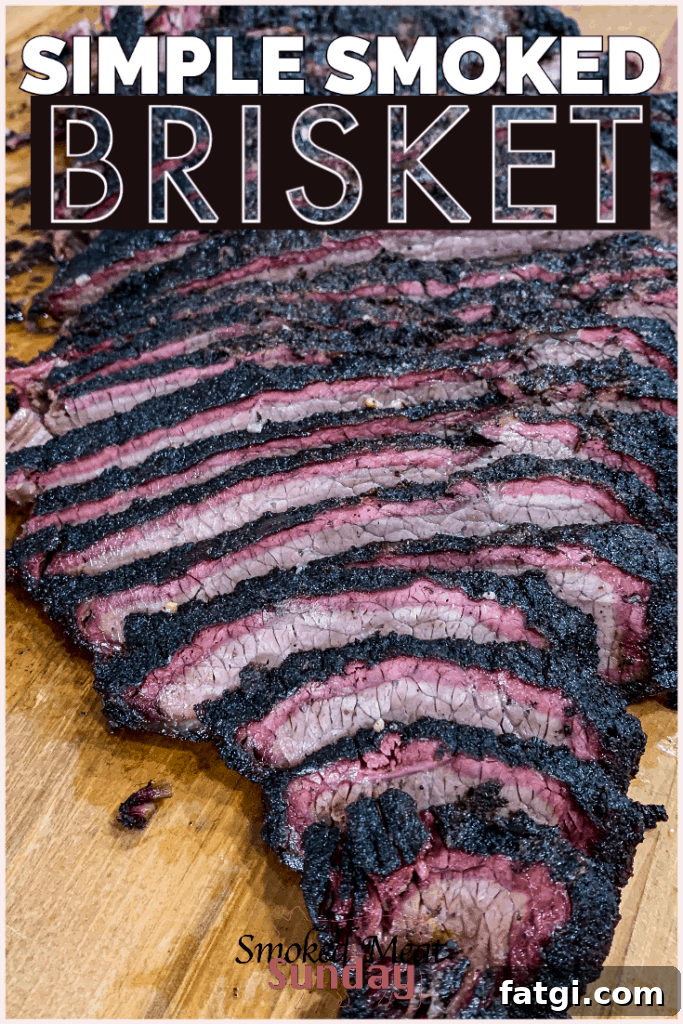
How to Choose a Brisket
Choosing the right brisket at the butcher or grocery will make a huge difference in the final result. Here are the practical things to look for:
- Choose a whole packer brisket (if you can). A packer brisket includes the point and the flat. The point is fattier and makes excellent burnt ends; the flat is leaner and slices beautifully. Whole briskets usually weigh 10–15+ pounds and feed a crowd.
- Pick a higher grade if possible. Choice or Prime offers better marbling and more forgiving results when cooking low and slow. Select grade can work, but may require extra attention to keep the meat moist.
For special occasions, wagyu brisket is outstanding for flavor and texture. For regular cooks, prime or choice is often the best value.
A Smoked Brisket Recipe for Beginners
Brisket on a smoker can feel overwhelming at first. This guide walks through trimming, seasoning, smoking, handling the stall, resting, and slicing so you understand each step and why it matters. After reading, feel free to ask questions in the comments if anything is unclear.
- How to trim a brisket
- Which rub and binder to use
- Wood selection and smoking temperature
- How to handle the stall
- Resting and slicing tips
- Suggested sides to serve
How to Smoke a Brisket
Smoked Brisket Recipe Prep Work
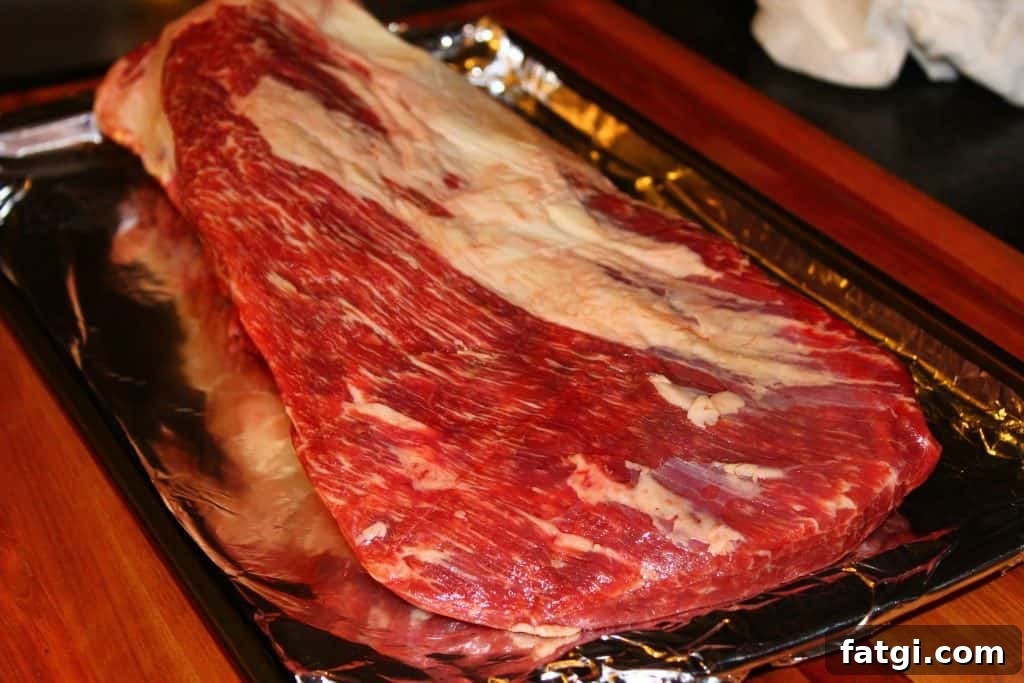
Start by assessing the fat on the brisket. One end can have very thick fat separating the point and flat. Trim most large, hard fat deposits off, leaving about a 1/4 inch of fat to help baste the meat during the cook. As a rule: if the fat is hard, trim it; if it’s soft, leave it.
Some cooks experiment with trimming all fat on higher-grade cuts like wagyu or prime. That can work, but for lower grades I recommend keeping some fat for moisture.
Smoked Brisket Rub and Binder
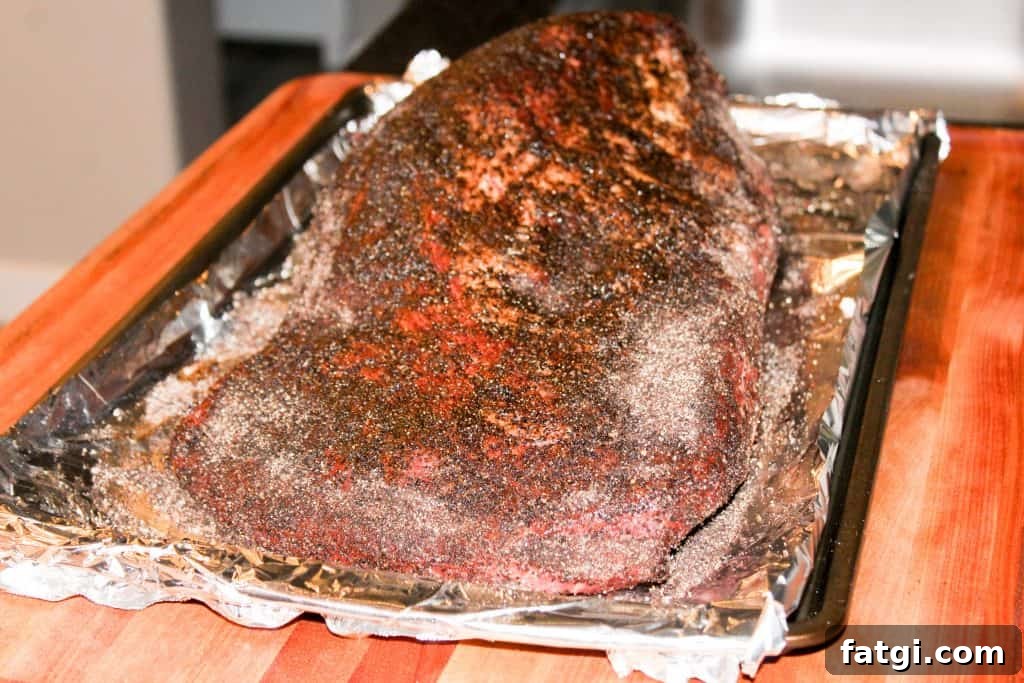
After trimming, coat the brisket with about 2 tablespoons of olive oil or another binder (mustard, avocado oil, or hot sauce). The binder helps the rub adhere. Apply your rub liberally — a little rub won’t adequately season a whole brisket. Be generous so the bark develops well.
If you make your own rub, aim for a balanced base of salt, pepper, and complementary spices. A touch of coffee in the rub can enhance natural beef flavor without overpowering it.
Smoking — Wood Selection and Temperature
Set your smoker for indirect heat at 225°F (about 107°C). Oak is a reliable choice for brisket; mesquite will add stronger smoke character if you prefer bolder flavor. Place the brisket on the grates fat cap down to protect the meat from direct heat.
Plan for a long cook: a common guideline is roughly 90 minutes per pound at 225°F. That means a large brisket can take 12–18 hours depending on size and conditions.
After about 4 hours, check internal temperature with a reliable thermometer by probing the thickest part of the flat. If you monitor temps remotely, try to avoid opening the smoker frequently to preserve heat and smoke.
Dealing with the Stall (Texas Crutch)
Expect a stall around 160–165°F (71–74°C), when internal temperature plateaus for hours. This is normal — don’t raise smoker temp to force progress. When the surface has developed a dark mahogany bark, wrap the brisket tightly in butcher paper (or foil if you prefer) and return it to the smoker. This technique — often called the Texas Crutch — helps push through the stall and retain moisture.
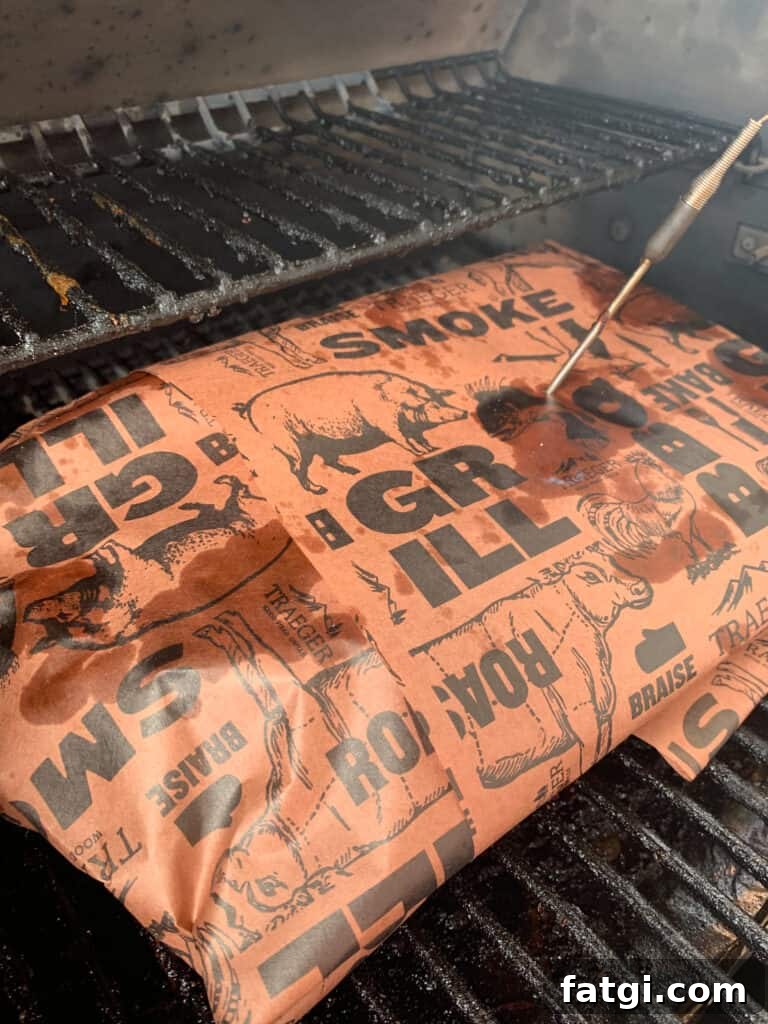
After wrapping, probe through the paper and monitor the internal temperature every hour until it reaches around 200°F (93°C). At that point, remove the brisket from the smoker.
Wrap the butcher paper with foil and place the brisket in a cooler with towels on top. Let it rest for at least one hour — two hours is ideal — to allow juices to redistribute. I’ve held briskets in a cooler for several hours; longer rests often improve texture as long as the meat stays above about 150°F.
Resting and Slicing
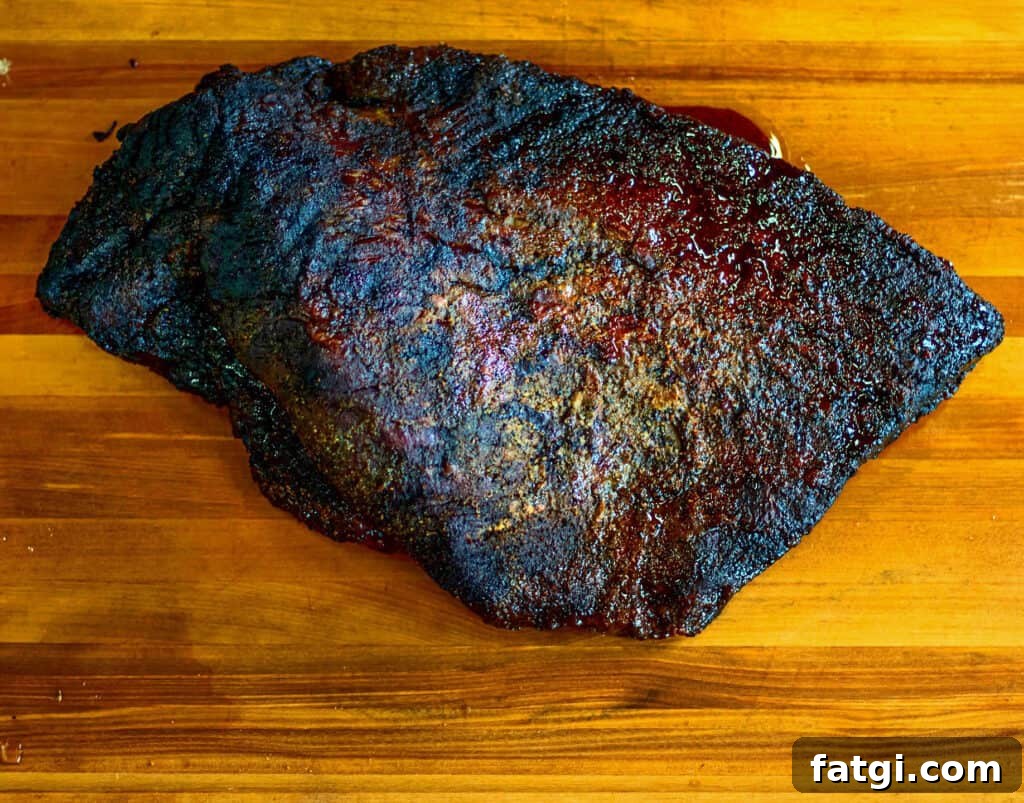
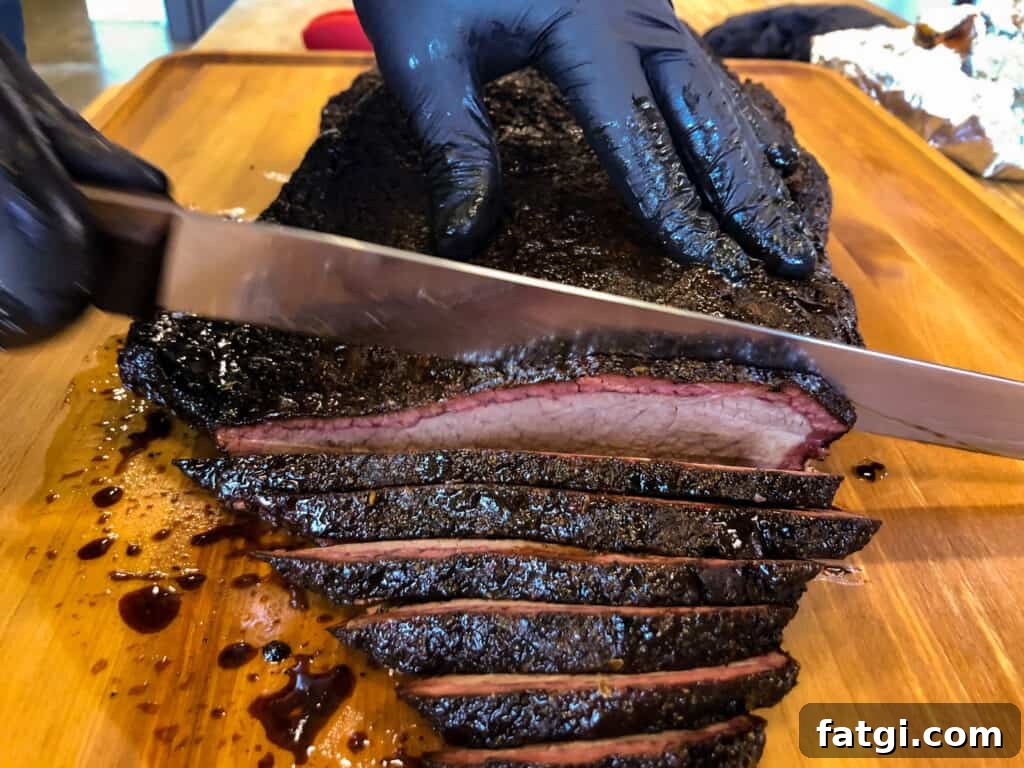
When ready to serve, separate the point and flat and slice each portion against the grain into thin slices. The flat typically has a single grain direction; the point’s grain often runs differently, so adjust your cuts accordingly. The point can also be cubed and used to make burnt ends if desired.
Sides for Smoked Brisket
A smoked brisket meal benefits from simple, classic sides. Consider a crisp wedge salad to cut richness, warm cornbread with butter, and barbecue baked beans or a three-bean casserole. These sides pair well and help stretch the meal to feed a crowd.
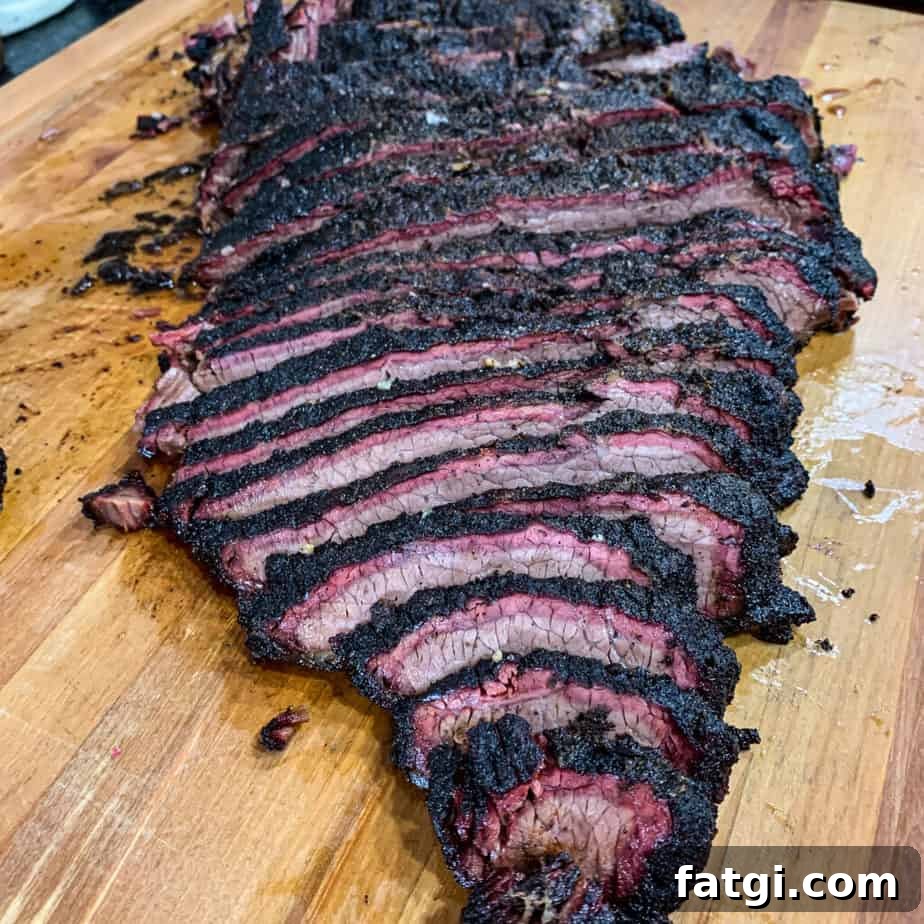
A whole smoked brisket can feed many people — leftovers keep well and make great sandwiches.
Smoked Brisket
Summary: This is wagyu brisket cooked low and slow with a flavorful rub. Plan ahead and allow ample cook and rest time. Expect about 90 minutes per pound at 225°F as a guideline.
Equipment
- Reliable instant-read thermometer
- Remote or alarm thermometer for monitoring smoker temperatures
- Disposable gloves
- Butcher paper or aluminum foil
Ingredients
- 12 lbs whole brisket
- 2 tbsp olive oil (garlic-infused optional)
- 4 tbsp barbecue rub (or more, generously)
Instructions
- Remove brisket from the refrigerator and trim fat, leaving about 1/4″ of fat. Avoid over-trimming where the point and flat meet.
- Preheat smoker to 225°F using indirect heat and your preferred wood (oak or mesquite recommended).
- Apply the binder (olive oil or another option) over the entire brisket to help the rub stick.
- Generously coat the brisket with rub, covering all surfaces.
- Place the brisket on the smoker, fat cap down. Expect a long cook — plan accordingly and avoid opening the smoker frequently.
- After about 4 hours, check internal temps. For accuracy, probe the thickest part of the flat; tracking both point and flat is useful since they cook at different rates.
- When the brisket reaches roughly 160°F and the bark looks well developed, wrap tightly in butcher paper and return to the smoker.
- Monitor until the internal temperature reaches about 200°F. Then remove from the smoker.
- Wrap the papered brisket in foil and place it in a cooler with towels. Let it rest for a minimum of one hour; two hours is better.
- Slice against the grain into thin slices. Separate the point and flat and cut each appropriately. Serve with your favorite sides.
Notes
- Use kosher salt in your rub; if substituting table salt, reduce the amount.
- Be generous with rub — a large brisket needs a lot of seasoning for good bark and flavor.
- Allow extra time for the stall and for resting; it’s better to finish early than to rush the cook.