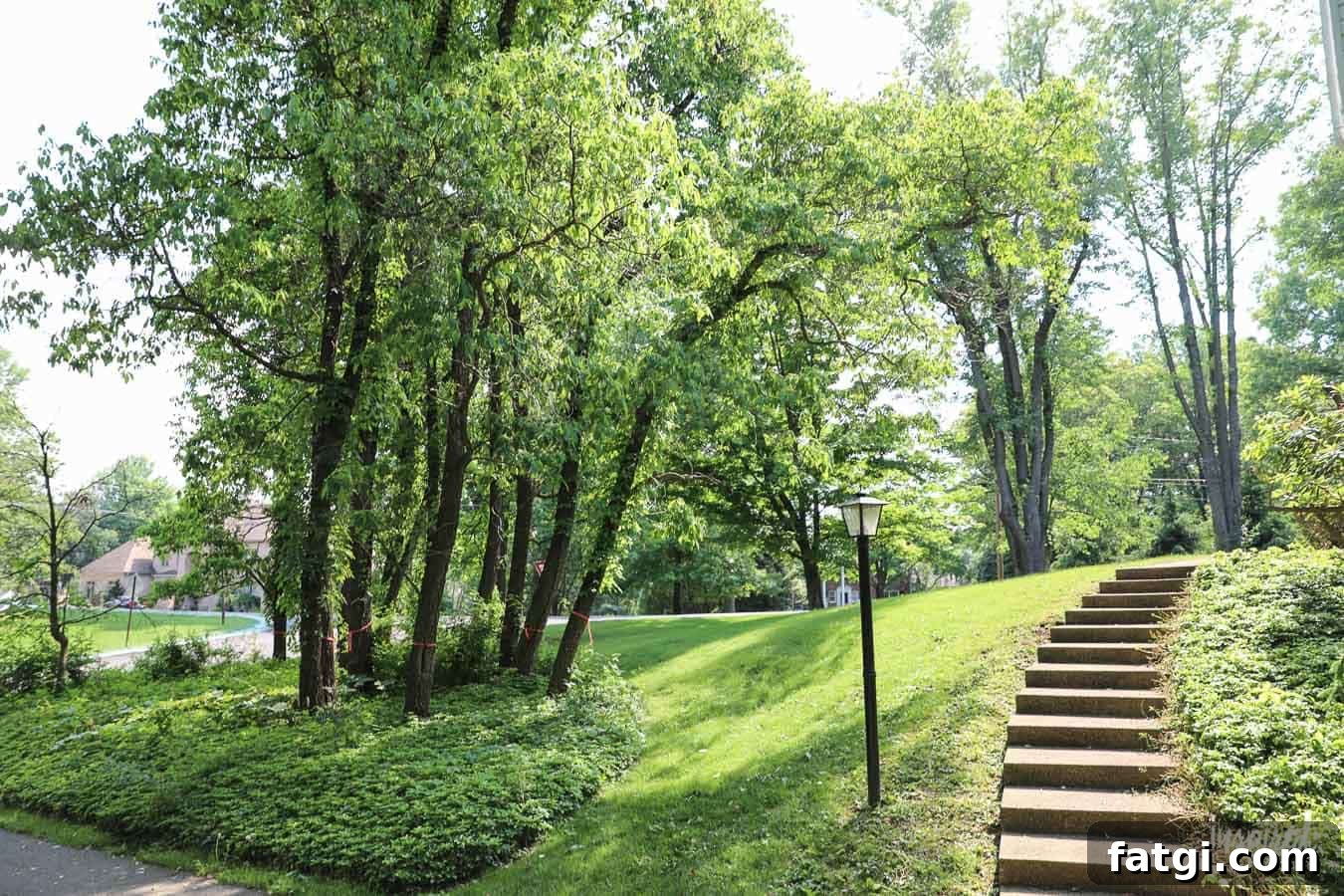
Front Yard Landscaping: Progress Update
With a few inches of snow on the ground, now seems like a good moment to share progress on my front yard landscaping. I captured photos at the beginning and at the end of the project, and while it’s taken me a bit longer than I expected to post them, I wanted to show what we started with and how the space has been prepared for its next phase.
Last June I purchased my current home, a property with two acres that had clearly been neglected for several years. Revitalizing the yard was one of the first items on my improvement list. There’s a lot of potential here, but it needed thoughtful attention to bring it back to life.
The first area I focused on was a grove of trees directly in front of the house. While the grouping provided privacy and shade, the planting bed itself had become overgrown and disorderly.
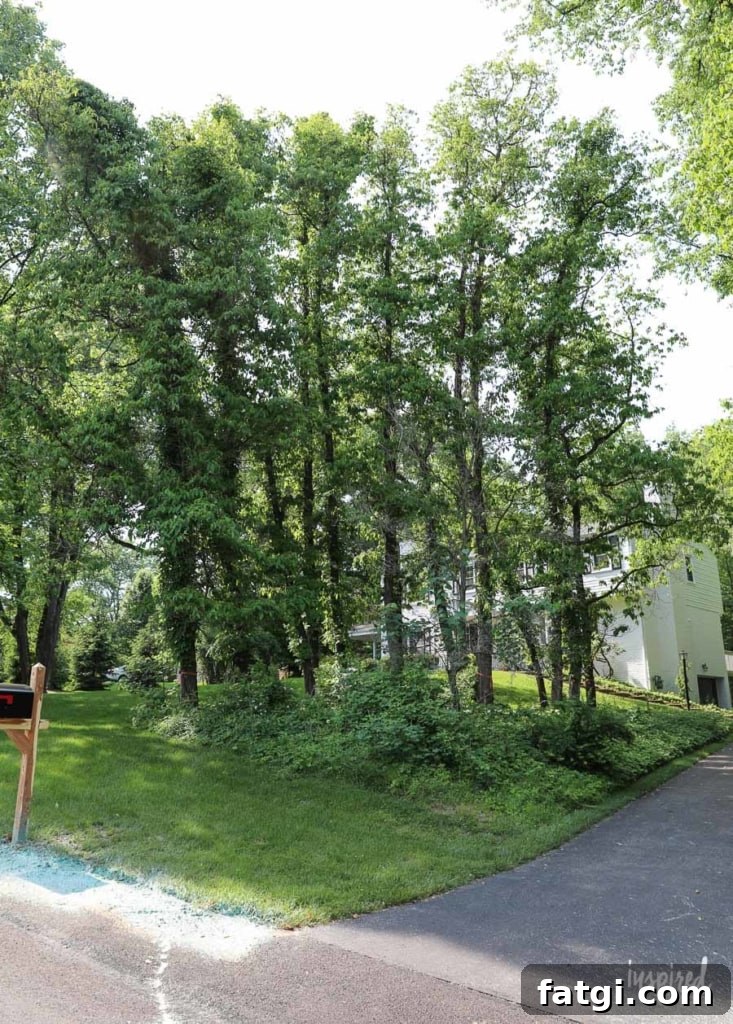
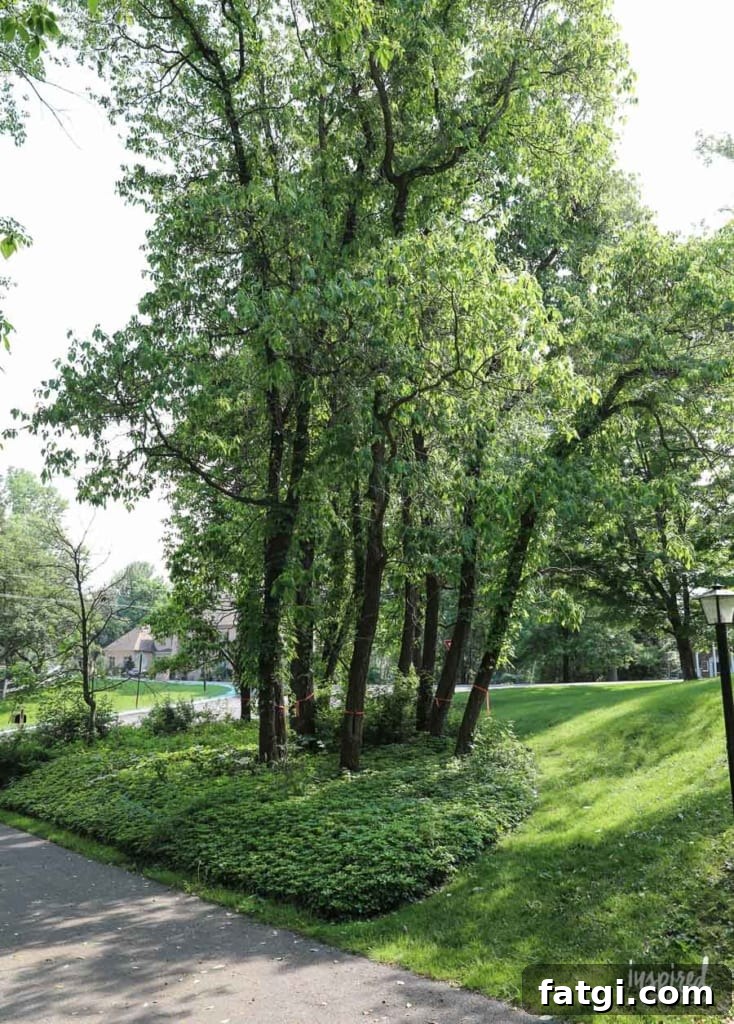
The trees in place weren’t the most attractive specimens and many were being overtaken by vines. Several trees were already dead, and many others appeared to be volunteer growth, resulting in poor spacing and a crowded, choked understory. Beneath the canopy, random saplings, shrubs and weeds were taking over the groundcover, making the whole bed look messy. It was clear that a clean slate was needed to create a healthier, more intentional planting.
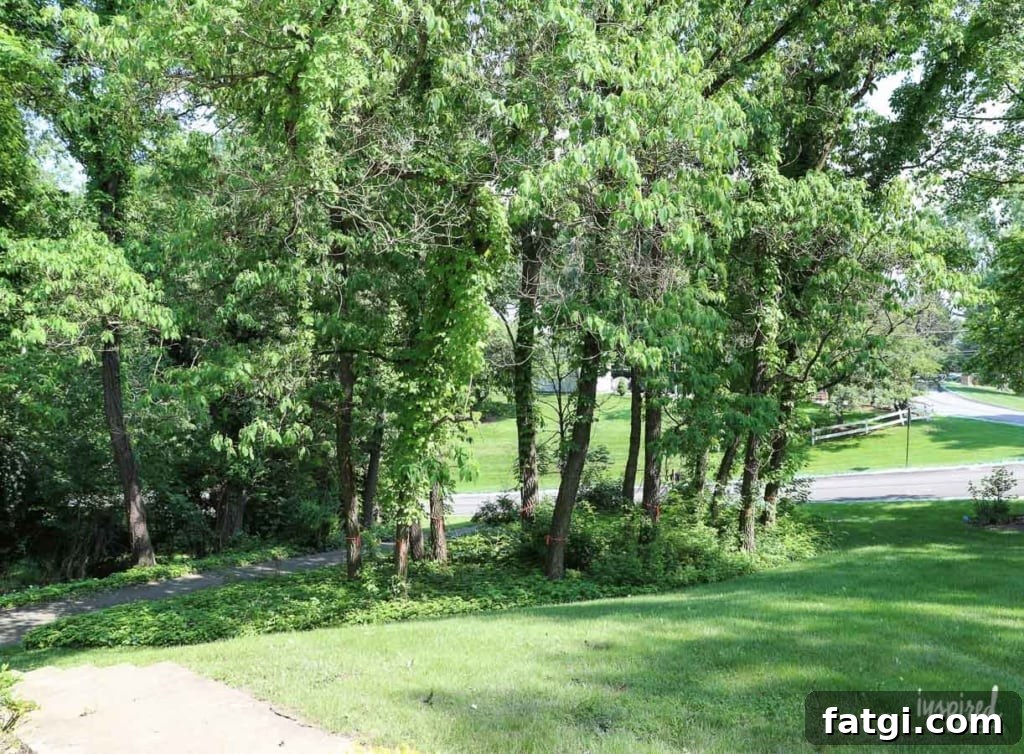
For safety and efficiency I hired a local tree-trimming and removal service to take down the problematic trees and grind or remove the stumps. This work required equipment and expertise I didn’t have, and the crew made quick work of clearing the area. In just an afternoon the bed was opened up and several other dead or oddly placed trees on that end of the property were removed as well.
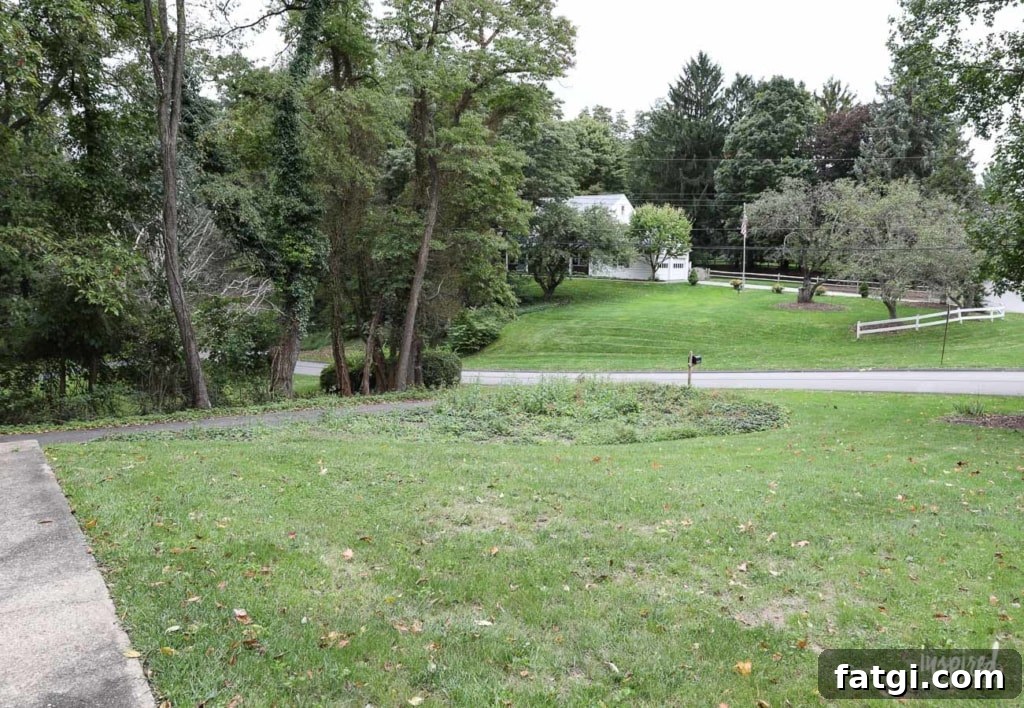
I would have removed a few more trees, but local borough regulations limit how many trees can be cut at once and require approval for removal of any tree with a diameter larger than six inches. That restriction can be frustrating when you’re eager to clean up a site, but I understand its purpose: to help preserve the wooded character of the neighborhood and prevent overclearing.
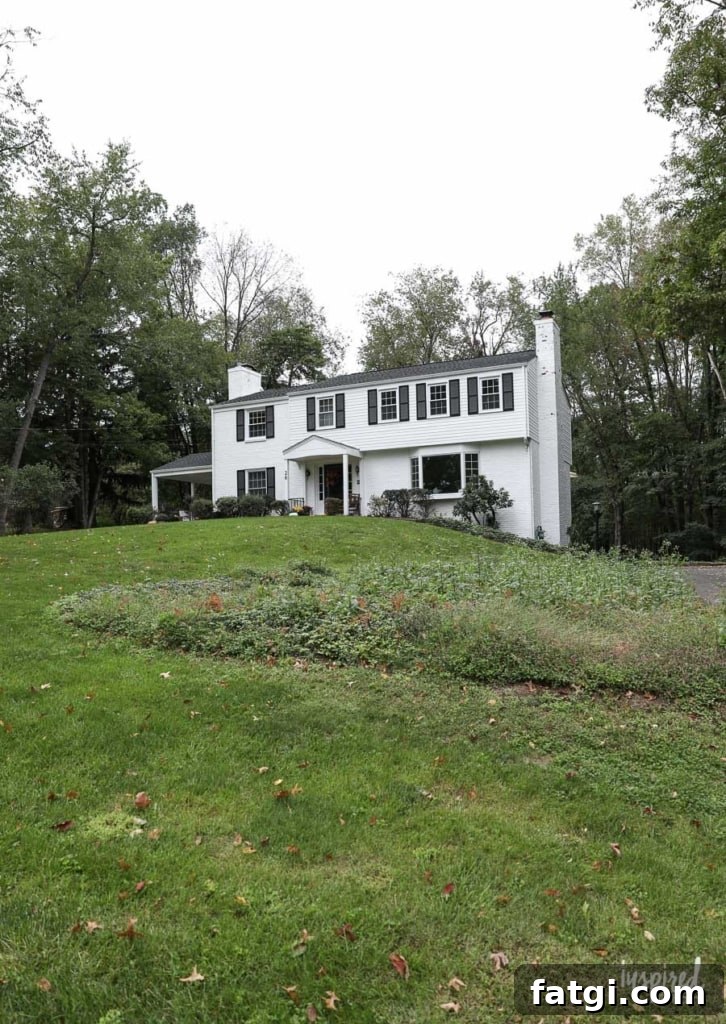
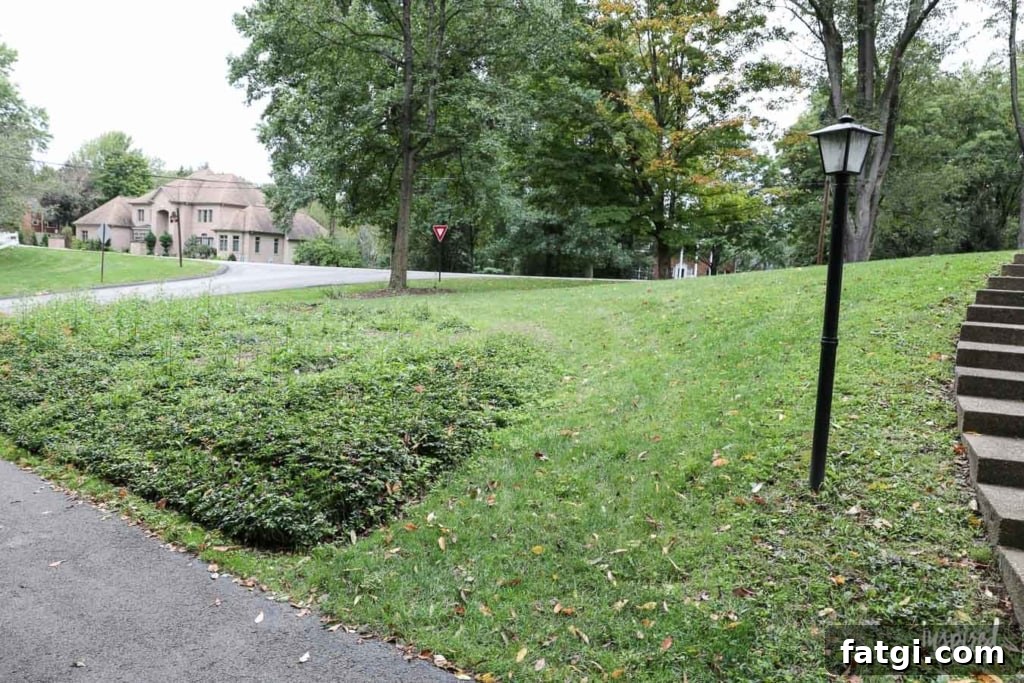
With the canopy thinned and the site cleared, I collaborated with a local landscaper to design a planting plan that would transform this awkward bed into an attractive, low-maintenance feature. We discussed light conditions, soil, plant spacing and long-term maintenance, and then chose plants and a layout that will work well under the remaining trees and complement the house.
This stage of the process looks raw; it’s one of those transformations that truly gets worse before it gets better. Removing the old growth and establishing proper spacing takes time, but starting from a clean foundation will allow the new plantings to thrive and give the yard a more intentional, curated look.
I also researched and found a reputable company I’m excited to work with for the broader yard renovation. My plan is to have them tackle a portion of the property each year, while I handle a few projects myself, so the entire landscape will gradually become more manicured and well-loved without overwhelming my schedule or budget.
After finalizing my goals, selecting the appropriate plants, and settling on the bed layout, an installation date was scheduled. Since this post is the “before” update, I’ll pause here and return soon with photos and details of the finished installation.
Thanks for following along — I’ll share the completed front yard landscaping soon. In the meantime, I hope this look at the clearing and planning stages gives a useful preview of how the space is being prepared for its next chapter.