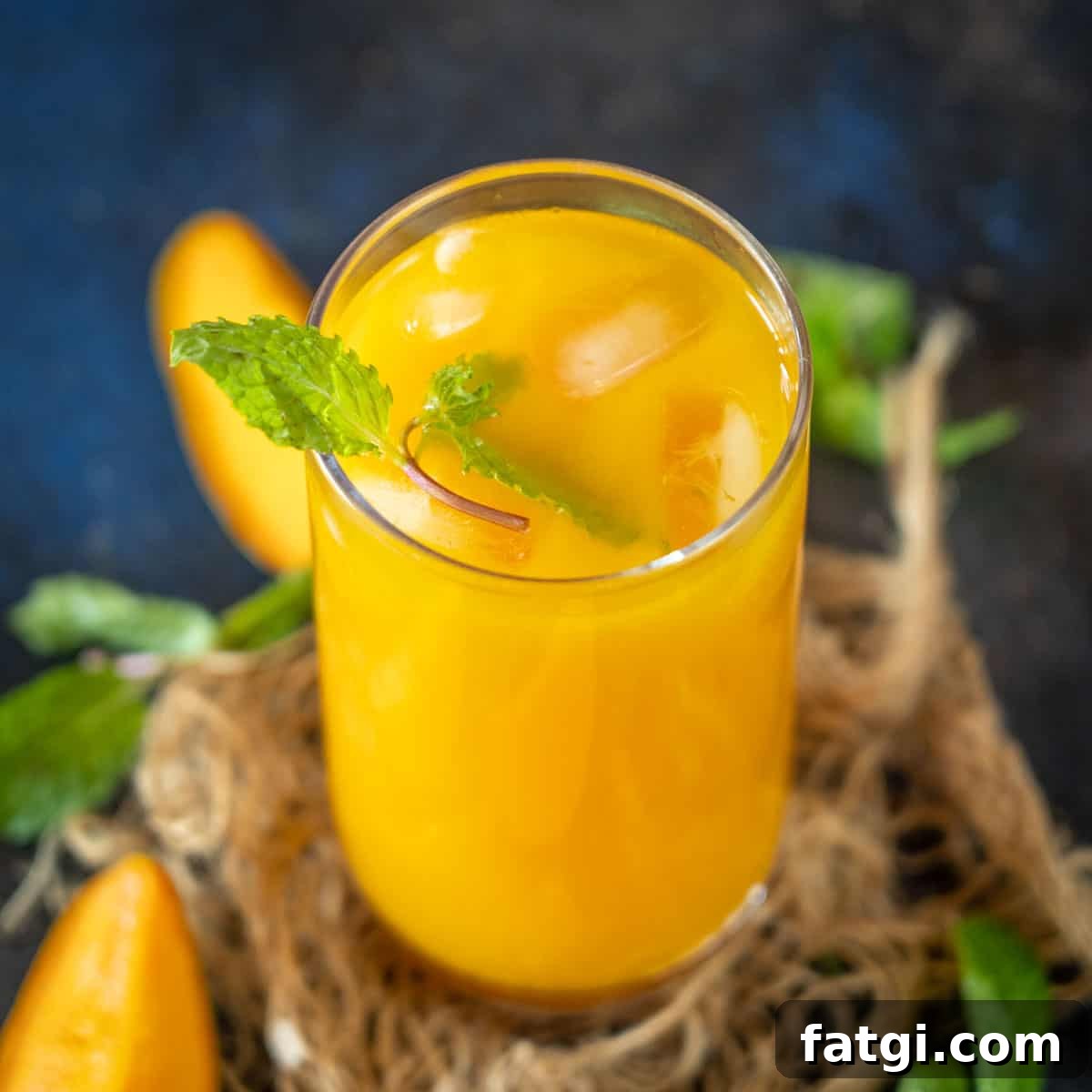
Mango Juice is incredibly simple to prepare at home using just two main ingredients. When fresh, ripe mangoes are in season this tropical drink is at its best, but you can also use frozen mango chunks or canned mango puree to enjoy it year-round. This recipe is naturally vegan and gluten-free and makes a refreshing beverage for warm days.
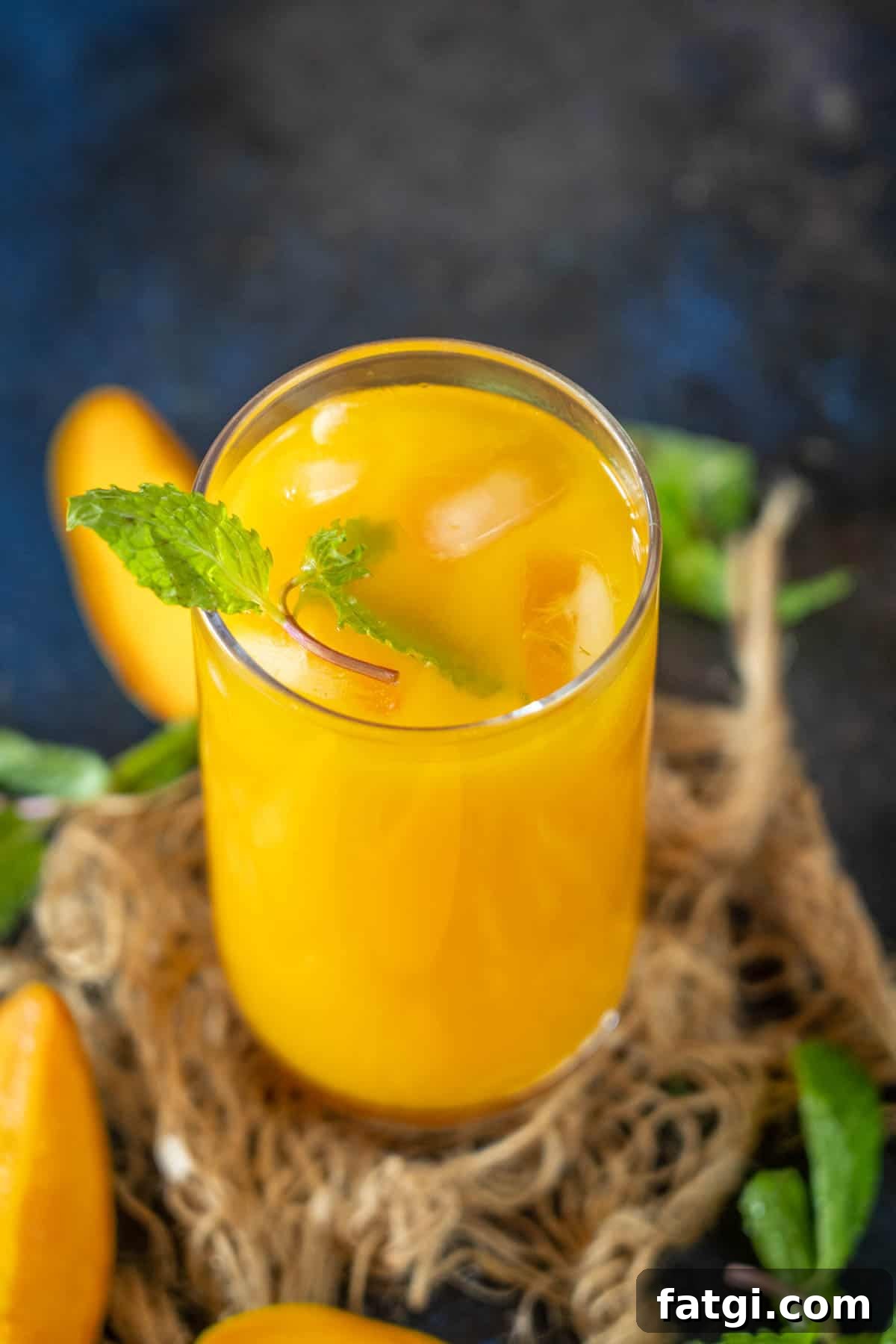
About Mango Juice
Mango juice is a sweet, fragrant drink with a smooth, fruity flavor. It requires minimal preparation: peel and chop the mangoes, blend with a little sugar and water, strain if you prefer a finer texture, and chill. You can make it in a blender, food processor, or with an immersion blender in minutes.
Homemade mango juice is superior to most store-bought versions because it contains no artificial flavors, colors, preservatives, or unnecessary additives. Making it at home is also more economical and allows you to control sweetness and consistency.
Serve mango juice chilled for breakfast, brunch, with snacks, or as a cooling drink on hot afternoons.
Ingredients
Mangoes – Fresh ripe mangoes produce the best flavor. If using fresh fruit, choose ripe mangoes that yield slightly to gentle pressure and give off a sweet, fruity aroma. Avoid fruit with black or overly soft patches. Varieties with fewer fibers — such as Ataulfo, Alphonso, Kesar, or Champagne — are ideal for a smooth juice.
If fresh mangoes are unavailable, frozen mango chunks or canned mango puree work well. You can also make and freeze mango pulp during peak season to use later.
Water – Plain chilled water is used to thin the puree to a drinkable consistency. For extra flavor and nutrients, substitute part or all of the water with coconut water or freshly squeezed orange juice. Both options complement mango and help balance its natural warmth.
Sugar – Add sugar or your preferred sweetener only if needed. Ripe mangoes are often sweet enough on their own; alternatives include honey (not vegan), maple syrup, or low-calorie sweeteners for a lighter option.
Variations
Customize the juice with mix-ins and spices: a handful of fresh mint or basil adds herbaceous notes; a small piece of fresh ginger adds warmth and spice; a pinch of black salt enhances the mango’s sweetness; a splash of lime or lemon juice gives a pleasant tang. Soaked chia seeds can be added for texture and cooling benefits.
For a creamier, tropical twist, blend mango with coconut water or young coconut meat. For a fruitier blend, combine mango with pineapple, orange, or passion fruit for a bright, layered flavor.
How To Make Mango Juice
Preparation
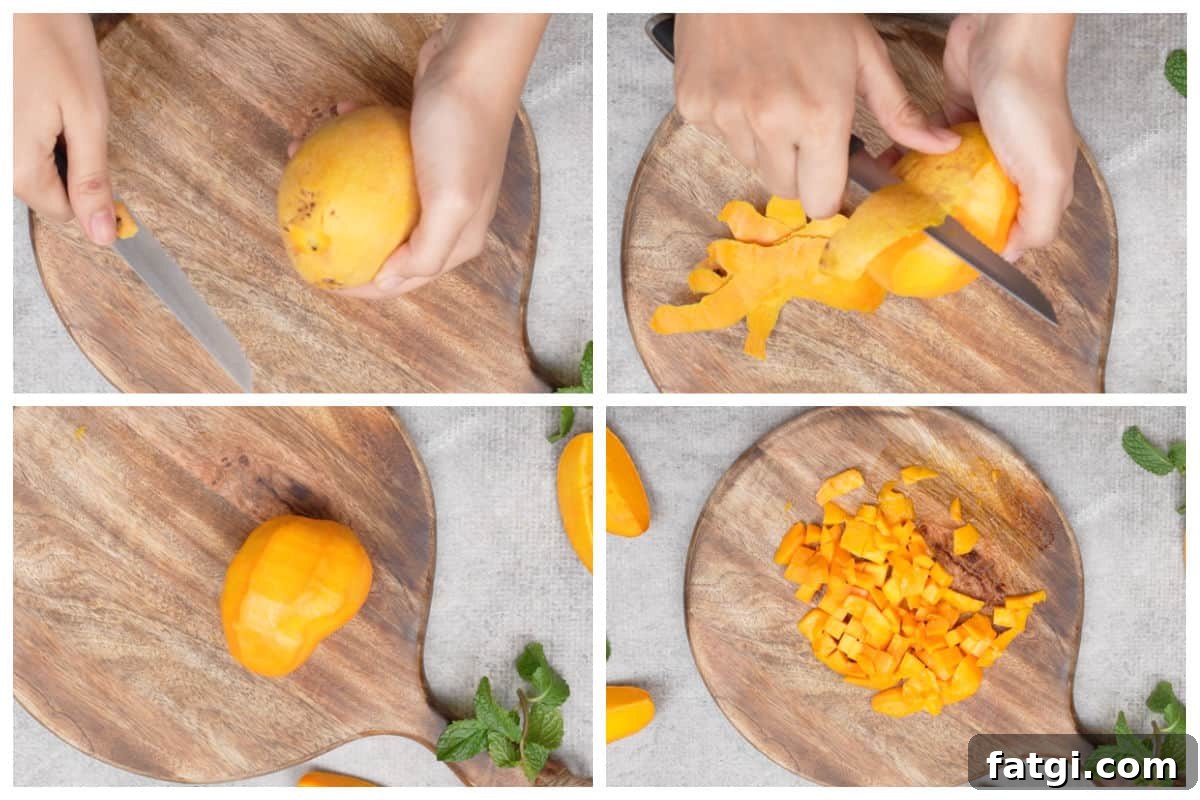
Wash and, if desired, soak whole mangoes in clean water for about 1 hour to remove any surface residue. Peel the mangoes with a sharp paring knife, slice the flesh away from the pit, discard the pit, and chop the flesh into small pieces. You will need about 2 cups of chopped mango flesh (roughly 2 large mangoes).
Make The Juice
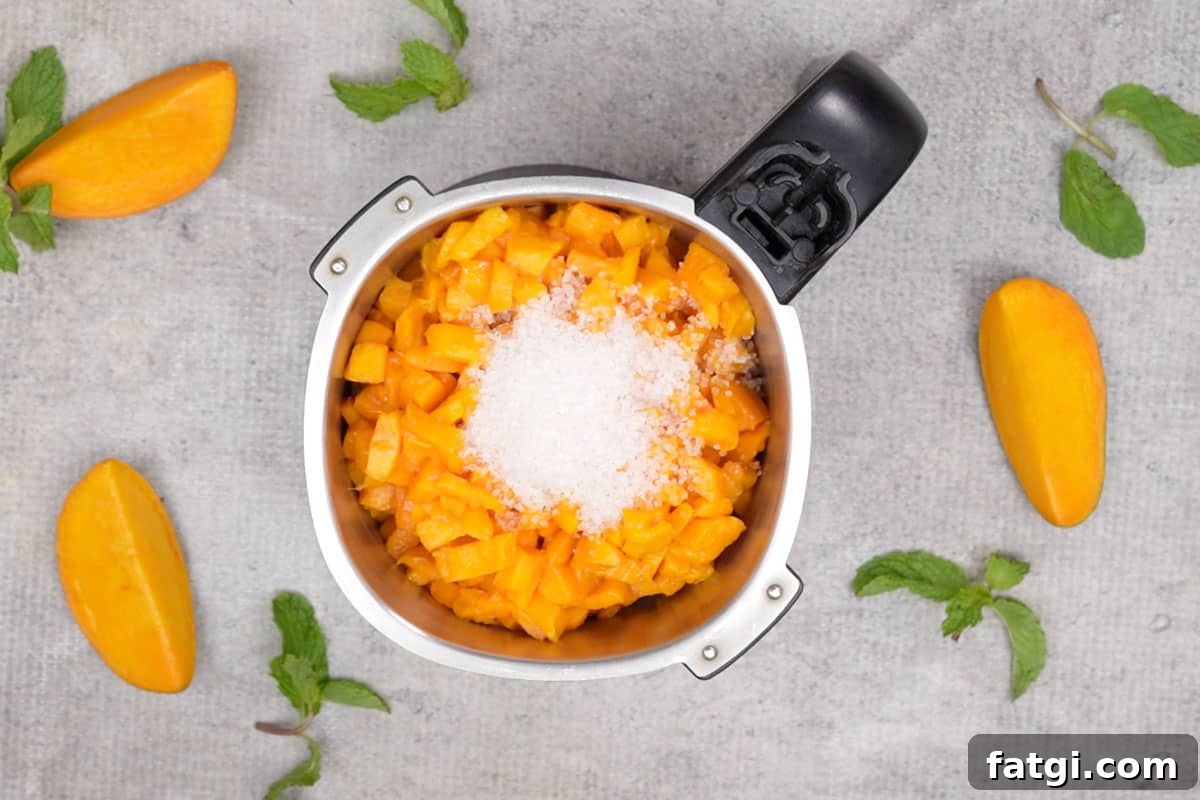
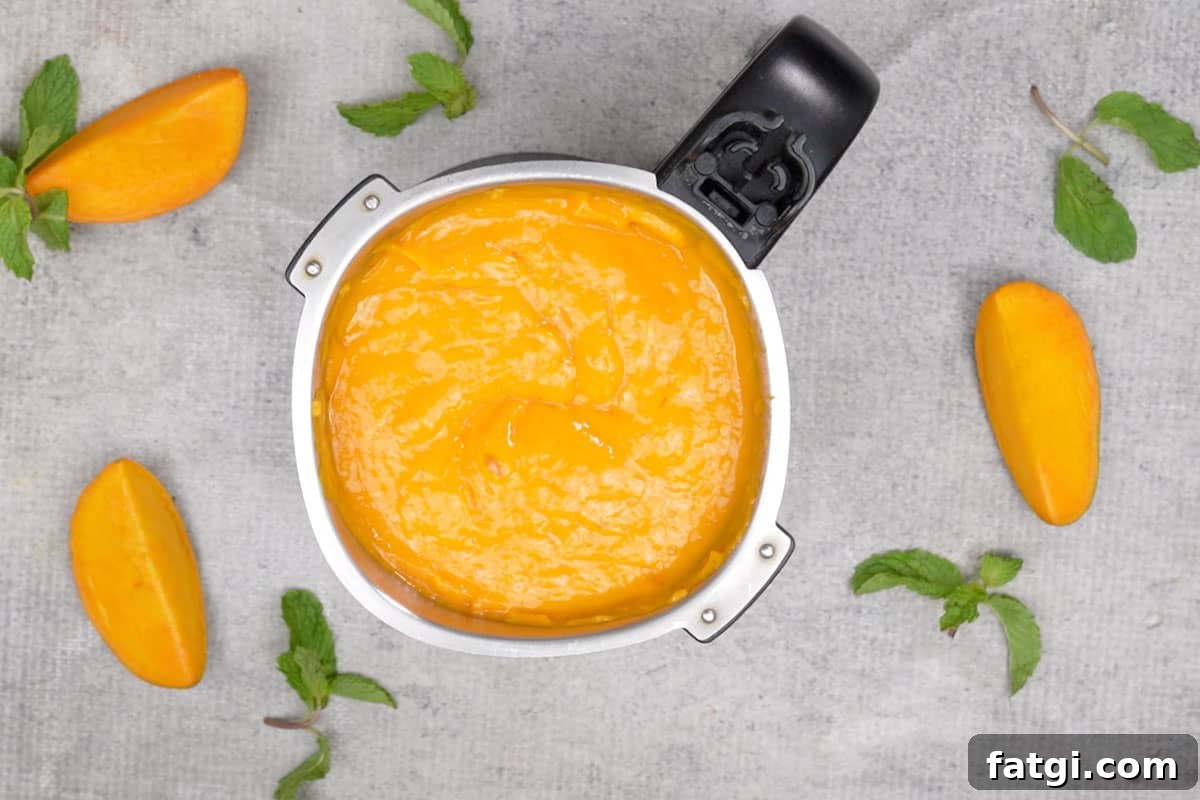
Place 2 cups of chopped mango and 2 tablespoons of sugar (adjust to taste) into a blender or food processor. Blend until completely smooth.
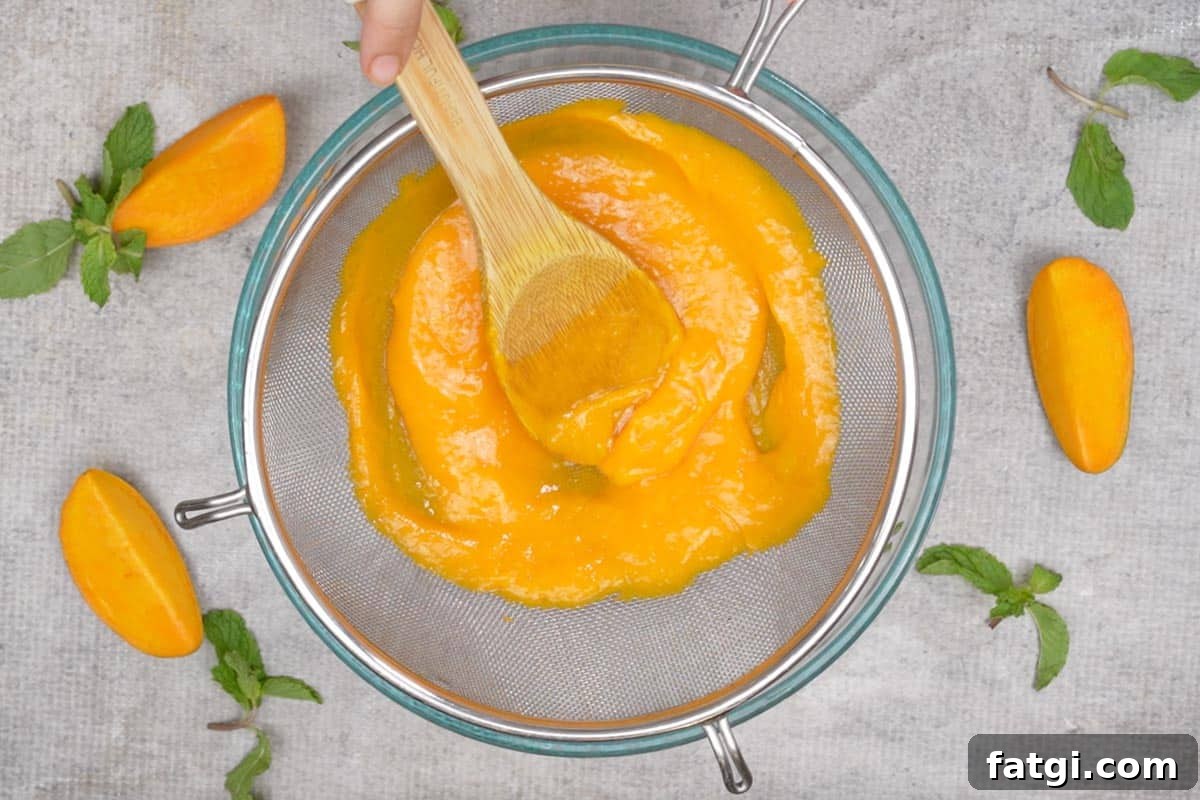
For a silky texture, pass the blended mango pulp through a fine-mesh strainer, pressing with a spoon or spatula to extract maximum liquid and leave behind fibers. If you prefer thicker, pulpy juice, you can skip straining.
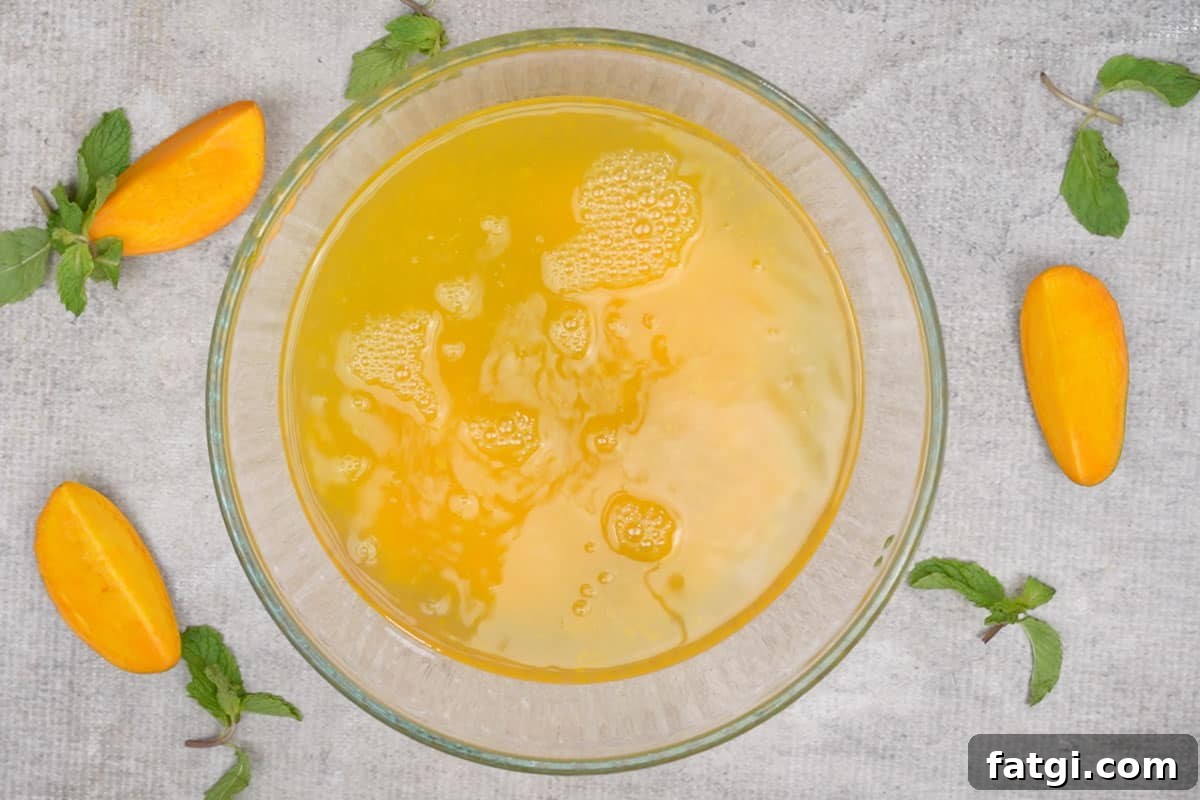
Add 2 cups of chilled water (or coconut water/orange juice) to the strained mango concentrate and stir until fully combined. Taste and adjust sweetness or acidity as desired.
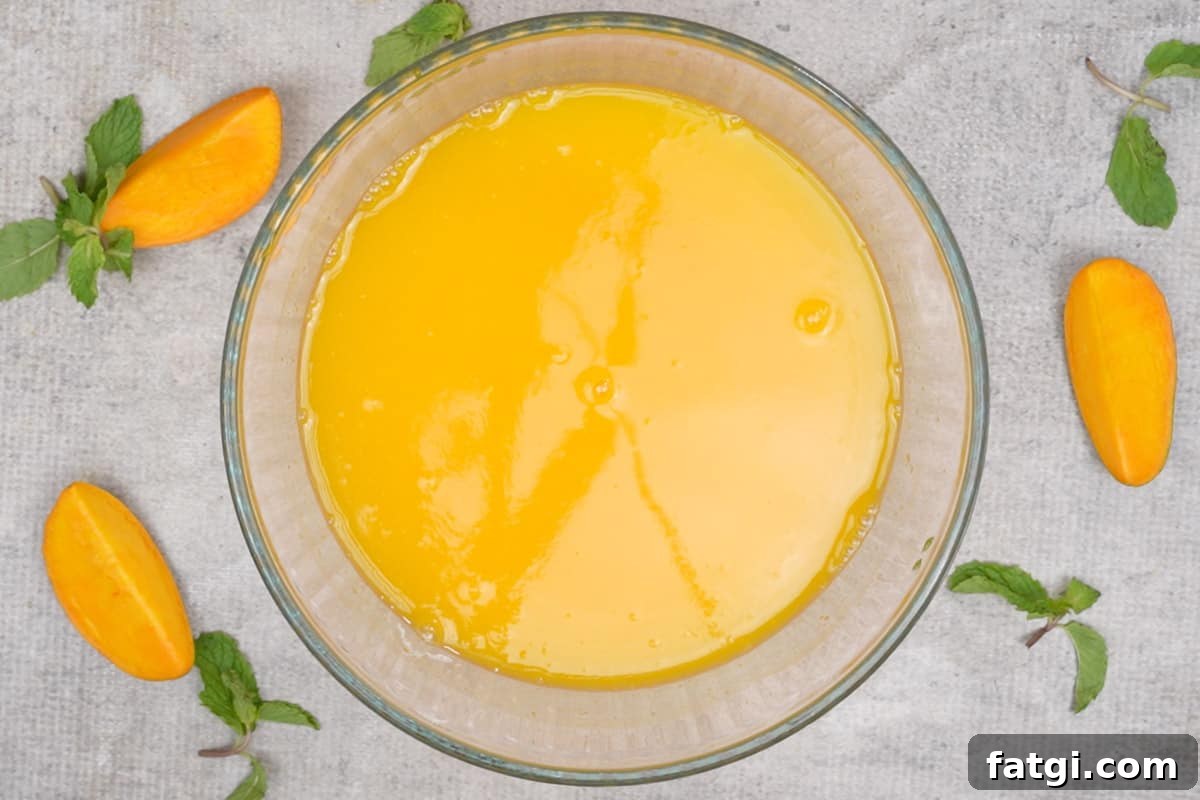
Pour the juice into glasses over ice and serve immediately for the best flavor.
Frequently Asked Questions
Yes. Mango pairs well with citrus fruits like orange or lime, tropical fruits such as pineapple and passion fruit, and mild fruits like watermelon or kiwi. Blend to taste and adjust liquid and sweetener accordingly.
Storage Suggestions
Fresh mango juice tastes best immediately. If you must store it, refrigerate in an airtight container and use within 1–2 days. Separation may occur; gently stir or shake before serving. Do not freeze the finished juice, as the texture and flavor can change. Instead, freeze pureed mango pulp in ice cube trays for later use.
Mango Juice Recipe
Servings: 4 | Prep: 2 mins | Total: 4 mins
Ingredients
- 2 cups peeled and chopped ripe mangoes (about 2 large mangoes)
- 2 tablespoons granulated sugar (adjust to taste)
- 2 cups chilled water (or coconut water / orange juice)
Instructions
- Add mango and sugar to a blender and blend until smooth.
- Pass the mango puree through a fine-mesh strainer for a smooth texture, or leave as is for a pulpy drink.
- Mix in chilled water or your chosen liquid and stir until combined.
- Pour into glasses over ice and serve chilled.
Notes
If mangoes are out of season, substitute frozen mango chunks or canned mango puree. To reduce the warming effect of mango in traditional diets, soak whole mangoes in water for 1–2 hours before peeling. You can enhance the juice with mint, basil, ginger, black salt, lemon or lime juice, or soaked chia seeds. Swap sugar for honey, maple syrup, or low-calorie sweeteners to suit dietary preferences.
Nutrition (approx.)
Per serving: Calories 50; Carbohydrates 12 g; Protein 1 g; Fat 1 g; Fiber 1 g; Vitamin A and C present in good amounts.