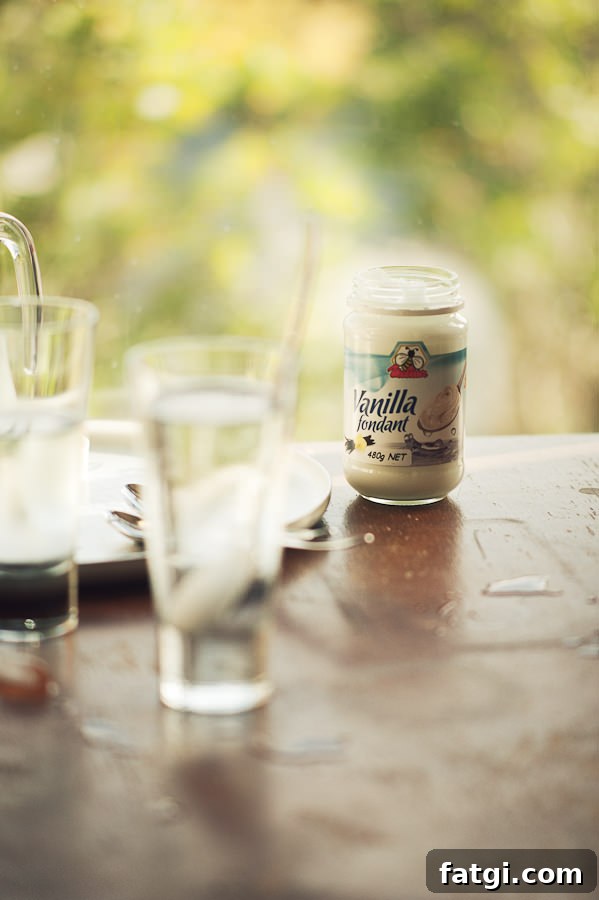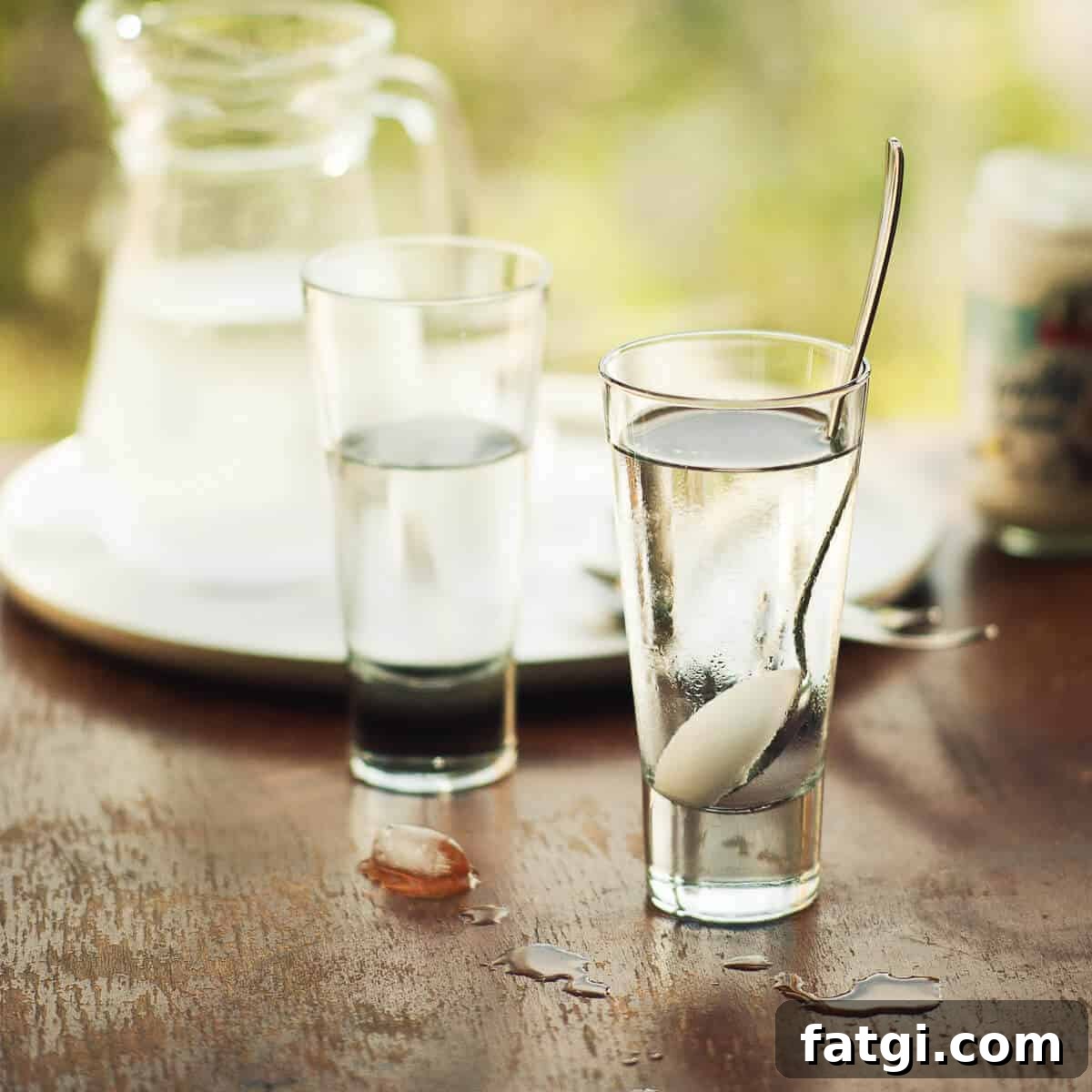
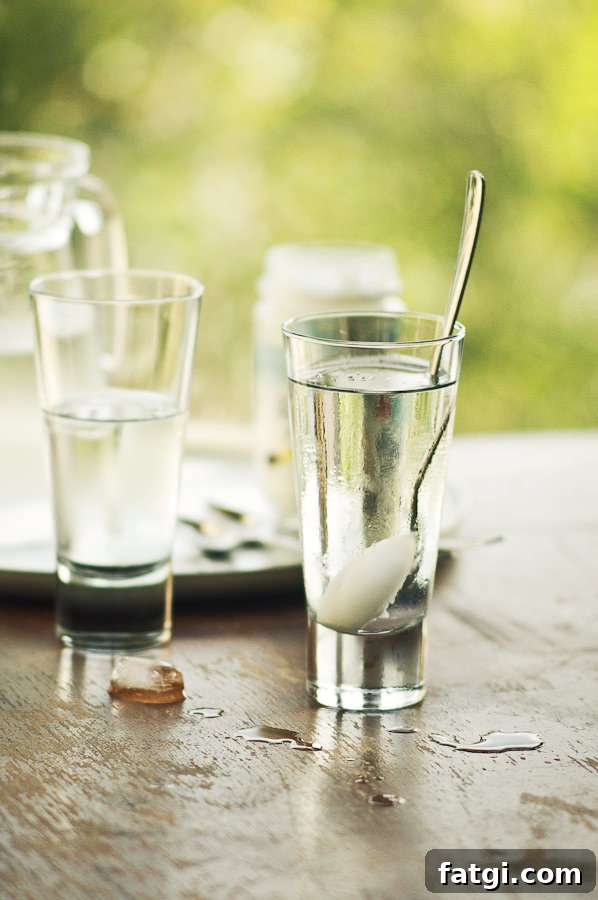
If you know Greek sweets, these pictures will likely make you smile. In Greece this treat is called “βανίλια” or “βανίλια υποβρύχιο” — literally “vanilla” and “vanilla submarine.” It’s a type of vanilla fondant that is commonly enjoyed as a spoon sweet, served and eaten in a simple, charming way that’s very much part of the tradition.
Spoon sweets are single-serving preserves presented in small jars. With vanilla fondant, you dip a spoon into the jar, scoop a little fondant onto the spoon, then dunk the spoon into a glass of cold water and lick the fondant like a lollipop. As the fondant sits in the water, it softens and becomes easier to enjoy; many people sip the chilled water as they go. The ritual is tactile and nostalgic, which is part of the pleasure.
This fondant usually comes in a plain vanilla flavor, and there’s also a version flavored with the famous mastic resin from the island of Chios. Mastic adds a resinous, aromatic note that gives the fondant a distinctive Mediterranean character. Both types are intensely sweet and meant to be savored in small amounts rather than eaten in large quantities.
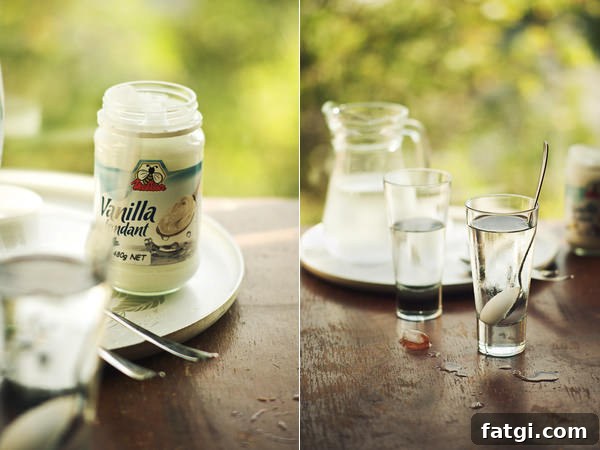
I remember the first time a school friend came over and my mum brought this out on a hot day. He couldn’t stop laughing with delight — the combination of cold water, sugary fondant and the simple spoon-scoop was oddly captivating. That memory is part of why I bought a jar recently after many years; one sight of it transported me straight back to the seventies and the small comforts of childhood.
Not everyone will be enthusiastic. Some will say, “I won’t touch that — it’s full of sugar.” That’s true: vanilla fondant is sugary and sweet. It’s not something for daily indulgence, but rather an occasional treat—perfect for hot weather or as a tiny nostalgic pleasure. When you consider how it’s eaten, a serving is really only a teaspoon or two, so a little goes a long way.
If you decide to try it, look in a local Greek or Middle Eastern deli. Serve it with very cold water and a small spoon. The steps are simple: dip the spoon, scoop a little fondant, dunk into chilled water, lick, and sip. The experience is partly about the contrast of textures and temperatures—the softening fondant, the cold water, the concentrated vanilla sweetness.
Vanilla fondant can also be used beyond the spoon-sweet ritual. It works as a topping or garnish for cakes, biscuits and simple desserts — a small spoonful swirled over frostings or mixed into cream for an extra sweet vanilla kick. Because it’s so concentrated, a little enhances desserts without overwhelming them.
Storage is straightforward: keep the jar sealed and store it in a cool, dry place. Refrigeration isn’t usually required, but if you prefer it very cold before serving, you can chill the jar briefly. Treat it as you would any preserves: keep it clean, use a dry spoon to avoid introducing moisture, and enjoy within a reasonable period once opened.
Ultimately, vanilla fondant is more than a sugary preserve — it’s a small cultural ritual that connects people to memory and to a simple way of enjoying dessert. Whether you try the classic vanilla or the mastic-flavored version from Chios, the experience is about savoring something sweet in a slow, deliberate way.
P.S. The label I read suggested using it as a topping for cakes and biscuits. I’m tempted to try a batch of double-vanilla cupcakes soon — a little fondant folded into buttercream would make a very nostalgic finish.