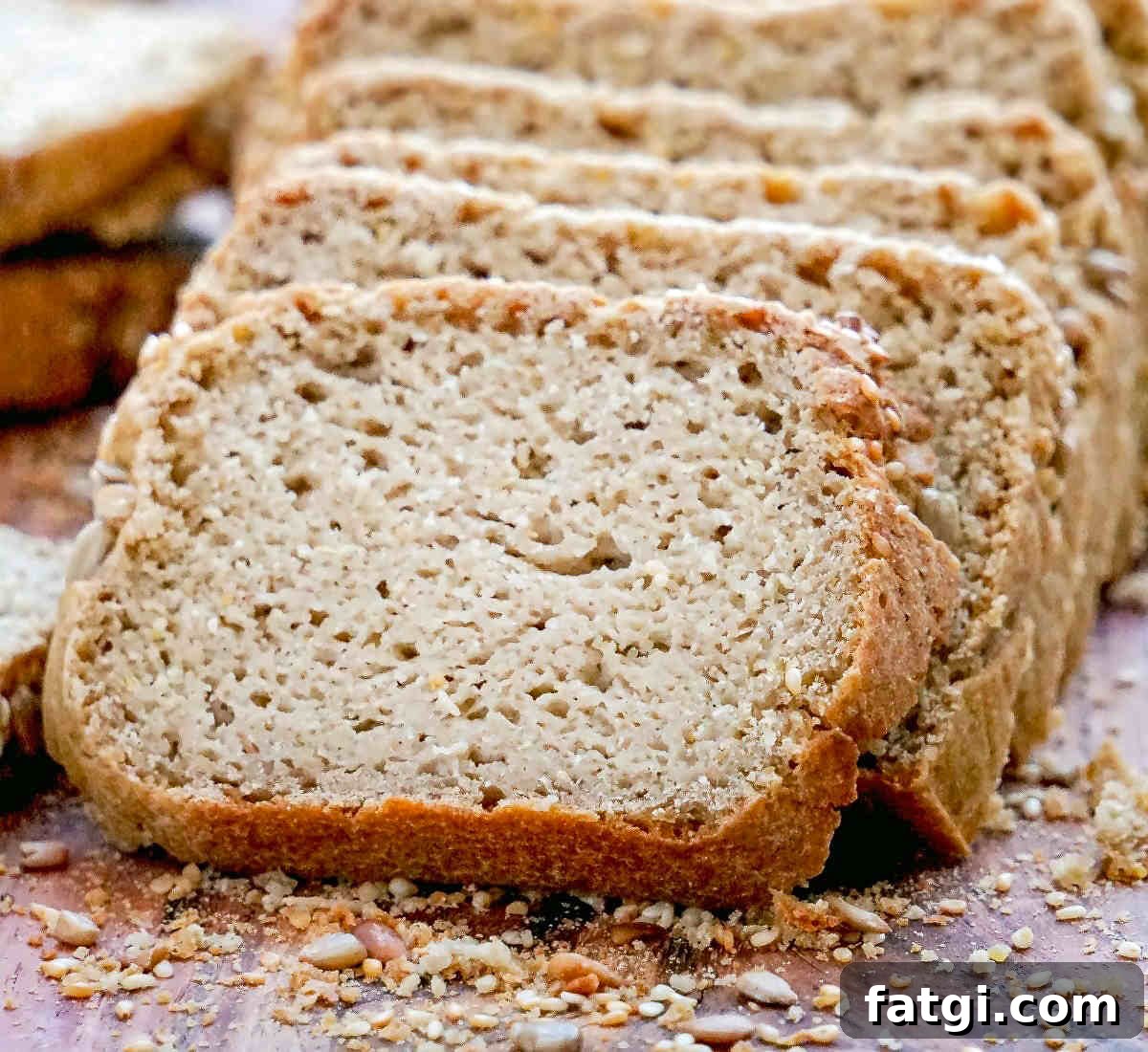
This gluten-free sourdough bread is the everyday loaf my family makes again and again. It is vegan, naturally leavened with a gluten-free sourdough starter, and made without commercial yeast, xanthan gum, oil, eggs, dairy, or psyllium. The result is a soft, sliceable loaf with a wholesome flavor and a crumb that toasts beautifully.
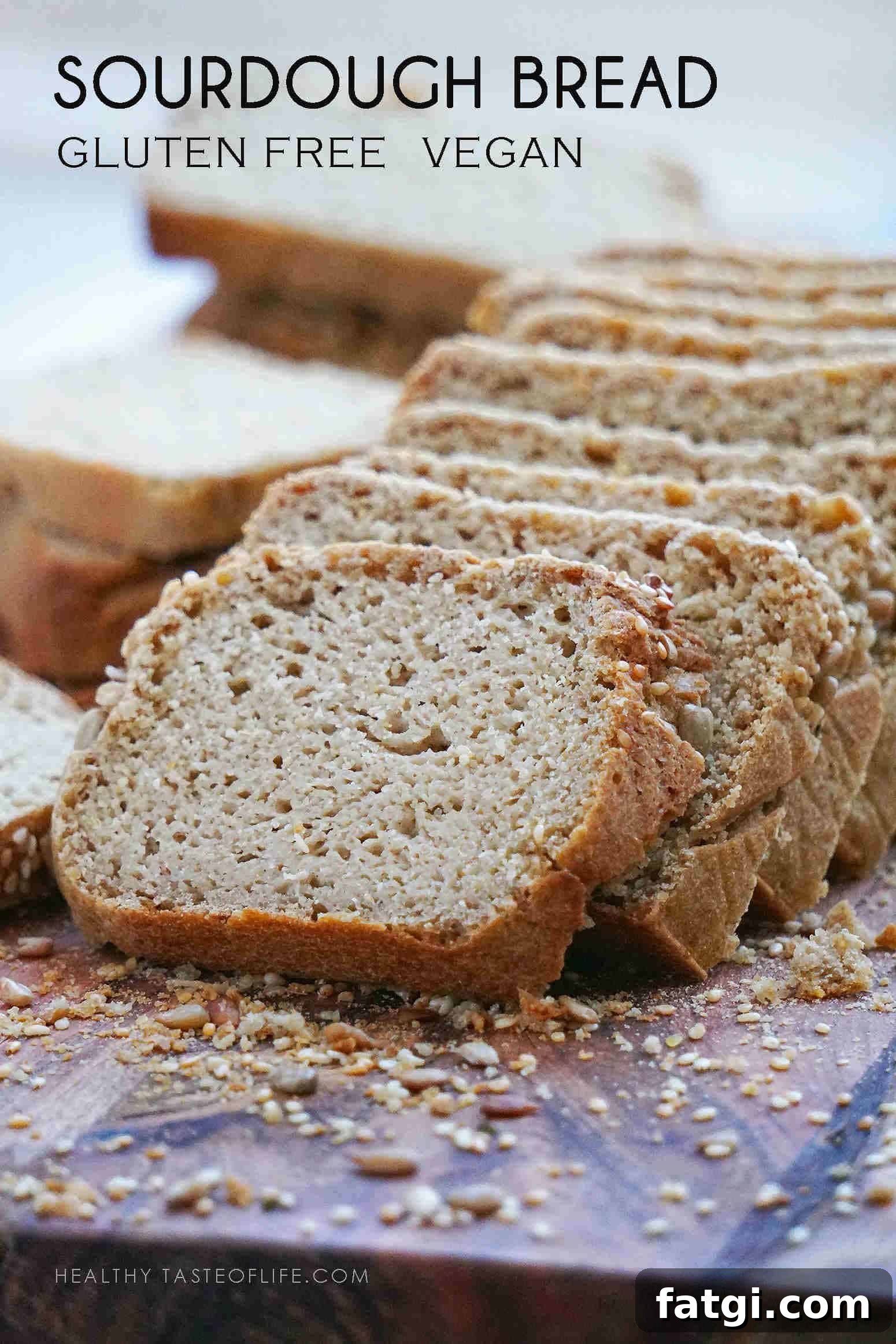
When I began testing gluten-free bread recipes, many store-bought and homemade versions relied heavily on refined starches, gums, and additives. I wanted something simpler: a gluten-free sourdough bread made with whole-grain flours, gentle binders, and a strong starter that could do the real work of fermentation and rise.
A plain gluten-free sourdough loaf is more challenging than sweet quick breads such as banana bread or small sourdough buns. There are no eggs for structure, no fruit for extra moisture, and no baking powder or baking soda shortcut. The starter, flour blend, hydration, and proofing all need to work together. Once you understand the batter texture and proofing time, this recipe becomes a reliable gluten-free sourdough bread for sandwiches, toast, and everyday meals.
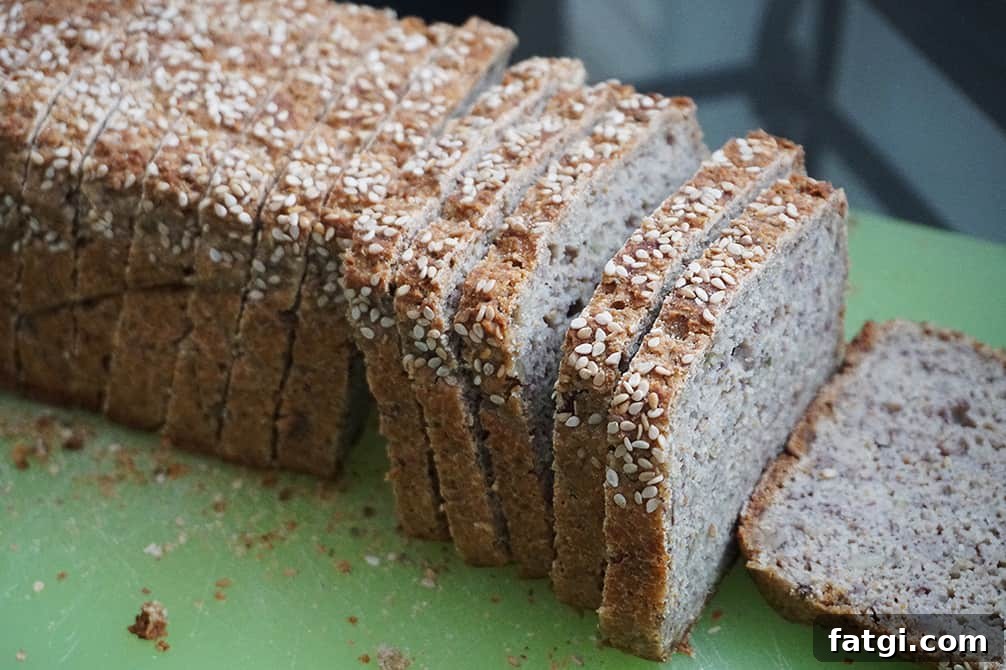
Why This Gluten-Free Sourdough Bread Works
- Naturally leavened: This loaf uses an active gluten-free sourdough starter instead of commercial baker’s yeast.
- No xanthan gum: Ground flax helps create structure and sliceability without gums.
- No oil: The recipe keeps the ingredient list simple and does not rely on added oils for softness.
- Whole-grain flours: Buckwheat and millet give the bread a hearty flavor and a more nourishing profile than starch-heavy blends.
- No kneading or shaping: The dough is a thick batter, so it is mixed, transferred to a loaf tin, proofed, and baked.
- Sliceable crumb: A tall loaf pan supports the batter as it rises, helping the bread bake into a usable sandwich-style loaf.
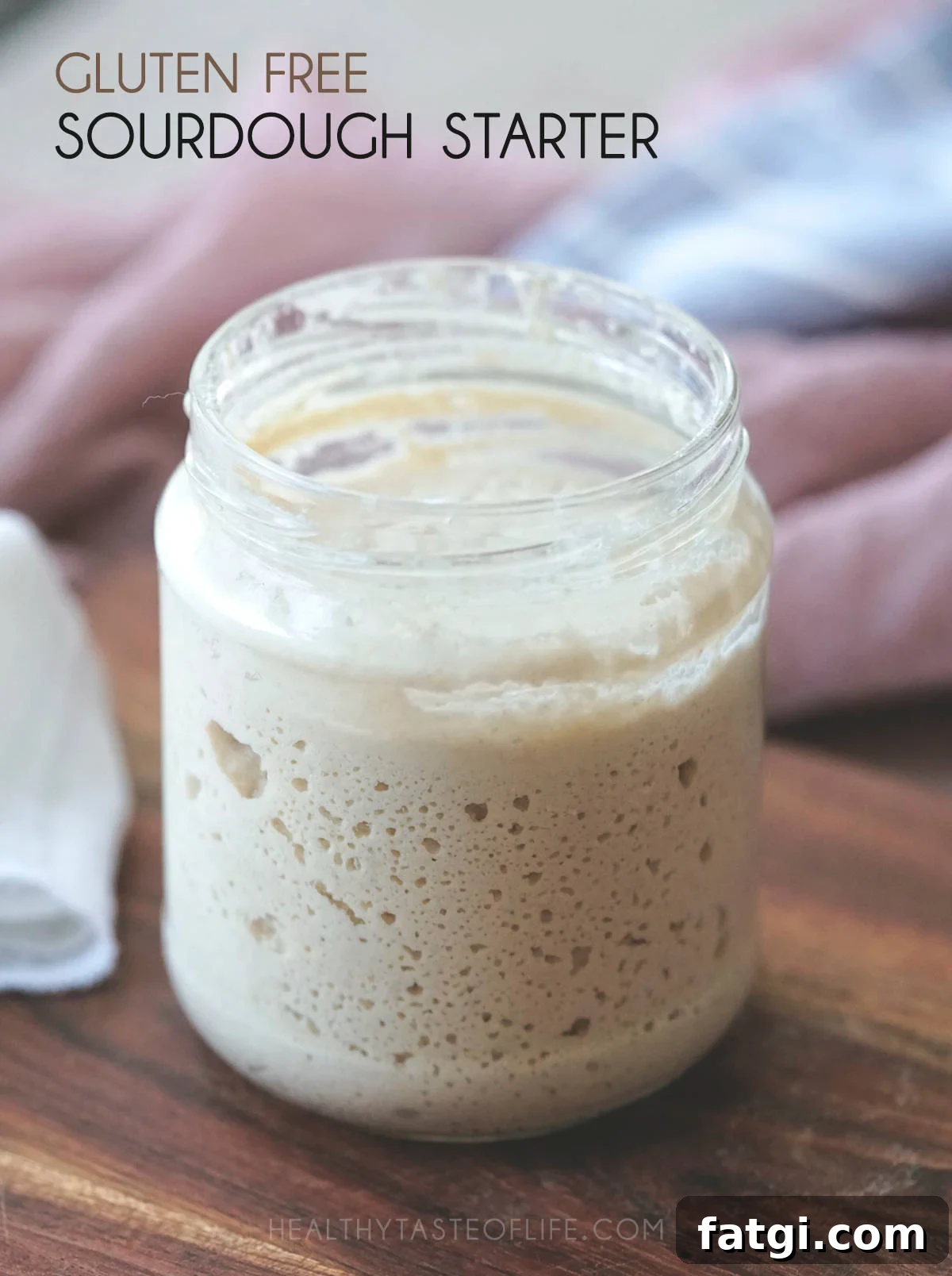
For the best rise and flavor, start with a healthy, active gluten-free sourdough starter. If your starter has been in the refrigerator, wake it up before mixing the bread batter. A sluggish starter can lead to a dense loaf, so give it an extra feeding if needed.
Once you have a dependable starter, you can use it in many gluten-free recipes, including bread rolls, tortillas, muffins, naan, pancakes, crackers, and other sourdough baked goods.
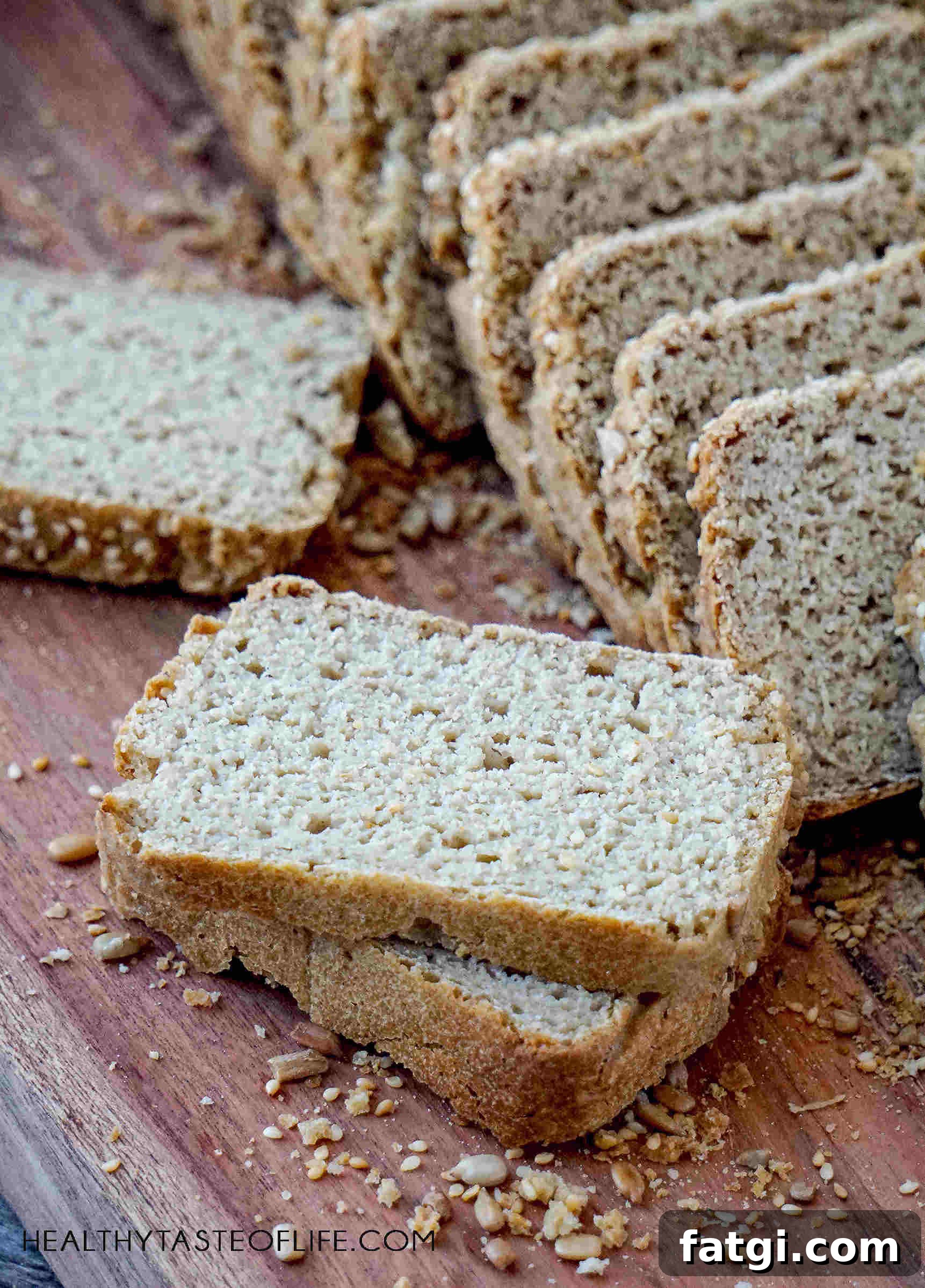
Key Ingredients and Simple Swaps
- Active gluten-free sourdough starter: Use a fed, bubbly starter. A starter maintained with brown rice flour works well for this recipe.
- Buckwheat flour: Light buckwheat flour gives structure and a milder flavor than dark buckwheat.
- Millet flour: Millet keeps the loaf tender and balanced. Gluten-free oat flour or sorghum flour can be used as a swap.
- Ground flax seeds: Flax acts as the main binder and helps the gluten-free bread hold together when sliced.
- Filtered water: Hydration is important because gluten-free whole-grain flours absorb water differently.
- Salt: Salt balances flavor and supports the overall taste of the loaf.
- Maple syrup: Optional, but it can slightly support fermentation and round out the flavor.
Note on oats: If you use oat flour, choose oats or oat flour that are labeled gluten-free, especially if you must strictly avoid gluten. Some people also react to oat avenin, so use the flour that works best for your body.
See all measurements in the recipe card:
How to Make Gluten-Free Sourdough Bread
Step 1. Wake the Starter
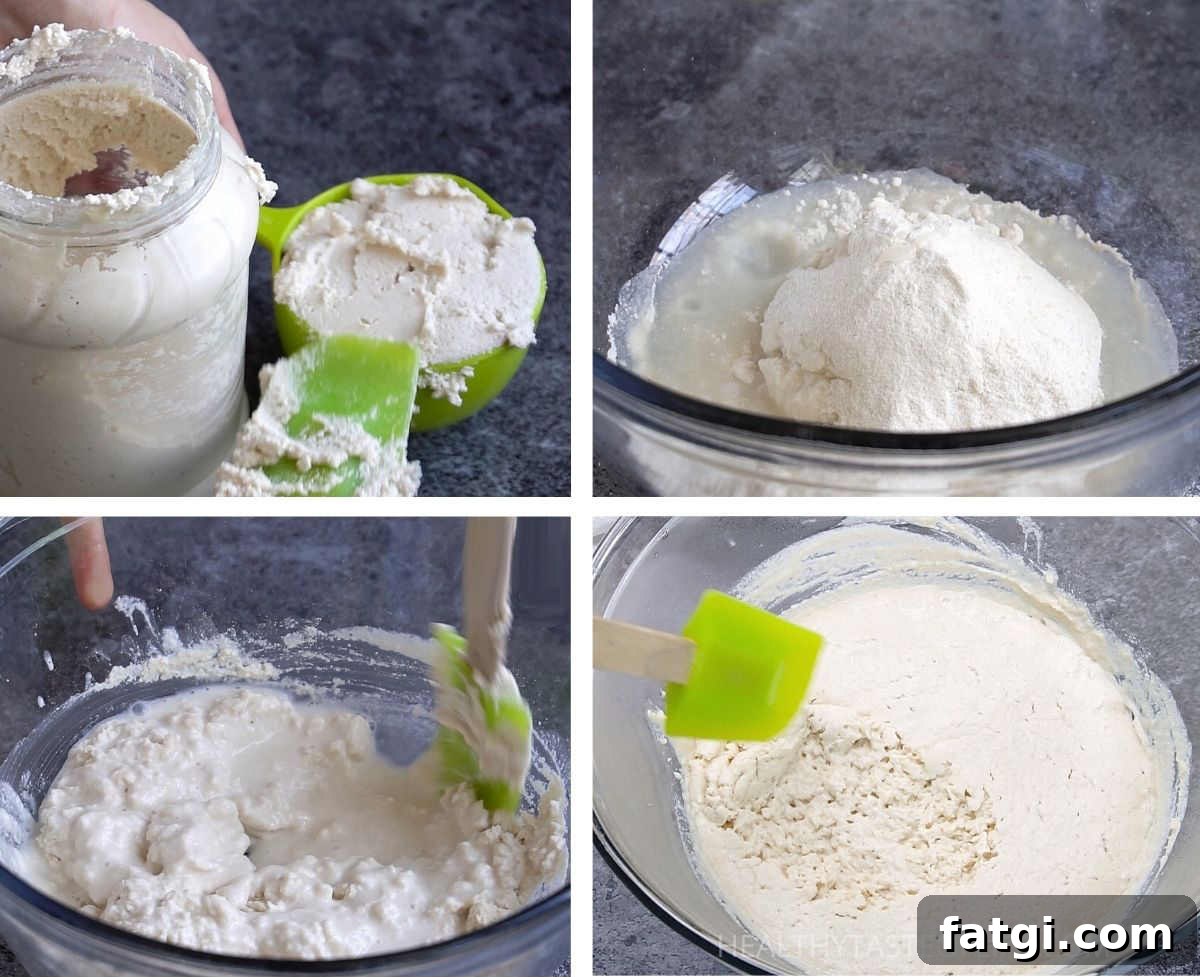
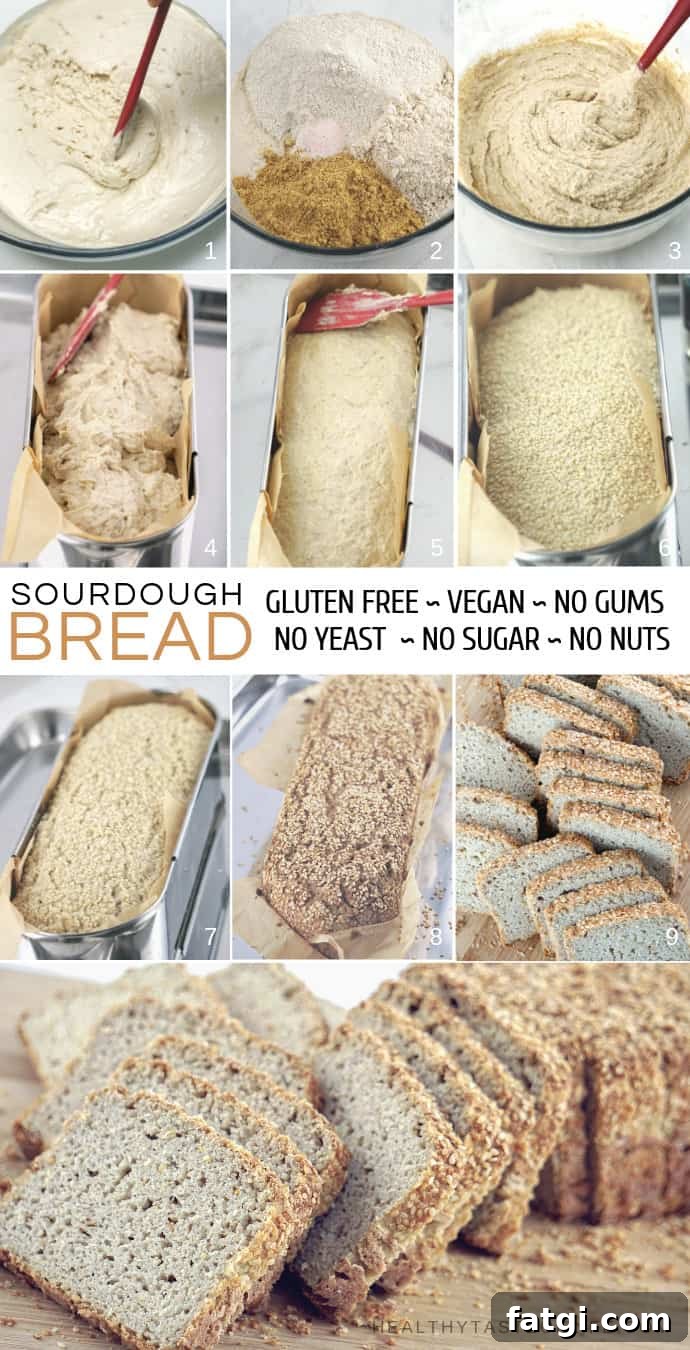
You only need 1 cup of active gluten-free sourdough starter for this loaf. To wake it up, mix the starter with 1/2 cup brown rice flour and 1/2 cup filtered water. Let it rest in a warm place for 3 to 5 hours, or until it looks bubbly and active. If your starter is already thin and watery, use slightly less water. If it is very thick, add a little more water until it loosens.
This recipe is designed for an established gluten-free starter. After taking the amount you need, feed the remaining starter and return it to the refrigerator. If the starter is slow to rise, feed it once more before making the bread batter.
Step 2. Mix a Thick Batter
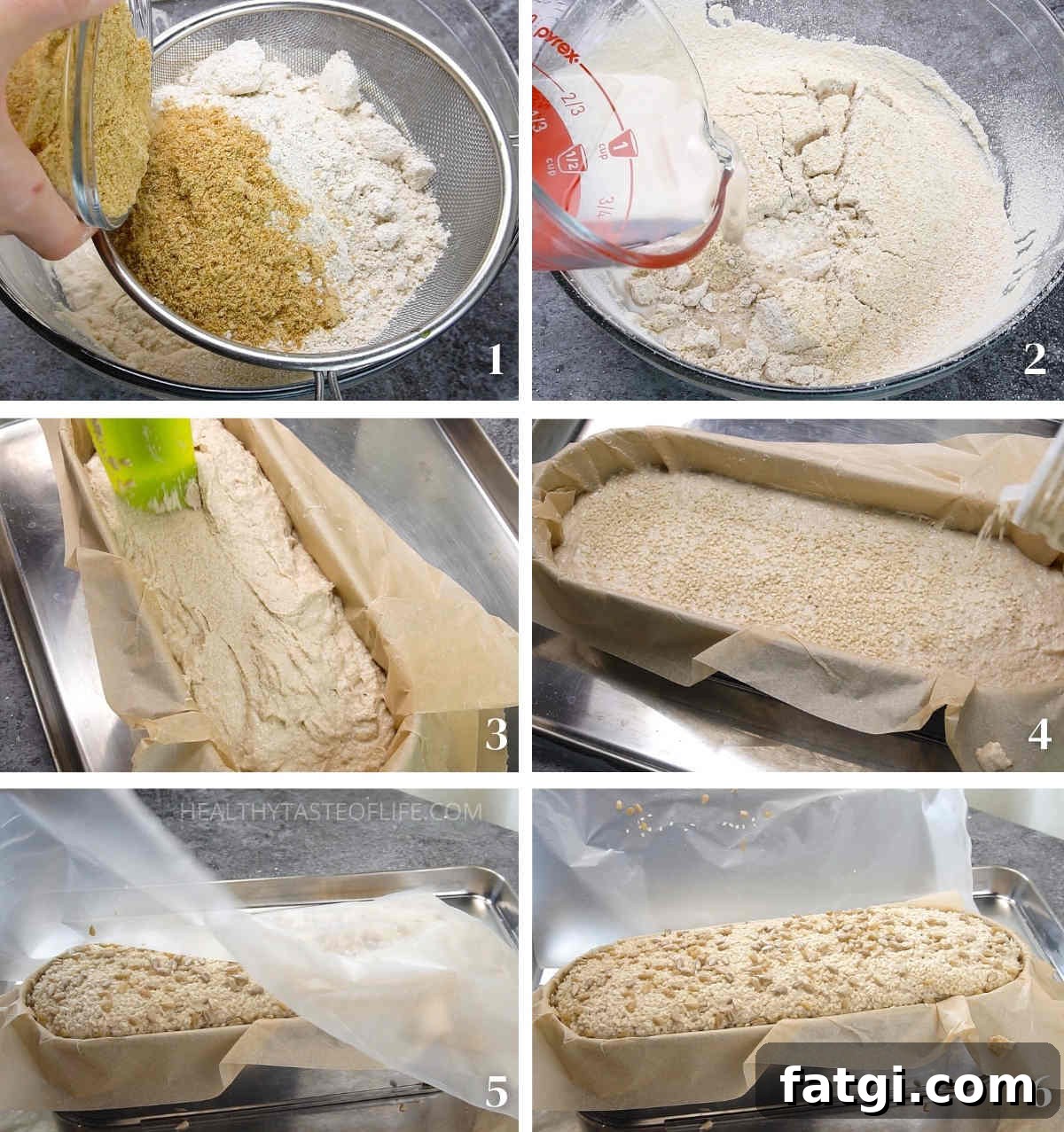
- When the starter is bubbly, add the sifted flours, ground flax, water, salt, and optional maple syrup to the same bowl.
- Mix until the batter is thick, sticky, and scoopable. It should look similar to thick oatmeal porridge or brownie batter.
- No kneading is needed. Gluten-free sourdough batter does not behave like wheat dough, so do not try to stretch or shape it by hand.
Step 3. Proof the Batter
- Scrape the batter into a high-wall loaf tin and smooth the top with a spatula. A slight dome helps the loaf bake with a better shape.
- Add seeds or nuts on top if desired.
- Cover the pan with plastic wrap, foil, or a towel to help hold moisture. You can lightly mist the inside of the cover with water to prevent the surface from drying out.
- Let the batter rise in a warm place for about 4 to 5 hours, depending on room temperature. It should look visibly risen and slightly domed.
Tip: Best Baking Dish for Gluten-Free Sourdough
A Dutch oven is not necessary for this batter-style loaf. Gluten-free sourdough batter needs tall sides so it rises upward instead of spreading outward. A high-wall loaf tin is the most reliable choice because it supports the batter during proofing and baking.
If you want a loaf that stands taller on its own, starchier flours can help. This version focuses on whole-grain gluten-free flours for a more wholesome loaf.
Step 4. Bake the Bread
- Preheat the oven to 425°F (220°C).
- When ready to bake, carefully cover the loaf with foil without touching the risen batter. Avoid shaking or bumping the pan because gluten-free sourdough batter can deflate easily.
- Lower the oven temperature to 390°F (200°C) and bake for 30 minutes.
- Remove the foil and continue baking for another 40 to 45 minutes, or until the loaf is golden brown and baked through.
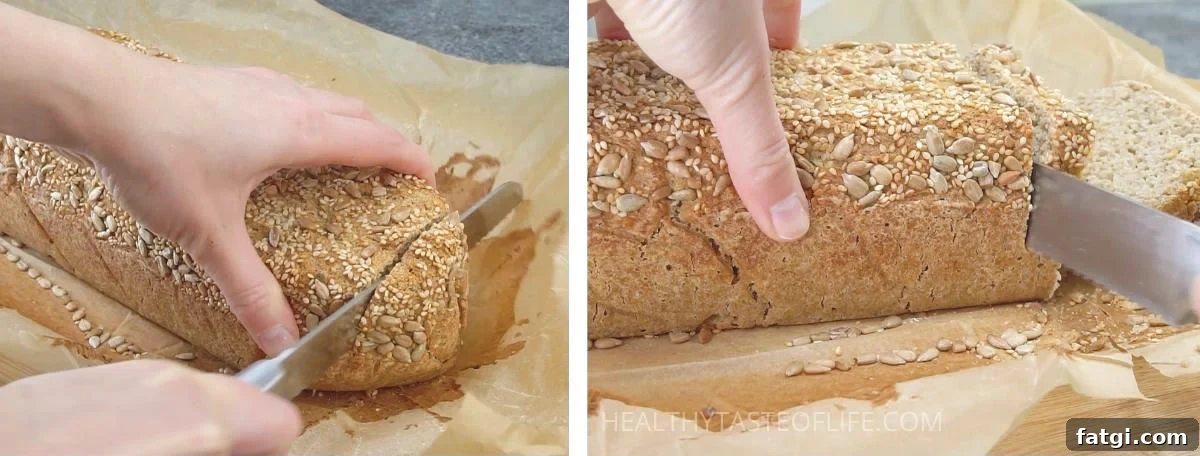
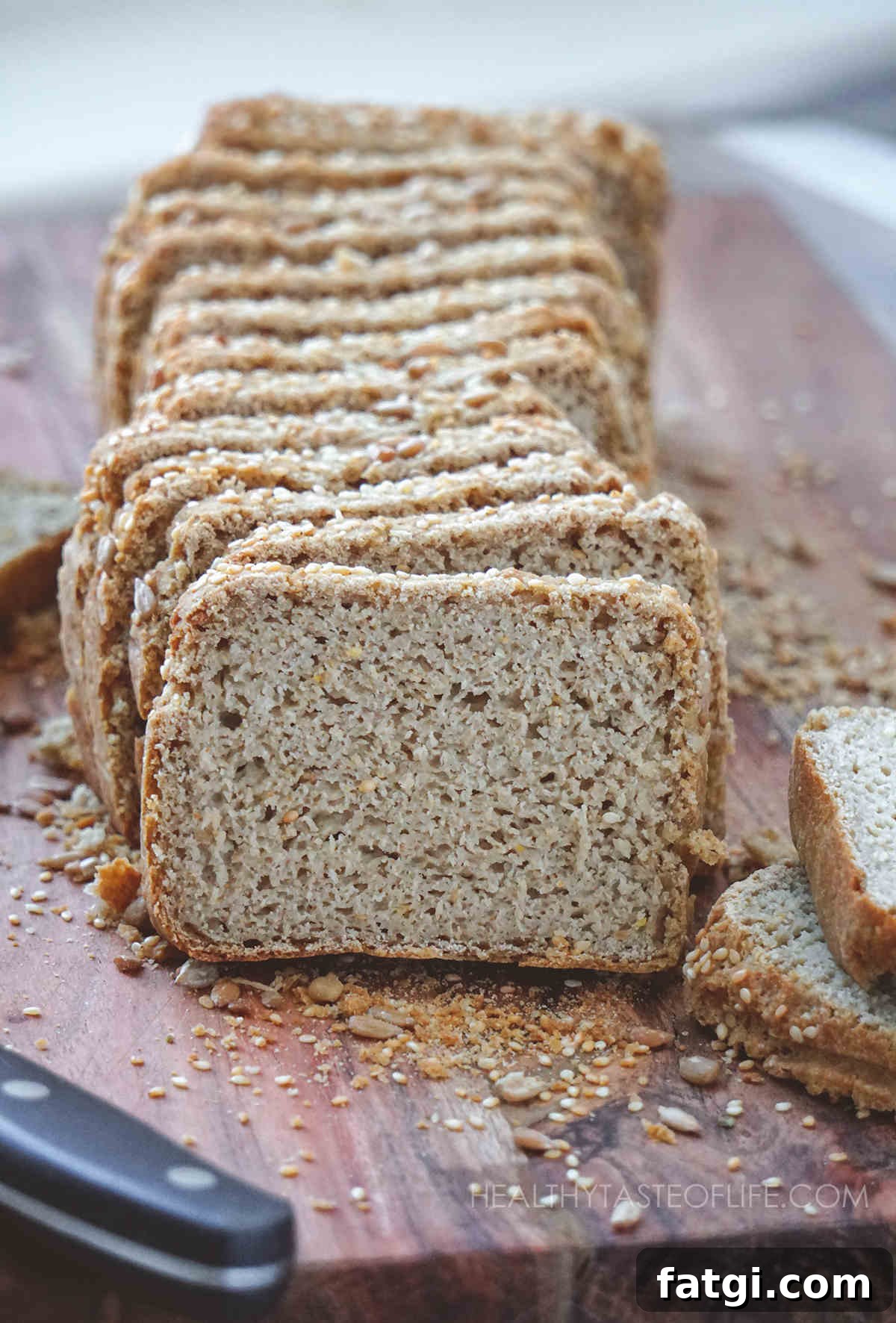
- Let the bread cool completely before slicing. For the cleanest slices, wrap the cooled loaf and cut it the next day with a serrated knife.
FAQs
It contains no commercial baker’s yeast. Like all sourdough bread, it is naturally leavened by wild yeasts and lactic acid bacteria in the starter.
No. Fermentation does not reliably remove gluten from wheat, rye, or barley. This loaf is gluten-free because it uses gluten-free flours only.
Long fermentation can change starches and reduce certain fermentable carbohydrates, which some people may find gentler. Individual tolerance varies.
Sprouting may reduce phytates and may improve mineral availability, depending on the grain and processing conditions.
Oat flour is not usually the strongest choice for maintaining a gluten-free sourdough starter. Brown rice flour is often more reliable.
Video: How to Make Gluten-Free Sourdough Bread
Watch for the thick batter texture and the proofing height before baking.
Gluten-Free Sourdough Bread
Ingredients
Activate the Gluten-Free Sourdough Starter
- 1 cup gluten-free sourdough starter – active, about 240 g, 100% hydration
- ½ cup brown rice flour – 80 g, to revive the starter
- ½ cup filtered water, room temperature – 118 ml, adjust if needed
Main Batter
- 1 cup buckwheat flour – 120 g, light color preferred
- 1 cup millet flour – 120 g; use 100 g if substituting oat flour, or 120 g if using sorghum flour
- ⅓ cup flax seeds – 37 g, ground
- 1½ cups filtered water – 355 ml, or plant milk
- 1 tsp Himalayan pink salt – 5 g, or 1/2 tsp sea salt
Optional
- 1 tbsp maple syrup – 15 ml
Instructions
Wake the Starter
-
Scoop 1 cup of established gluten-free sourdough starter into a large bowl.
-
Feed it with 1/2 cup brown rice flour and 1/2 cup water. Mix well, cover, and rest in a warm place for 3 to 5 hours, or until light and bubbly.Feed the remaining starter in the jar and return it to the refrigerator, or use it for another recipe.
Mix the Batter
-
Once the starter is active, add the buckwheat flour, millet flour, ground flax, salt, water, and optional maple syrup.Mix until a thick, sticky, scoopable batter forms. It should resemble brownie batter or thick porridge. Do not knead.
Pan and Proof
-
Scrape the batter into a high-wall non-stick loaf tin. Smooth the top with a spatula and shape it into a gentle dome.
-
Add seeds or nuts on top if desired. Cover the pan and proof in a warm place until the batter is noticeably risen and domed, about 4 to 5 hours depending on room temperature.
Bake
-
Preheat the oven to 425°F (220°C).
-
Carefully tent the loaf with foil without touching the batter. Reduce the oven temperature to 390°F (200°C) and bake for 30 minutes.
-
Remove the foil and bake for another 40 to 45 minutes, or until golden brown. If appropriate for your pan, you may remove the loaf from the tin during this stage for more even baking.
Cool and Slice
-
Cool in the tin for 10 to 15 minutes, then transfer to a rack and cool completely before slicing. For the best texture, wrap the cooled loaf and slice it the next day with a serrated knife.
Notes
- Do not shake or touch the dough once it has risen and is ready to bake. Gluten-free sourdough batter can collapse easily.
- Use a tall loaf tin to support vertical lift. A shallow dish may cause the batter to spread.
- Seeds and grains on top add crunch and extra flavor.
- For a lighter-colored loaf, use light buckwheat flour and lighter gluten-free flours such as millet, sorghum, or certified gluten-free oat flour.
- For a more sour flavor, let the dough ferment about 1 hour longer, watching carefully so it does not overproof.
- Whole-grain flours tend to feed the yeasts and bacteria in a gluten-free starter well. Sudden changes to white or very refined flours may affect starter strength.
- Ground flax seeds are important for structure and sliceability. Do not skip them.
Nutrition
Calories: 136.5 kcal |
Carbohydrates: 26.5 g |
Protein: 4.1 g |
Sodium: 22 mg |
Potassium: 144.8 mg |
Fiber: 3.5 g |
Sugar: 1.2 g |
Calcium: 7 mg |
Iron: 1.5 mg
The nutrition information is an estimate provided by an online nutrition calculator.
Pro Tips for Baking Gluten-Free Sourdough Bread
- Use a flour mix, not one flour only. A blend of medium-density flours such as buckwheat, millet, oat, or sorghum creates better balance, moisture, and structure.
- Choose finely milled flours for a smoother crumb and less crumbling.
- For a lighter crumb, use light buckwheat flour and lighter gluten-free flours.
- For a darker, heartier loaf, use dark buckwheat and add more whole-grain flours such as teff or sorghum.
- Do not skip the flax. Ground flax is the primary binder in this egg-free and gum-free gluten-free sourdough bread.
- More active starter can speed up the rise, while a cooler room will slow it down.
- Control the tang. A shorter proof gives a milder loaf, while a longer proof gives a more sour flavor.
- Proof high and bake hot. Covering the loaf at the start of baking helps retain moisture, then uncovering allows the crust to brown.
How to Store Gluten-Free Sourdough Bread
Let the loaf cool completely before slicing. Store sliced bread at room temperature for 3 to 4 days in a breathable bag. For longer storage, freeze the slices flat in freezer-safe bags. Toast slices directly from frozen whenever needed. Toasting brings back the best texture and aroma, especially with gluten-free sourdough bread.
More Healthy Gluten-Free Bread Recipes
Soft Buckwheat Bread Recipe (GF, DF)
Gluten Free Sourdough Buns (No Egg, Vegan)
Teff & Buckwheat Sourdough Bread (GF Pumpernickel-Style)
Gluten Free Sourdough Banana Bread (Vegan, Moist)
Gluten Free Sourdough Baguette (No Yeast Added)
Gluten Free English Muffins (Vegan, Sourdough)
Extra Recipes Made With Gluten-Free Sourdough Starter
- Soft Gluten Free Wraps / Tortillas (Vegan)
- Gluten Free Sourdough Pancakes – Light & Fluffy
- Gluten Free Sourdough Crackers With Seeds (Vegan)
- Gluten Free Sourdough Baguette (No Yeast Added)
Baked it? I’d love to hear how it turned out. Leave a rating or a quick comment to help other readers.
©HealthyTasteOfLife. Content and photographs are copyright protected and need prior permission to use. Copying and/or pasting full recipes to other websites and social media is strictly prohibited. Sharing the link to this recipe is encouraged and appreciated.
Disclaimer
This article shares general food and baking information only and is not medical advice. Always use gluten-free labeled ingredients if you must strictly avoid gluten, and consult your health professional for personal guidance.